
April 2023
Understanding God's Chosen People
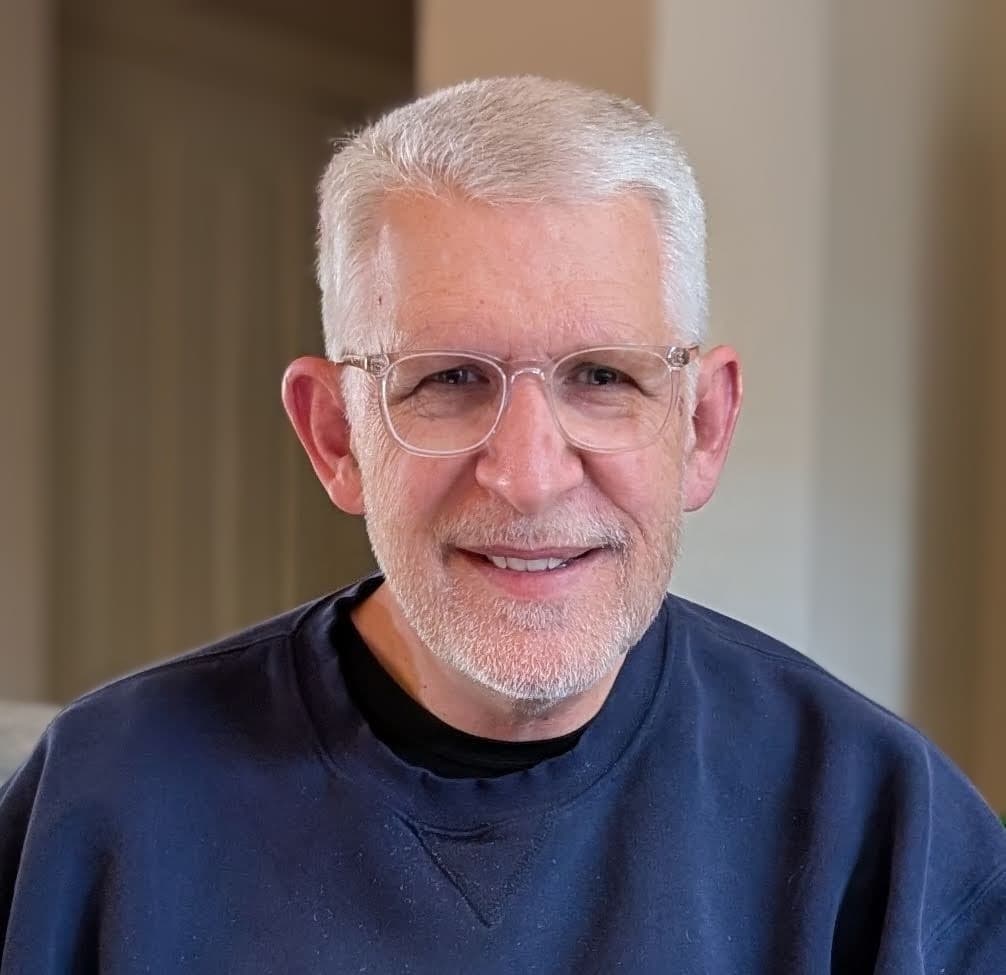
Understanding the rapture and the distinction between the Church and Israel can deepen our faith. It's about our trust in Jesus' sacrifice and recognizing our shared identity as God's chosen people.
Teacher: Pastor Paul LeBoutillier Calvary Chapel Ontario Pastor Paul: Good day everybody and welcome. I'm Pastor Paul, I'm here with my wife, Sue and we're here to do a Bible Q&A, something that we haven't done for quite a while. Sue: I don't know how long but it's been probably more than a couple months. Pastor Paul: I think so. Obviously, we're not coming to you live today, this is pre- recorded but we've been gathering your questions.
Many of you have written to us, emailed through our office, or emailed me directly and I maybe haven't had a chance to get back to you yet. Some of you have made comments on our YouTube channel and we've collected those and we've just put together a bunch of questions for us to go through today. Sue: Yes, so I think usually, when one person asks a question, it means there are many more thinking through the same thing and so this is a great way to just get those questions answered. Pastor Paul: Yes, absolutely. So that being said, let's get into it and see what we have.
What's first? Sue: The first one that we have is from Vada and she said, “I'm trying to figure out, when the rapture comes, why are people left behind? Is it because they don't believe Jesus is the Christ?” Pastor Paul: Well, I wouldn't probably say it quite like that because I think that there are some people that might believe that Jesus is the Christ who are still left behind at the time of the rapture. We need to be more specific about that when we talk about salvation, we need to talk about the fact that what makes us saved or what saves us, is our confidence in the finished work of Jesus Christ on the cross.
So I think a better way to say that is, at the time of the rapture, when Jesus comes for His church and we are received to Him up in the clouds, as the Bible tells us, or meet Him in the air, it will be those on the earth at the time, who have placed their faith and confidence in the finished work of Jesus on the cross. And of course, those who died before, in confidence of what Jesus did, will precede those who are left on the earth at that time. So, rather than just saying, those who believe in Jesus, that's a little unclear, I would go a little bit further than that. Sue: Melanie asks, “I'm trying to understand the difference between us (meaning the Church) and Israel (God's Chosen People). I want a good understanding of how this all works out.”
Pastor Paul: Well, this is really common and I think a lot of people really get concerned and confused when they tried to discuss the difference between God's relationships with Israel and how He sees the body of Christ. And one of the things I noticed about Melanie's question is, she referred to Israel as God's chosen people, which is interesting, because that term is also used of the Church. In fact, in 1 Peter chapter 2, verse 9, Peter writes, “But you are a chosen race, a royal priesthood, a holy nation,” he says, even though he's talking to people from multiple nations, “…a people for his own possession,” that means his people, he says, “…that you may proclaim the excellencies of him who called you out of darkness into his marvelous light.” So God really has a people and they are His covenant people, whether they are Jews, whether they are Gentiles, it doesn't matter. So we need to stop thinking sometimes about those differences in some respects as it relates to God's people.
Now, there are times when we need to make a differentiation between the nation of Israel and the Church and that is when we're talking about the promises that were made to each. Because the promises made to Israel are very different from the promises that God made to the Church, we have different covenants that we are under. Israel, as a nation was originally put under the Mosaic Covenant or the covenant that was brought about through Moses and we are under what we call the Covenant of Grace, inaugurated through Jesus, by His death on the cross, burial and resurrection and they have very different promises attached to them. And so when you're reading the Old Testament, you need to understand that some of the promises you're reading aren't applicable to the Church because that was part of the Mosaic Covenant. Now there are many times when God just simply expresses His love for His people and His heart toward His people and those things are definitely applicable because God's people are God's people, whether under the Mosaic Covenant or the Covenant of Grace, but when we talk about promises, that's where the differentiation needs to be made.
Sue: So really good answer lies in, keep reading through the whole Bible and you'll get layer upon layer upon layer of all the nuances of Israel and the Church and where they are separate and where they are God's chosen people. Pastor Paul: It's really important because, over the centuries, as you know, the Church has stumbled in certain areas of trying to apply certain commands that were given to Israel, to the Church. For example, Sabbath keeping is one of them, food laws are others and those things were part of the Mosaic Covenant. They have been fulfilled in the person of Jesus Christ for the Church, so we don't keep them in the same way, we keep them by faith, not by the rigid practice of the law. So there are things that need to be kept in mind when you're reading the Old Testament and understanding that these are things that God did uniquely with Israel.
Sue: Sure, good. Kathleen said, “I've been watching Pastor Paul online and had a question for him. Though he says there aren't different levels in heaven, are we not rewarded differently based on works? Otherwise, what's the point of storing your treasures in heaven?” Pastor Paul: This is another question that I've actually got to quite often and it seems that there are some people who really struggle with the differentiating the idea of rewards and levels, because they're very different things.
The Bible is very clear that we will be rewarded differently based upon how we have served the Lord and what we've done with those gifts, talents and abilities and resources that God gave us while on the earth. That's clear, different rewards will be meted out according to what people have done. But that doesn't mean those people are going to attain a different level of heaven, that's where levels comes in. Levels is like the gold level or the premium level. Sue: We're wired that way, aren't we?
In video games, in Olympics and all sorts of things, we're just wired to consider levels. Pastor Paul: Different levels of achievement. I was taken to a football game, a pro football game for my birthday this last year, and my son gave us or bought tickets for us that were a really high level ticket for the game and we got to enjoy benefits that other people didn't get to enjoy because of what he purchased for us and I was very much appreciative of that. But that's not the way it's going to be in heaven, we will be rewarded differently, but we're all going to be on the same level as the redeemed of the Lord. Sue: Karl asked about a particular sermon, I don't know which one it was, but he said, “Great sermon, but I'm a little confused as you mentioned that Isaiah 53 is only spiritual.
But Isaiah 53 is quoted in Matthew 8:16 speaking of physical healing.” Pastor Paul: Isaiah 53 and what he's referring to are the references in the New Testament where God says, by His wounds we have been healed. That's the specific reference that he's citing and that is cited in the New Testament from Isaiah, chapter 53. And Karl, the answer to this question is, first of all, what I said was, when that passage or even that statement, by His wounds, some Bibles say, by His stripes we've been healed or by His wounds. When that is quoted in the epistles, the context is always spiritual.
Now, what he's saying is, that passage is also quoted in the Book of Matthew, and he's correct. And it is Matthew chapter 8, in fact, verses 16 and 17 and it goes like this. “That evening they brought to him many who were oppressed by demons, and he cast out the spirits with a word and healed all who were sick.” And then Matthew goes on to make this interesting statement, commentary in verse 17, he says, “…This was to fulfill what was spoken by the prophet Isaiah: “He took our illnesses and bore our diseases.”” Notice he quotes a different portion of that passage in Isaiah 53 and he says, that phrase or that sentence in Isaiah 53 was fulfilled in the earthly, healing ministry of Jesus Christ. Because that's what Matthew says, “This was to fulfill.”
What was to fulfill? Well, everybody they brought to Jesus, He healed, Matthew says, it was fulfilled. So we're talking about different sections of Matthew 53. My reference again, was in reference to that statement, by His wounds, we have been healed. People apply that to physical healing all the time and I was simply saying, the New Testament writers do not.
Sue: Here comes a sort of a textual question from Desera, she said, “How do we know that ‘week’ refers to 7 years?” Pastor Paul: She's obviously referring to the word as it's used in Daniel, chapter 9, where Daniel is told about seventy sevens that are decreed for his nation, the nation of Israel. And we talk about that as weeks and weeks applies to years and that's what she's saying and this can be a little confusing for somebody who's never really gone through this study. And let me just say to Desera, first of all, I can tell you haven't been through my study in Daniel, because I actually explained this. So if you go to my study in Daniel, ccontario.com/daniel and listen to particularly, I would encourage the entire study to be gone through, but just the part of chapter 9, you'll hear the explanation for this.
But to give you a short explanation right now, the ancient Hebrew word that is translated in that passage as weeks, can simply refer to a unit of seven and that's a long definition. That single word can mean a unit of seven. Now, it most often refers to a unit of seven days which is why it's translated a week but it can also be used to describe a unit of seven years which is what we believe it means. Now, to go further with Desera’s question is, well, how do we know it means years in this case, and not weeks? You have to apply context and in our case, understanding last day’s events, we have to look at other Bible passages that speak about the Tribulation Period and frankly, all of the other years from the markers that Daniel was given for those timeframes.
Up to the point of the time of Christ and then the period of the Great Tribulation and it is from the context of that, that we determine that in this case, this is referring to years and not weeks. Sue: In Revelation recently, you were teaching and there was three ways that that time period was described. Remember times, time, and half a time and then it was described again in terms of the number of months and so that's really helpful to give us context. Now we go to Nancy, I think she's probably speaking of her and her husband. “We're both still struggling with the concept of predestination despite having your messages to listen to.
We've heard John MacArthur and many others preach on this subject and their scripture references to support it seem as valid as those that negate it. We're not Bible scholars and for us it's troubling. How does a person know if he or she is truly saved? We know that we've both been changed, but as far as being totally transformed, it doesn't seem possible. Then apply predestination to the mix and it seems that we're not chosen anyway because we're not seeing in ourselves complete, radical transformation.
I know I can't be an effective witness to anyone else or even to myself when I applied the standards I hear preached.” Pastor Paul: Well, I've said for a long time that the way, the reformed teaching on the idea of predestination, frankly, does more to upset people than it does to give them assurance and confidence in their salvation. I hear from people on a fairly regular basis who have heard a message on predestination as it is preached from a reformed position and they end up as a result, doubting, that they are actually saved. Because they'll write to me and say, how do I know if I was chosen? So here's the problem, the problem is that the reformers or those from the reformed tradition, or we say, the Calvinist position, are using the same scriptures that I am.
We're all reading from the same Bible, we don't read different words and that can be one of the big issues about this thing. But it's not just about what we're reading, it's about the conclusions that people draw from what they're reading and when we refer to Reformed Theology or Calvinistic teaching, we're not necessarily talking about teaching from the Bible. We're talking about a conclusion that is based on that teaching and the conclusion is x, that predestination is this and this and this, when in fact, with all due respect to men like John MacArthur and other, very capable Bible teachers, I disagree with their conclusions about those passages. And my belief is that, predestination is our salvation from God's perspective of eternity or if you will, timelessness, from His perspective. He never had to wait to find out who was going to come to Him and to receive salvation.
So from His perspective, they were chosen and their names are written in the book of life before the foundations of the earth and, again, the reason is because God doesn't have to wait for anything. We don't live in timelessness, you and I live in very rigid time and we have to wait for things to happen and we remember when they happened in the past. So, for us, from our perspective, salvation is a day and the Bible talks about today is the day of salvation, today is the day of decision. For you and me, for people who live within the context of time and the boundaries of time, there is a day and a time, maybe an hour and a minute, that when we came to know Christ and received Him as our Savior. Well, God didn't have to wait for that day or that time or that hour or that minute.
He knew from the very beginning who would come to faith in His Son Jesus Christ and because He knew, that person was predestined and that's what the Bible says, according to God's foreknowledge, we have been predestined. Sue: So what would you say to someone like this who's honestly looking for something to rest in? Pastor Paul: Well, I would say to rest in the promises of God as they are given in the Word of God, that for those who call upon the name of the Lord, they will be saved and that's the easiest way to look at it. John 3:16 says that, whoever believes in Him and that means to put their faith and trust in Him, His person and His work will not perish but have everlasting life, that is the promise we hold on to. You can't know the mind of the Lord, you can't look into the book of life ahead of time and make sure your name is there.
You have to take it on faith, based on the promises of God. Sue: It's good. Kathy said, “I recently heard that Jerusalem has four red heifers, and if one is without blemish, they will sacrifice it on the spot where they'll build a new temple. I can't find the original post where I saw that, but I think that's how it was written. I'm just wondering, is there anything biblical about that, and is sacrificing animals something that Jews still do?”
Pastor Paul: Well, first of all, yes, there are parts of this that are biblical and parts of this are not, or at least I would say, they're not, they're just untrue. The biblical part is the element of the red heifer and if you want to read about this Kathy, if you go to the Book of Numbers in the Old Testament, chapter 19, you will see information there about the red heifer. And it is a necessity, if the sacrificial system were to be reinstituted and it is true, I believe that it is true, that they do have a red heifer and they're ready to go. What I do not believe is true, is that they've made the decision that they're going to sacrifice it where they're going to build the temple. Most Jews believed that the original temple, the temple mount, is where the Dome of the Rock is today.
There are some, who believed that the temple was located elsewhere and that the Dome of the Rock is not going to get in the way. Well, we don't know those things for sure. What we do know is there is no sacrificial system going on currently in Israel and so that's what answers that part of the question. But the red heifer part of it is true and I believe that we know from various books of the Bible, that the sacrificial system will be reinstituted during the period of the Great Tribulation, at least for a part of it. And so it will happen and there are preparations being made by a small group of people in Israel, but it is not happening yet.
Sue: Reneé asks, “Does 1 Corinthians 14 verses 34-35 mean that I can't ask questions in church and that I have to ask a man after? I'm not sure what this means.” Pastor Paul: And the reason Reneé that you're struggling with this question is because you're looking at it from a modern church going standpoint. The passage is that Reneé is referring to is 1 Corinthians chapter 14, as she said, actually, verses 33 through 35. And it says this, 1 Corinthians 14:33-35 (ESV) As in all the churches of the saints, the women should keep silent in the churches.
For they are not permitted to speak, but should be in submission, as the Law also says. If there is anything they desire to learn, let them ask their husbands at home. For it is shameful for a woman to speak in church. So many people have read this passage and they said, women should never speak in church, it is shameful for them to ever utter a sound in church. And again, they're interpreting what Paul is saying, from his cultural position and they're making it fit into their modern situation.
We know that in the Jewish synagogues, women did not sit with the men. The men sat in one place and the women sat in a different place. It is very probable that when the Jews who went out and began to plant new churches, created those fellowships, that they use some of that same, what they knew first, pattern, exactly the same model, so women were separated from the men. And what was happening in the church at Corinth is that the women being separated from their husband would have a question about what was being said, or being read, and they would speak out to their husband, and they would distract the whole service and they would ask questions of their husbands during the service. So, Paul was writing to them to say, well, we've had to create this model, this rule that listen, ladies, if you have a question about something you're hearing, just take note of it and then talk to your husband once you get home.
Because it's really a shameful thing to interrupt the church service by asking the question in that loud and boisterous way. If you can imagine in a church service, we have an auditorium here that seats about 500 people, if a woman was sitting on this end of the auditorium, and she yelled to her husband on this end, hey, Henry, what does he mean by that? Well, that would be very distracting. Sue: In our modern context, it doesn't matter, male or female, you really don't encourage anyone to pipe up and ask questions, because this isn't the format for that, we have small groups for that. We have other things, but this isn't the format.
Pastor Paul: We've had situations in the past where people have spoken out. There's some people that just they lack some boundaries and so, you're in a church service, and you've got 100, 200, 300, whatever number of people and somebody goes, I don't get that, you have to just say, I'll get with you afterwards, thanks for your question and move on. Sue: Sherry said, “Today I saw you talking about how death was not a part of God's original plan. But since He's all knowing, then He knew that man would choose to disobey — unless He allowed himself to not foresee the choice made to eat the fruit.” Pastor Paul: This really is a mind bender for a lot of people and I've talked about this before.
People struggle with understanding where God's foreknowledge ends, and where predetermination begins. In other words, did He cause, in fact, by knowing ahead of time, did He cause that to take place? And I'm guessing that that's a little bit where Sherry is struggling. But even if she's just saying, did God know they were going to fall? The answer to that question is yes, He did, because God, again, doesn't have to wait for anything to happen.
God knew ahead of time that Adam and Eve would make the wrong choice and redemption was planned out from the beginning. As we know in the scripture, Jesus is the Lamb of God slain from the foundations of the earth and so, yes, God knew ahead of time. He did not cause that failure, but He was aware ahead that it would happen. Sue: Denise says, “Dear Paul, my name is Denise and I'm from the United Kingdom. (Two questions here, first) Is smoking a big sin?
(Second) Will I go to hell for smoking?” Pastor Paul: Okay, is smoking a big sin? I am interested by the word big because there's no such thing as a big or a small sin, sin is sin. Here on earth, you can get a longer prison sentence for some things that you do. But as far as what sin does, ultimately, which is separate us from God, sin is sin.
That's the first thing that needs to be understood. Is smoking a sin? So let's answer that question. Well, the better way to look at this is to understand the definition of a sin. To sin, according to the Bible means to miss the mark.
If you think of like an archery target with a big red center, if you miss the target with your arrow, that is a picture of sin. Now the target, is a picture of God's will, His righteous demands, His will, His purpose for our lives. So the question that I guess I would ask Denise first is, do you believe that smoking is missing the mark of God's will for your life? That's the first thing that I would ask and first of all, the Bible doesn't mention smoking. This is one of those areas where you have to ask yourself the question, is smoking the will of God for people?
What does smoking do to my body? Do I have the right to do that to my body? The Bible says, I'm not my own I've been bought with a price therefore honor God with my body. Does smoking honor God? That's the question, those are the things that need to be asked.
So that's what I would have her and anyone else considering this question, to think about and to really pray about. And then secondly, will I go to hell for smoking? No, but you might smell like you've been there. People go to hell because they've rejected the salvation that is ours through Jesus Christ, not because they've made mistakes, not because they've sinned or struggle. As Christians we sin, we still sin, but we go to the Lord and there's a perpetual forgiveness in the Lord, through the blood of Jesus Christ.
So please understand, you're not going to find people in hell who believed in Jesus with all their hearts, but oh I lit up and now here I am in hell. No, in fact, I'll pause just and add this much else. The Bible says, that hell was created for the devil and his angels or his fallen angels, those demons. God never created hell for man. Man chooses to go there by his rejection of God's redemptive plan.
Sue: Juliana says, “Pastor Paul, this question is about being slain in the spirit. Is this practice biblical?” Pastor Paul: No, it is not Juliana, there is nothing in the Bible, anywhere in the pages of scripture, about being slain in the spirit. Were there people in the Bible who were knocked over by the power of God? Absolutely, they were enemies, they were always enemies of the Lord and the idea of being slain in the spirit as a method or a way for God to minister to people is entirely unbiblical.
And anything you see associated with this idea of slain in the spirit comes from man, it is of man's tradition and of man's creation. Sue: Lesa said, “I wanted to ask about when we meet the Lord in the sky before the Great Tribulation and we disappear from earth. Will the people who are left behind see us go? Or will there be a big mystery wondering what happened to all those people?” Pastor Paul: That's a good question, I've had people ask it of me before and obviously the Bible doesn't address those issues.
But I think it's safe to say that people are going to notice that some people are missing. Those who are left behind are going to know that some are missing and so how they're going to explain it at the time, we have no idea, who knows. People are going to be so deceived, I believe, by the time that happens, it'll be either aliens or who knows? Who knows what they'll come up with? Sue: We can speculate about a lot of things but there's nothing in the Bible that tells about it.
Pastor Paul: No, there's nothing and frankly, the antichrist could even make a claim that he got rid of everybody that was a troublemaker or a problem person. The Bible doesn't say that, that's a total speculation on my part, we just don't know, we don't know how that will be explained. Sue: All right. The next question comes from Zhi. He says, “Hi, Pastor Paul, it's great that I have listened to a few of your sermons.
What is your opinion of the teaching of the five points of Calvinism?” Pastor Paul: Well, we've talked about that already in another question and I've made the point that the teachings of Calvinism are essentially a way of looking at and a conclusion based on certain passages related to salvation, God's sovereignty, and our part, I guess, in being saved. And I disagree with Calvinism, the five points of Calvinism and I don't believe that it is in keeping with a true biblical interpretation. Sue: I do see a comment once in a while that just merely wants to ask Pastor Paul, are you a Calvinist? And because we, you, our Church, takes such a middle of the road approach.
If you only listen to one or two or a handful, you can see both sides coming out in your messages. Pastor Paul: I've had people write to me and assume that I am of the Calvinist ilk but we are not, we do not subscribe to the five points of Calvinism. Sue: All right, the next question is from Cheng. “Hello, pastor, I'm following your online teaching resources, and currently in the book of Numbers (chapters 1-4). I have a question: why are the tribes’ census counted and stated in exact tens?
But when they counted, the number of the firstborn of Israel is the exact number was 22,273? (Nu 3:43)” Pastor Paul: We're not told, that's the simple answer to that question. We're just not told. There were times they did round things up and there were times that they gave exact numbers and they never explained why. Sue: We just ran into that in that women study in 1 Kings that said Solomon had written x amount, a rounded number of Proverbs, and then the Psalms was 1005, or 1006, or whatever it was given.
It's just right in the same sentence, it didn't match so no explanation. Janet says, “Is it biblical to say that you can kill someone's spirit or murder someone's spirit?” Pastor Paul: No, there's nothing biblical about killing or murdering someone's spirit. In fact, Jesus says quite the opposite, He says, don’t fear those who can kill the body only. Sue: And then secondly, she says, “Why do some people say Jesus was the last prophet?”
Pastor Paul: Well, because some people get a lot of things wrong, that's the simple answer to that question. He was not the last prophet, there were other people who spoke prophetically. The Bible tells us in the Book of Acts that when Paul and Barnabas were called to go into their ministry, there were teachers and prophets who were there in Antioch and who spoke the Word of the Lord, confirming the calling to send them out. So Jesus was not the last prophet, if somebody said that they would have a real hard time backing it. I think what people are confusing is a statement that's made in Hebrews chapter 1, that basically speaks of Jesus as God's final Word, or the final revelation of God to mankind.
But it would be incorrect to say He was the last prophet. Sue: Monica says, “Do you believe in spirits? A friend at work swears she sees her grandparents and a child that died at her church. I think she truly believes she has seen these dead people. Do you?”
Pastor Paul: No, I don't. I don’t believe that she has seen people who are deceased. Although I do believe in spirits because first of all, we as human beings are all made up of spirit and flesh and soul. And when our bodies die, the soul and the spirit goes to be with the Lord, if we have embraced the sacrifice of Jesus Christ on our behalf. If not, those people go to a holding place or awaiting judgment, in spirit and so on and so forth.
But I don't believe, and of course we also believe in demonic spirits. And I think that when people say that they're seeing a spirit, well, they're either out of their mind, or they could be actually witnessing a demonic situation where demons are trying to lull people into a sense of believing that they're speaking with a deceased loved one or a deceased person, when in fact, they're actually communing with a demonic spirit and it's a very dangerous thing. Sue: Do you think there's room too just in our emotional makeup to really just want to believe things, convince ourselves that something is there. Pastor Paul: Absolutely, we can convince ourselves of anything, if we try hard enough and so absolutely. And I think if someone was grieving or mourning, or even guilty over the death of a loved one, they could imagine themselves seeing that person.
Sue: Catherine says, “I know there is a judgment of the saints for reward and the judgment of those who rejected Christ. When do each of these judgments occur, and do the judgments have different names? I tried Googling this, but there are too many unreliable sites, but yours I trust. Thank you.” So let's first talk about the judgments, then let's talk about Googling.
Pastor Paul:. When we talk about judgments, judgments have been going on for a long time, the Bible is full of judgments. We've got, the Great Flood, which was a judgment and we've got the judgment of Sodom and Gomorrah and we have judgments upon the nation of Egypt and the judgments upon the nations of the Canaanites. And so, there have been all kinds of judgments in the past, there are present judgments, there are future judgments, I think what Catherine is probably asking is about those future judgments and there are actually several. The Tribulation period itself, is a period of judgment, judgment goes on during that time, this is depicted in several ways in the Book of Revelation.
But then we also have in the Bible, what we call the Judgment Seat of Christ, which is referred by the New Testament authors, which we talk about as the Bema or Be-ma Judgment. People pronounce it both ways, which is a judgment of believers, where we are judged according to our works, for a reward to determine the reward that we will get, but that's a form of judgment. When does that take place? Probably during the Great Tribulation period when we are with the Lord, probably but then we have other judgments. We have the judgment of the nations, which is going to take place right after the tribulation when Jesus will sit in judgment over the Gentile nations and how they treated the Jews.
There is the judgment of angels that the apostle Paul talks about. He says, do you not know that we, speaking of believers will judge the angels? And then we have what the Bible refers to as the Great White Throne Judgment, which is the final judgment and by the way, the Great White Throne Judgment is not a judgment unto life, it is a judgment unto condemnation. There is no judgment for those who are in Christ except to reward them and the reason we know that is because Jesus was judged on our behalf. So any judgment that takes place is a judgment of sin, for those who are already lost.
Sue: So to overly simplify what you have said, I think what she's asking is the names for the two, the judgment for reward, we would typically name that the Bema or the Judgment Seat of Christ, and the one to separate out those who rejected Christ, the Great White Throne. Pastor Paul: Those are the big ones. When people are talking about judgments, they will focus on those two and that's fine and she says, when will they occur? And they will occur at the end of the Tribulation Period, and, then even later. Sue: Now, what do you have to say about Googling these sorts of questions?
Pastor Paul: Well, I say that it's dangerous, I think you have to be very careful. People actually write in fairly regularly, who have been unsettled by something they found in a random search online. They'll say, I was searching for such and such and I read this, and now I'm unsettled, I'm doubting my salvation, or I think maybe I might have blaspheme the Holy Spirit, or any number of other possible fears and you do have to be very careful. I would encourage people to know where you're going. If you're not sure that a website is safe, then don't go there.
Sue: And you can see her discernment over here, she said, too many unreliable sites, so she already understands, there's a lot of weirdness out there, that's dangerous. Sue: Last question we have is Matt, “How can our prayers be understood alongside God's unchanging character?” Pastor Paul: That is a challenging question. Sue: Do you think what he's asking there is, “How can our prayers actually change or make a difference?” Pastor Paul: And how can they make a difference.
He's saying God is unchanging, the theological word for that is immutable. Not very many people use that word, so we say, unchanging there and truly that's the case. God says that in the scriptures, I, the Lord, do not change, so people come back and they say, then what's the use of praying. But they're looking at prayer as changing God's mind and rather than changing circumstances, or changing the minds of others, or protection upon people, there's many things that we pray about. We don't pray to change God's mind, prayer most often changes us.
But we do pray that certain emphases or changes might be made in a person's life. Or, sometimes when we're praying for the lost, we say, God open their heart, to hear the gospel, or bring somebody into their life, who's going to speak truth to them, or give them discernment, to understand a lie when they hear it, or any number of other things. There are many things that we pray for, we pray for people to be healed, we pray for people to be delivered, we pray for people to be strong, to be strengthened in the midst of trials and difficulties. Sue: So I'll put you on the spot, “Can you give us an example in the Bible, Old or New Testament, of someone praying and the outcome was changed? We clearly see in the text, the outcome was changed as a result of their prayers.”
Pastor Paul: Well, sure. When Peter was invited to Joppa after the death of Dorcas, she had passed away, she had died and he prayed, and God reversed that and gave her life back according to Peter's prayer. And Paul did the same thing, when Eutychus fell out of the window. It says he was picked up dead when Paul was droning on, talking into the night, and there's all these candles and Eutychus is getting all sleepy, and he falls out of a window in like a second or third story and it says they picked him up dead and Paul went down, prayed, and God restored his life. So we can see there, where the passive will of God came to pass as it relates to these things, but then the Lord reversed that according to the prayers of the saints.
Sue: All right. So that's it. Pastor Paul: That's it, we're done. Well, those are all the questions that we have. Listen, we're going to do this on a regular basis, hopefully, maybe monthly.
So, write in, give us your questions. Best address is office@ccontario.com, that's the best way. We know that some of you from time to time ask questions in the comment section and we're going to try to field those as best we can but that's not the most effective way to do that. So the best way is through email, if you wanted to, you could even call our church office and you'd find that number on our website at ccontario.com. But email’s the best and we'll do our best to get to your question next time we get together to have a Q&A.
So until that time, thank you so much, my dear, for helping today and thank you for your questions, and we'll hope to see you all soon. God bless you. Bye.