
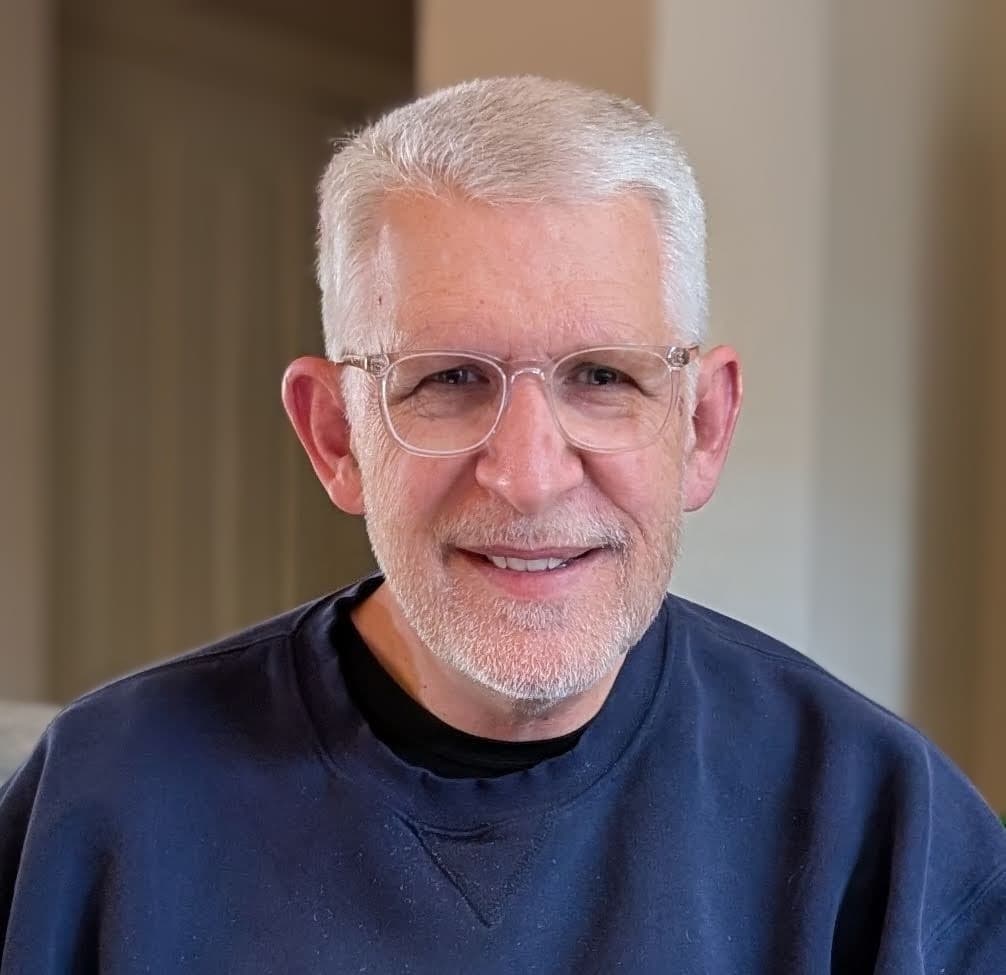
Teacher: Pastor Paul LeBoutillier Pastor Paul: Hi again, everybody, and welcome back to our Bible Q&A. This is where we tackle some of the questions that you write in and ask and do our best to answer. I'm Pastor Paul. I'm here with my wife, Sue, and we're going to tackle some more questions, and we've got some challenging ones this time. Sue: Yeah, we do.
I'll see how you do with them? Maybe I'll grade you. Pastor Paul: Okay, sounds good. Sue: All right. Denzil says, “Hi Pastor Paul and greetings to Sue.
In your online studies you highlight chapter outlines throughout your teachings. Where do you get the outline headings or do you create your own through your personal studies?” Pastor Paul: A lot of the outlines that I use, they're fairly obvious. Just from reading the text, you see the text, you read what's going on, and you make an outline. Outlining in the Bible is a great way of just studying yourself.
And I even encourage people to do that from time to time, not just for teaching, but for your own personal study. So I would encourage Denzil and others who are looking for ways to kind of increase their study of the Word of God, to go through and read a chapter and then make an outline. Maybe the first thing is, what's the overall theme of the chapter and then the specific headings under that? So sometimes I get them from just the Bible I'm reading. Sometimes the Bible itself will throw in chapter headings or break up the chapter with different headings.
Those can be helpful. I get them from commentaries, and then I create my own. So it kind of all of the above. Sue: All of the above. Now we have a series of questions that are coming in through the website when people write to questions@lifebibleministry.com.
Pastor Paul: Okay. Sue: So here's one that Chester wrote; “What are your thoughts on using AI for questions about the Bible? I have asked it for specific inquiries such as, “Is being passive-aggressive addressed in the Bible?” It will be fairly specific with Bible quotes from the Bible to respond to my questions. I do not belong to a church right now, and I have many questions that I have about my journey.”
Pastor Paul: I think that there's the issue of AI, there's the issue of even just using Google to ask Bible questions, because you can do that as well. And people like to kind of vilify AI, but it's really just a higher level of a computer generated understanding of what's already been out there. AI has to get its information from somewhere. So when you're just kind of throwing a question out into the cosmos, and you're looking for an answer back, you have to remember that it's going to pull those answers from a myriad of places, and they may not be reputable places. It may not be information that's correct.
So I think you have to be very careful. I think you need to if you're going to use AI, be sure you follow up, read the Bible passages that it feeds to you, make sure that you see a connection there, and then even pray about it. So what Chester is referring to in this particular question, his questions are fairly innocuous, and it's really not far removed from just really Googling it. What does the Bible say about passive aggressive or something like that? Because you can do that without AI and come up with a lot of the same responses.
But I do think you do need to be careful. There are a lot of sources on the Internet that you don't want to be tying into. You don't want to be getting your information from them, because they're whacked out, and their interpretations are crazy, and AI is going to grab from all of that, so I would be really careful. And the other thing , as I said, Chester's questions are fairly simple, but I know there are other people who are actually having conversations with AI of a theological nature, and I think that's where it really steps up the danger level when you're having a conversation and this service is influencing you. Just be careful that these things may not be correct, that it's feeding back to you.
Sue: I think about a parallel really within a church body or group of Christians, you might ask advice from someone, a variety of people and get really different answers based on their level of maturity and their experience. With people you have an opportunity to watch their life, and you can assess like that person, I'm going to ask him this question because I've been able to watch him. He's been married for 52 years, and you can observe with AI. Pastor Paul: None of that is going on. Sue: None of that exists.
You have no idea. You're just throwing out a question, as if you had asked 50 people the answer to this question, you can't tell if the Christian maturity behind it. Pastor Paul: When Jesus warned us about false prophets, he said, you'll know them by their fruit. How are you going to check the fruit of ChatGPT or some other AI service? You can't, and so be careful.
Sue: Be careful. Pastor Paul: Ultimately, go to the Word and pray about finding someone that will mentor you. For guys like Chester, who are new in the faith and just learning their way through, find someone you can talk to who is mature, knows their Bible and is a straight shooter. Sue: Good. Shannon says, “Good day, since we are now living in modern times, does the Bible still apply to today's world?
If some parts of the Bible do not apply to today's world, how can I apply the Bible to my life? How would I know if a scripture applies to today's world or not? Is there a method that I can use to discover this information?” Pastor Paul: It's not so much a method, it's a person. When we are reading God's Word, it is through the Holy Spirit that that Word is made understandable and ultimately applicable, even in today's world.
The thing about the Bible is that it is eminently reasonable and applicable and valid for our lives today. By the time this airs, it's going to be a while since I did. But just today, I taught through the book of Ruth, chapter 3, and we highlighted some really practical advice that was given by a woman named Naomi, probably a little more than 3000 years ago. And some people might kind of look at that and think, what can a woman from 3000 years ago give me in the way of advice that is in any way applicable for today? Again, that's where the Holy Spirit comes in to bring application.
And it is the Holy Spirit who speaks to our lives and makes us understand how the Word of God applies to the various situations and circumstances that we're going through today. There are many things that we deal with today that are not in the Bible. We've got some questions coming up here that are dealing with things that in Bible times they knew nothing about. So how do you begin to deal with those things? Why would you go to the Bible to give you information about topics that they knew nothing about back then, maybe medical procedures or things like that?
You might say, that's not something I can go to the Bible for because they didn't know about lung transplants, you know what I'm saying? Sue: Sure. Pastor Paul: So that's the assumption that many people come into it with. But when you take the Word of God and you add the Holy Spirit on top of that, and the Holy Spirit is very much of today, and knows how the Word of God applies to all those situations, he will lead you into all truth. That's the promise that Jesus made about the Holy Spirit in our lives, He will guide you into all truth, or everything that is true, as the Greek means.
When Shannon asks about this, it really is, the element of the Holy Spirit is the answer to pretty much all of her questions that are contained here. Sue: Very good. Our next question comes from the handle, @NotOkayDisciple. Pastor Paul: I like that. Sue: There's a story behind that.
Pastor Paul: That's honest, isn't it? Sue: “A great question was asked in my Bible study group last night, Pastor Paul. When we get to heaven, will God and Jesus and the Holy Spirit be separate entities … or will they be combined? Will God and Jesus be one or separate?”
Pastor Paul: Yes. How you like that for an answer? Here's the deal. You got to remember that the Father, Son and Holy Spirit have always been and always will be separate persons. They will never cease to be who and what they are.
So that's really the answer to the question. She also asked, will God and Jesus be one? They are one. Jesus said the Father and I are one and yet we know that they are separate persons. So he's not talking about one in essence.
He's talking about one in purpose, one in heart, in every other way, we are one, but there is a separation in their personhood. And of course, Jesus has taken on a physical body. He is a human being while also being God. And that will continue for eternity. He will continue to be a human being as well as God in human flesh.
So that's not going to change. So the Trinity, or the Godhead, as we say, will continue to be exactly as they are yesterday, today and forever. God says I the Lord, do not change. Now there's only one God, but the three persons will continue to be the three persons. Sue: Katie says, “Hi Pastor Paul and Sue.
My husband and I recently found out the only way we will be able to conceive is through IVF. We are struggling with this process because we do not want to “play God” or make the decision to “dispose” of any human life (fertilized embryos that are not deemed strong enough or more embryos fertilized than children I'm able to carry). Is there any moral/ethical way to pursue this method of bringing life without feeling like we are going against God?” Pastor Paul: Yeah, there sure is. But let me start by saying, talk about a situation that isn't covered in the Bible.
Sue: Exactly. Pastor Paul: IVF was not something. There was one way to have children in the Bible, and that was it. And if that didn't work, a woman was considered barren. But now we do.
We have all of these medical procedures, and we have things that work in some cases and in other cases do not. We've also met people, you and me, we've met people who were told that there was no way they were going to be able to conceive except through IVF, and then they ended up conceiving. We've got one couple in our church. Sue: Two. Pastor Paul: Two couples in our church, who were told the same thing.
Is that true? Sue: Yes. Pastor Paul: And then ended up conceiving naturally. So that's something to consider. Doctors aren't perfect.
They don't know it all. That's something else to think about. But the question is a valid question nonetheless. You can tell she's really struggling with the moral implications of some of these things, and there's really no shortcuts about this. Couples need to understand everything there is to know, or they can learn about IVF and about what is done with embryos that have been fertilized.
They need to know it. They need to understand it. And then finally, they need to pray it through, and they need to listen for the voice of God as to how to proceed. And I really believe that with all my heart, I'm not going to give a one answer fits all people. I'm going to say, know what you're dealing with, understand the medical and physiological implications of what is involved, pray about it, and then let the peace of God rule in your heart.
If God gives you peace about proceeding, then you've got a green light. If God doesn't give you peace, and it sounds like this person doesn't have peace. I mean, just from the way she's written this letter. There's not a peace. So my counsel to people is always, if you don't have that peace, don't proceed.
Don't go against your conscience. It is one thing the Apostle Paul talks about a lot in the New Testament. He says I always strive to have a clear conscience, and that means I don't go against what I have a sense might be wrong. I don't violate that. So I would encourage Katie to listen to the voice of God and do what you feel the Lord is allowing you to do.
And do no more than that. Sue: In some ways, it's really good when we face these sorts of challenges that bring us into a whole new orbit of seeking God. Pastor Paul: That's true. Sue: And it is good for us regardless of how we end up on it. Pastor Paul: It's uncomfortable.
Sue: It’s an exercise. It's uncomfortable because we really do want a pattern to follow, or script to follow. Pastor Paul: And we want answers to come easy, and many times they don't. In situations like this, answers are hard to come by, and it takes time. Here's a couple who's desiring to have children, and they've probably already waited a long time, and now here I am telling them to wait on the Lord for an answer, and that's probably about the last thing they want to hear because it's like, we want to get on with this and start having children and raise a family and so forth.
I get that, but you can't sidestep the very real and serious implications of these procedures and what they mean down the road. Sue: Good answer. So far, you're getting a high grade. Pastor Paul: Okay, good. Sue: Maxine says, “I'm in Exodus chapters 17-18 and I hear you say that God tests us.
Can you explain James 1:13, which says, Let no man say when he is tempted. I am tempted of God: for God cannot be tempted with evil, neither tempted he any man.” Pastor Paul: I think what Maxine is doing is she's confusing the difference between testing and tempting. And there is a very huge moral difference, and it's the moral element that really comes into play here to be tested. We all understand what tested is, because in school, we were given tests and it was to see how we would respond, or if we knew the information about what we were studying.
But tempting has a moral element to it, and it means, essentially to put a stumbling block in someone's path on a moral level so that they will fall and reach out for that thing and lay hold of it that God never does. God never puts a temptation in our path. And that's what James says. However, God does test us many times to see how we're going to respond to a given situation, and whether we're going to respond in faith and trust or whether we're going to take matters into our own hands and try to resolve the issue on our own, those are the things. God will test us along the way, but tempting never.
Sue: It's really not very different than a parent who might test or observe their child. Will they obey? Have they learn to obey? But what parent would ever tempt them to not obey? Like, I'm going to trick you here and tempt you to be not.
Pastor Paul: Like, if I've told my child never to touch that glowing circle on the stove top. But then I said to them, doesn't that look interesting? Sue: That’s like evil. Pastor Paul: Doesn't that look like fun to touch that? That's a temptation.
I'm luring them into a place. That's something God would never do and you're right, a parent would never do either. Sue: Last question is Donavan, who says, “Greetings Pastor, Is there a biblical way to identify the calling God has on our lives – or is that process more of a constant development in our walk with Christ?” Pastor Paul: It is a constant development in our walk. There's no doubt about that.
I like this question. This is a good one. Is there a biblical way to identify my calling? Yes, and it is with the body of Christ. One of the best ways to identify our calling is to have it recognized and confirmed in the body of Christ, and then to have the body of Christ say, go and do that.
And we see Paul talking to Timothy about how there was confirmation and even prophetic words spoken over him related to his spiritual gifting and his calling from the Lord. And Paul called or asked Timothy to call those things to remembrance, because it would be an encouragement to him in the ministry to say, I remember when the body of Christ said, you know what, you have the gift or whatever it might be. You're an evangelist. I see it. It's natural in you, or you're an encourager, or you are a good teacher.
You have that communication gifting. That's always a very encouraging thing, because along the way in ministry, there's always lots of opportunities to give up to get discouraged. I mean, the enemy loves to bring discouragement, and there's plenty of things just living in a fallen world that lead us that way. But when we have a confidence that God called me in this area of ministry, it really helps us to carry on when we would otherwise be tempted to give up. So I really believe that a very important element is the identification of a gifting by the body of Christ and that sort of thing and a confirmation of it.
We have too many people wandering around in Christian circles talking about their calling that they have identified on their own, and it has never been identified in the body of Christ or confirmed, and they just believe and we call that a self-proclaimed person, and that's not a good thing. God never meant to for us to be dismembered from the body of Christ. We were meant to be integrated as a people. Paul even uses the imagery of a physical body to describe the spiritual body of Christ, and he says you can't get along without a member. Just try.
If you're missing a hand or an arm or a foot, it just doesn't work very well. So the whole idea of us needing one another, is very easily seen in the Word of God, and this is one of the things we need… Sue: It’s very good. Pastor Paul: In the body of Christ is to see, recognize and confirm a person's calling. Sue: So healthy church bodies are really important, which means that pastors and elders and leaders are very important because they cultivate healthy church bodies.
Pastor Paul: They do. Sue: Which helps with things like this. Pastor Paul: They do very much. And I've always believed that ministry should come out of the life of the church. It should come out of the life of the church and then go out from there.
It should not come into the life of the church and say, hi, I have a gifting. Where can I serve? It comes out of the life of the church. It doesn't come out of your own head. Sue: Excellent.
That's it. Pastor Paul: That's it? Sue: Yeah. Pastor Paul: Those are our questions for this week, but we'll be back with more, because I'm sure you have more. There's kind of constant source of questions, and we love it.
We love getting your questions. Just send them by email to us; questions@lifebibleministry.com. You can also add a question right on the comment section of our YouTube channel. We do our best to find those. Sometimes we have to comb through them to find them and then pull them out.
But actually sending us an email is the best way, the most effective way. And when we get your questions, we'll do our best to answer them right here on this forum. So until we're back next week, have a good rest of your week. God bless you.