
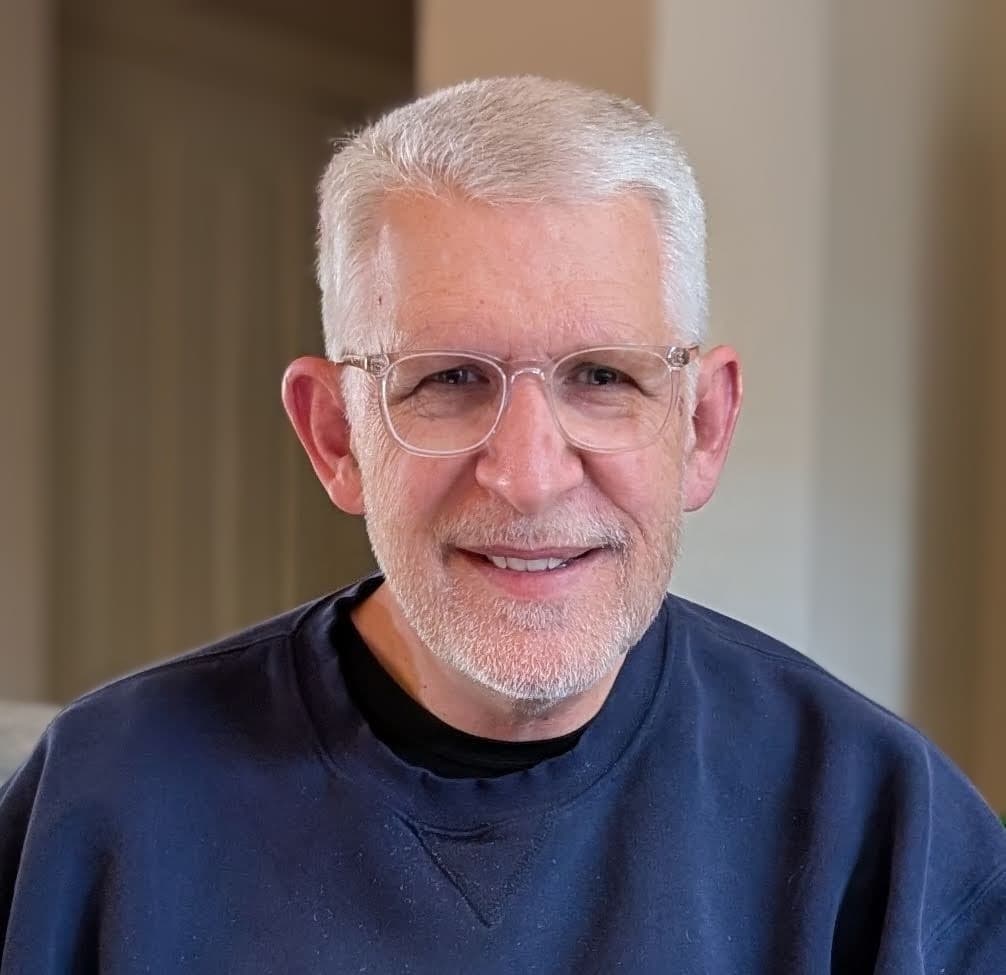
Teacher: Pastor Paul LeBoutillier Pastor Paul: Hi everybody, believe it or not, we're back with another Bible Q&A. I'm Pastor Paul. I'm here with my wife, Sue, and we're back to answer some more of your Bible questions. So, what do we have? Sue: Well, the first question we have is from someone who wrote on our video way back in November when we talked about all personal questions.
Pastor Paul: Oh, yeah. Sue: And Sam said, "If I knew about this, I would have asked about your decision to homeschool your kids. How did it come about? What was it like, Sue? What were some of the challenges you faced and what were the benefits?"
Pastor Paul: We can talk a little about this right now, but I don't want to talk much, and here's why. We're going to do—I decided—a special podcast which we are going to dedicate to just explaining our experience with homeschooling. Sue: Sure. Pastor Paul: Just to let everybody know, we have four kids, and we homeschooled all four of them all the way from kindergarten through graduation. And we do want to talk about the things we did, and honestly, I think the benefits were fantastic.
A lot of changes took place in the homeschooling realm during the years that we were homeschooling. Would you agree? Sue: Oh, for sure. Pastor Paul: I mean, as far as its popularity, its acceptability, and that sort of thing, because we started in about 1989, something like that. Anyway, we are going to talk about it, but we're going to do a whole podcast, and I'm going to let you talk about your, what 26 years of homeschooling our kids.
Sue: I think it's a really good topic because, as we have said before, there's very few topics that touch the heart of parents as much as how they're going to educate their kids. Pastor Paul: Oh, absolutely. Sue: Very complicated decisions. Pastor Paul: Yes, it is very complicated, and I think there's a lot of people. I know there's a lot of people—who, when talking about homeschooling, just become completely overwhelmed.
They believe in their hearts that they just can't do it. There's just no way they can do it. I'm excited about the upcoming podcast where we will talk about just homeschooling. Sue: Great. Alright.
We'll move on to Alma. She says, "I am writing to ask for your guidance on how I should go about reading the Bible from beginning to end, and how to stay consistent with this goal. I would greatly appreciate your guidance.” Pastor Paul: I get so many questions from people wanting to know what order to do the books of the Bible in as they decide to go through the whole Bible. And honestly, I don't really like to dictate.
I don't think it needs to be dictated necessarily. Sue: It's almost like asking, what should I prepare for dinner tonight? Pastor Paul: Yeah, what’s your taste? Sue: There's so many different tastes, there's so many different elements that go into that. Pastor Paul: Yeah, that's for sure.
Now, there are some books that would probably be good to go together just because there's a continuing story. I usually tell people, take the first five books of the Old Testament and link them together. And if you are going to break them up, don't put a whole lot of time between those books, because that is really largely a continuing story. Sue: But also, once you get to Joshua, Judges, Ruth, First and Second Samuel, First and Second Kings, the story continues. Pastor Paul: And that's another area.
Sue: The same thing can be said for when you get to the prophets. If you read through all of the major and minor prophets all at one time, that's a lot of weight. Pastor Paul: It is, and in that case the chronology is going to bounce around all over the place. And in my teachings, I explain where those chronologies begin and end. But, as far as the New Testament goes, I tell people, don't worry about really a book order.
Break up maybe the gospels. Start with Matthew, and then jump into Acts, Romans, maybe do First and Second Corinthians. Then come back and do Mark, and then pick up another three to four New Testament books. Then come back and do Luke, that sort of thing. Other than that, I don't think that doing things in Bible book order is as critical as people would like to think.
Sue: And a lot of Bible reading plans, a lot of very popular plans, and people seem to love this—have you read a little bit in the Old Testament, a little bit in the New Testament, and a Psalm or Proverb. For me, that's just not the way I want to immerse myself in one thing at a time. Read an entire book in the Old Testament, an entire book in the New Testament. But we're also different. Pastor Paul: We are.
Now, the second part of her question was, how can I be consistent in that sort of a thing? And that really gets into some personal sort of creating good habit stuff. And this differs from person to person to person based on just how consistent of an individual you are. I will say this: if you're not a very structured or disciplined person, I think that doing it with someone, or having someone that maybe you will report to as they're also studying through the Bible, and you know those meetings are going to be coming up, that's a good way to stay consistent if there's some accountability. Maybe ask someone that you know, hey, would you be willing to go through the Bible with me?
And we'll talk once a week and talk about how we did that week in our study, talk about what we learned. That can be a good way to stay on course. But that doesn't work for everybody. So, it really kind of depends on your own personal habits and styles. Sue: Trent says, "I have a question when it comes to prayer.
I heard from someone in my former church that by praying in your head and not voicing it, it means Satan can't hear you. Is this true? Doesn't Satan also hear our thoughts and play with our minds?" Pastor Paul: Well, he can certainly play with our minds, but there is nothing—not one word—in the Bible to suggest that Satan can read our thoughts. And is Satan even listening when we're praying?
If you're praying out loud—Jesus prayed out loud. It didn't seem to have a problem with it. A lot of other people in the Bible did as well. I struggle with the idea that we need to pray quietly in our own mind so as to keep the devil out of the conversation. I struggle with that, I got to be honest with you.
But if you feel sensitive about it, then by all means pray in the quiet of your own heart and mind. But, again, there's nothing in the Bible that would suggest Satan can read our thoughts at all. Now, he can certainly exploit what he knows to be common human thoughts, sure, but I don't think he knows our thoughts, sees our thoughts, or can hear our thoughts. He knows humanity. He knows human psychology, and he can use that against us.
Sue: That's why I love how Martin Luther and his son called him "our ancient foe." He's been at this for a long time. Pastor Paul: He's been doing this a long time. We haven't. Sue: The probabilities.
Also, when you are teaching and you mentioned that Satan is not omnipresent. Pastor Paul: Right. Sue: Don't ascribe an attribute of God to Satan. I've heard people go like, yeah… Pastor Paul: It’s kinds of like a light bulb goes up.
Sue: Because there's something that kind of maybe ebbs in a little bit to say, they're just the good and the bad, and they're equal. No, no, no, they're not. Pastor Paul: Absolutely. Sue: Isaac says, "If we sin in secret or keep repeating the same sin, do our prayers become less effective/does God stop hearing our prayers?" Pastor Paul: What I hear Isaac asking is what I hear a lot of people asking, and that is—if I can put words in his mouth for a moment, or maybe in the mouths of many others who've written—they write to me very often and say, Pastor Paul, there's an area of my life that I keep falling to, and I'm afraid that because of how many times in a given month, for example, that I fall to this sin, that God is going to stop loving me.
He's going to stop listening to me, and it's going to come a point where my prayers are just nothing. He's going to disconnect the communication. That's what I often hear. That's what I kind of hear going on here. And I want to say, listen, I don't care how many times you sin in a month or a week or a day.
You come to the Lord. You come to the Lord quickly, and don't let a callus grow over your conscience and your heart. You come to the Lord quickly, and you say, Lord, I know you're sick and tired of hearing from me about this, which is really not. Sue: No, we get sick and tired confessing. Pastor Paul: But you say, Lord, forgive me, cleanse me, and change me.
And I'm here to tell you, your relationship with the Lord will stay strong, and you don't need to worry about the enemy whispering in your ear, telling you you've sinned so much that he's about ready to dump you altogether. Sue: Good encouragement. I like that. Sue says, "In 1 Corinthians 6:3 Paul says, “Do you not know you will judge angels?” Never heard that before.
So, if we are to judge angels, when will that happen?" Pastor Paul: I can tell that Sue hasn't listened to my most recent 1 Corinthians study, because we just recently—just a few weeks ago—covered that. And I talked about that, and I talked about the fact that that really isn't something that we hear about elsewhere in the scripture. Paul talks about it. He's talking about it in relation to the people in Corinth going to human judges to settle their issues.
And he's saying, you know what, guys, we're going to judge angels one day, and so you don't have anybody around that's competent enough to take care of your issues? And that's the whole reason he made the statement. So, when is that going to happen? We assume that the judgment—when all things are kind of being judged in the final days—it'll probably go along around with the white throne judgment, we expect. We're not told specifically is the best short answer.
But we assume this is going to happen when the final judgment takes place. Sue: I just love it when people say, I've never heard that before. Pastor Paul: Yeah, I know. Sue: That’s great. Shelley said, "Could you clarify how David is a man after God's own heart?
That's a hard sell given that he had multiple wives, was an adulterer, and complicit in a murder plot." Pastor Paul: I know. So people hear that God says, David is a man after my own heart and then they read about him in the Bible, and they're like, hmm, really? He was a man? Because they interpret it as pure and sinless, or as maybe as good as you can get this side of heaven.
And that's not what that term means to say. When God says he's a man after my own heart, he's a man who sought after the heart of the Lord. He yearned for the heart of the Lord. He wrote about it in the Psalms. And his heart was also easily broken when the conviction of the Lord was laid upon him.
And I believe that's another element of why God called him a man after my own heart. Think about it—Saul, his predecessor, was a man who when convicted, made all kinds of excuses and just simply hardened his heart further. David didn't do that. When David was convicted of sin, he broke. He broke, and he said, you're right.
I'm guilty. And that's something God loves. God will not despise a broken and contrite heart. Sue: That’s awesome. Char says, "I have been doing a reading plan through the Bible with two of my teenage granddaughters and we are currently making our way through Exodus.
The devotional has explained that there is a direct correlation between the Tabernacle and the Garden of Eden - meaning that the Tabernacle was patterned after Eden. Also, in today's devotional instruction, they referred to Adam as being the first priest. I have never heard these teachings before and I'm not sure they are biblically sound." Pastor Paul: I'm really not sure they are either. That's the problem with devotionals, and I try to encourage people.
First of all, be careful. Be careful about consuming devotionals, because it's kind of like eating candy because devotionals are geared toward creating kind of a warm fuzzy or a connection point, a handle with every Bible passage that you come across. And sometimes it's really hard to do that. And sometimes devotionals have to reach to make that heart connection. And so, be careful.
Make sure if you're going to read a devotional, it's like dessert. But make sure you got your dinner before. Don't just eat dessert. And make sure the devotional is written from someone that you really respect, that sticks to the Word. And make sure that what you're reading you check.
That's why I appreciate here what this person is doing—Char. She's writing because she wants to check on this. I've never heard that the Tabernacle was a pattern of Eden. I've never heard that. I don't know where the writer of that devotional got that.
I'd love to find out. But honestly, I've never heard that. And then she says that Adam was referred to as the first priest. That could be applied to a lot of people in a lot of circumstances, because the function of a priest is to essentially intercede and to go before the Lord on someone else's behalf. And you could say that Adam did that in some respect, I suppose.
I'm not really sure where, but you could apply that word to a lot of different people. And I didn't read the devotional, so I really can't comment on it. I'll just give a more general response and say, check up on your devotionals and make sure they're telling you what's really in the Bible. And if they're not, find a different devotional, or get rid of your devotional altogether and just read the Bible. Study the Bible.
Read a good commentary. I mean, frankly, my teachings are kind of commentaries. And then there are other excellent commentaries as well, if that's something you want to do to give some greater clarity and insight. But be careful about devotionals. Sue: Right.
Melissa says, "I am a believing wife and mother to an unsaved husband and teenagers. I love them dearly and pray for them daily, but I often find myself caught in a whirlwind of fear and panic when I see how the world is gripping them. How do I cling to God's promises and break out of this fear cycle when I see my kids gravitating toward the world?" Pastor Paul: My heart goes out to women like Melissa. She says she has an unsaved husband; she's got teenagers who are being influenced by the world, she's praying for them, but she's struggling sometimes to hold on to faith.
And that's what it comes down to. So, Melissa, if you're listening, when you say that there are times when these whirlwinds of fear and panic come upon you—that is unbelief. That's doubt and we need to call it what it is. She needs to recognize it so that she can deal with it. And she needs to bring that to the Lord.
She needs to just tell the Lord. Lord, I'm praying for my family, I'm praying for my husband, for my kids, but what I see with my eyes has me in a tailspin sometimes. I need your grace and I need your strength to hold fast to faith and to trust, and to put my hope in you, that you have not abandoned my family regardless of what I see with my eyes. And we're told over and over in the Word that we're not to fix our eyes on what is seen, but what is unseen. Because, frankly, if you do fixate on what is seen, you're going to struggle with depression, doubt, and unbelief.
It really comes down to what I'm looking at in front of my eyes. Well, she can't help but see what she's seeing, so she's got to bring what she's seeing before the Lord. And she has to confess to him that this is causing a struggle in her heart. Listen, God already knows you're struggling. God already knows you're having a hard time.
He wants you to bring that burden to him. He wants you to offload it at his feet, and he wants you to receive a supernatural work from his hand of grace and faith to stand strong. And perhaps, as a woman and as a mother, you might have some additional exhortation. Sue: I think we are very relational as women. So I think to seek out, pray about first, but seek out a relationship where she can be praying together with someone else.
Either a mentor relationship or another peer, another mother who has an unsaved household, that you probably don't need 15 friends, you just need one that you really can know that someone else is safe to share these kinds of words with and to pray together. And there's groups all over the place, Moms in Prayer, Moms in Touch, things like that. I think to pray about that sort of thing, and then to focus on what you said. The important part is our own personal relationship, the disciplines that go along with that. There are disciplines that go along with keeping our faith strong.
They're all the normal Christian disciplines of being in the Word, if it is possible to be in church to be encouraged, or at least to be listening to good sound Bible teaching, and to pray. Pastor Paul: Absolutely. Great suggestions. Sue: Ken said, "I would like to ask about the “laying on of hands.” I realize there are times the Bible mentions it, but when others tell me of a struggle they're having in a spiritual sense or health issue, I ask if they would like prayer, and at times I lay my hands on them.
I am wondering if I may be overstepping my bounds regarding the laying on of hands, and what the verse in 1 Timothy 5:22 means." Pastor Paul: If you're concerned about whether you're overstepping, then just ask the person, do you mind if I just lay my hand on you while I pray? And if they say, I'd rather you not, then don't. Because there's nothing supernatural about that particularly. It is a biblical thing, and it's good, and I lay hands on people usually.
But if you're concerned about overstepping, then just ask the person. Now, he goes on to ask what the passage in 1 Timothy 5:22 means, if anything related to this. And 1 Timothy 5:22 is where Paul is exhorting Timothy not to lay hands too quickly. But he's talking about ordaining people for service. And what he's saying is, don't raise up someone too fast, because that can be a problem if they're not really mature enough for the rigors of leadership.
So, 1 Timothy 5:22 really doesn't apply. Sue: So, are you saying in that passage the laying on of hands is almost like a conveying of authority, imparting an authority from ministry? Pastor Paul: In 1 Timothy 5:22 it is, yes. It is really kind of a euphemism for ordaining and extending authority to people. So just ask the people you're praying for.
Sue: Sounds good. That's it. That’s the end for today. Pastor Paul: Oh, that's the last question. Wow, that went pretty fast.
Sue: It did. Pastor Paul: Hey, be looking forward to the podcast that we talked about at the outset of this, where we're going to talk about homeschooling. And we're really just going to share homeschooling from the perspective of here's what we did, and here's how our kids responded, and here's how they turned out. And we're going to let you kind of make your own decisions. But we're going to be talking about that very soon.
So, stay tuned. Until we see you again, God bless you. Have a good week, and we'll hopefully talk soon. Bye-bye.