
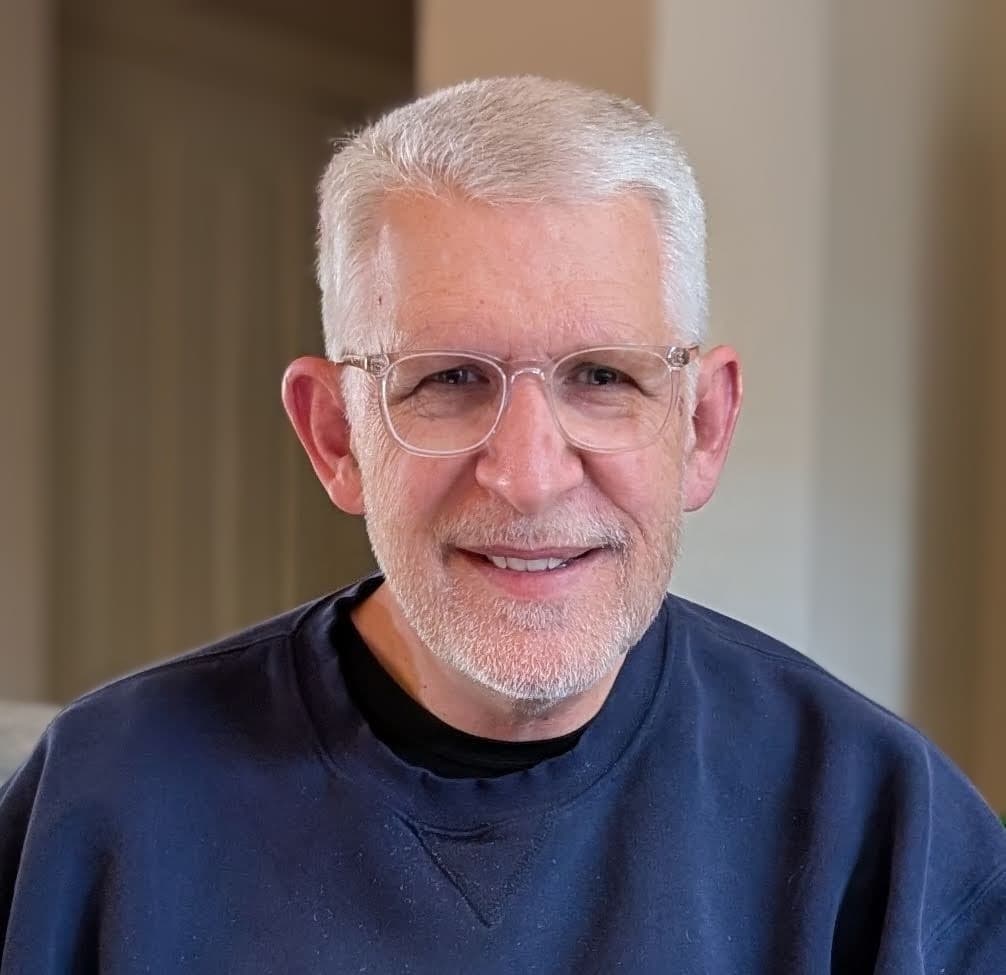
Teacher: Pastor Paul LeBoutillier Pastor Paul: Hello everyone, and welcome back to our Bible Q&A. We're doing this weekly now and covering the questions that you guys are sending in to us through a myriad of means. Sue: Right. They're always good questions. Pastor Paul: They really are, and there's some good ones here today.
Sue: We'll start off with a question from Bailey, she says, “How do you find the balance between trusting God for the future and also being wise, doing your part, and preparing?” Pastor Paul: That is the challenge, isn't it? I mean, this is a really common question. People have been asking this for a long, long time. And I think there definitely is a balance, but that balance probably needs to be tipped, I think more toward trusting the Lord than trusting ourselves or making our own plans.
When you think about how many passages there are in the Bible that talk about not only trusting God, but not trusting yourself. I'll just read a couple to you well known Proverbs 3:5-7 (ESV) and following “Trust in the LORD with all of your heart” and then this part, “Do not lean on your own understanding. In all your ways acknowledge him”. And that means to acknowledge the presence, wisdom and direction of the Lord in whatever thing, issue, plan, and direction you're working on. And it says, “He will make straight your paths.”
But then we often don't tag on the next verse in that same passage, which says “Be not wise in your own eyes”. And so there are so many passages that speak about our need to trust the Lord and not trust ourselves. Proverbs 16:3 (ESV) says, “Commit your work to the LORD, and your plans will be established”. So you can kind of see what's going on here. It's more than how you go about making your plans.
It's the hard attitude behind it. Because to submit your work to the Lord and to in all your ways acknowledge him, that's a hard attitude. That's a humility that says, God, you know best, and I'm not going to exalt my intelligence or my wisdom above you and your plan for my life. In the New Testament, James talks about this and he kind of reminds believers saying for those of you that are thinking to yourself, you know that today or tomorrow we're going to go over there, we're going to move and we're going to set up business there and we'll make money. And James goes on to say, you don't even know what your life is.
He reminds you that you're a mist that appears for a while and then vanishes. And then he says instead you ought to say, if the Lord wills. And again, that all comes down to attitude. It all comes down to where the heart is at. Am I choosing to exalt and trust the Lord above my own understanding?
Sue: And her question began with the word how do you do that? And I think it's just like anything else practice. Every time that you tune into the voice of the Lord, more you listen, more you practice it, it becomes your habit of life. Pastor Paul: Exactly. And what better way to practice is then when an issue comes up and you need to make a decision.
And so you learn to pray about it and you learn to seek direction and you learn to figure out how to get a confirmation on the Lord's direction. That's another big question. How can I know that this is the direction of the Lord? Well, the Bible also says in Colossians 3:15 (ESV), “Let the peace of Christ rule in your heart.” And that word rule is really very similar to like a referee at an athletic game who calls it as he sees it.
And we're to let peace because God is a God of peace. He gives us a sense of peace when we're walking in his will. Even if it's a difficult walk. So we need to learn to listen and sense that peace. Sue: Very good.
All right. Darla asks, “What happens after death for Christians? I am a Christian and I still don't have this straight in my mind.” Pastor Paul: And the reason people don't have it straight in their mind is because there's so many teachers and Bible study leaders that misquote the Word of God and don't really take it as a whole. We have to remember the Apostle Paul said in 2 Corinthians that “We would rather be away from the body and present with the Lord.”
And we have taken that for many centuries to mean that when we die in Christ, we immediately go to be with the Lord. But there are other passages, we have to remember the thief on the cross. Jesus didn't say, this day I'm going to drop you off somewhere and I'll pick you up later when the resurrection happens. Or he said, this day you'll be with me in paradise. So there was this immediacy to the promise that goes along with that.
When believers die, we go immediately into the presence of the Lord. Our bodies await the resurrection, when they will be renewed, remade, and be given kind of an eternal capability to exist. And then we will then be merged with those new resurrection bodies. But the essence of who you are immediately goes into the presence of the Lord. Sue: It's a comfort.
It's a good answer. Here's a question that came from your teaching on Matthew 26. And they said, “Exodus 12:14 God tells us to keep Passover as a memorial day throughout your generations…why aren't most churches teaching this and why are there not more people celebrating Passover and abandoning Easter?” Pastor Paul: Well the reason is, is because God did not tell us to keep the Passover as a memorial. He told Israel to keep the Passover as a memorial.
If you look at Exodus 12:14 (ESV), the reference that this person cited, it says, “This day shall be for you”. And that was spoken through Moses to the people of Israel. “This day shall be for you a memorial day, and you shall keep it”. Who is the you? It's Israel.
It's not the church. We have to remember the church is not in view in the Old Testament, and that doesn't mean the Old Testament isn't applicable to us. There are wonderful insights and moral guidelines that we get from the Old Testament, but we have to remember that as the body of Christ, we have Jesus as the fulfillment of the Passover, and so we keep the Passover in a different way. Here's what Paul said. I think this is fascinating.
He says, “For Christ, our Passover lamb, has been sacrificed.” So then he goes on to say, “Let us therefore celebrate the festival.” And then he tells us how “Not with the old leaven”, which is a picture of sin, “The leaven of malice and evil, but with the unleavened bread of sincerity and truth.” In other words, Christians celebrate Passover every day of the year by living the new life that Christ has enabled us to live. Because that's the essence of Passover, so that's the answer.
Now, the second part of this question was, why don't we abandoned Easter? There's nothing in the word that tells us to celebrate the resurrection of Jesus. I can't imagine that it's a bad thing. Jesus was raised. We know when he was raised.
We know when he was raised that Sunday after Passover and what's wrong with celebrating it? Now somebody might say, all this Easter bunny and eggs, you're right. You know what, I'll give you that. That's not biblical. I don't think it's necessarily harmful, but it's not biblical.
It could be harmful if it covers up the meaning of the resurrection. When we celebrate the resurrection, we should celebrate the resurrection and the fact that Jesus was raised from the dead and that was God's stamp of approval on his sacrifice on the cross. That's worth celebrating. And that is a New Testament reality is the resurrection of Jesus Christ, and I don't see any problem with celebrating it. Sue: All right.
That's great. Our next question comes from Sonia who asks “Are we supposed to avoid unbelievers according to Psalm 139:19-22?” Pastor Paul: That portion of Psalm 139 is what we call an imprecatory Psalm. I talk about this and actually explain it in my study through the Psalms. It's one of many imprecatory Psalms.
And what that means is it's a Psalm that includes a prayer to God to bring judgment upon the evil of the world, upon those who care nothing for the Lord and who are just awaiting punishment. It's basically a prayer that calls down judgment. So they're challenging sometimes to study in light of the New Testament reality that we've been called to love our enemies, pray for those who do evil and so forth. Anyway, let's take a look at Psalm 139:19-22 (ESV), the verses that she's referring to it, it reads like this “Oh that you would slay the wicked, O God!” You can hear that in that, can't you?
“O men of blood depart from me! They speak against you with malicious intent; your enemies take your name in vain. Do I not hate those who hate you, O LORD? And do I not loathe those who rise up against you? I hate them with complete hatred; I count them my enemies.”
There you go. Sue: That's pretty rough. Pastor Paul: Yeah, it's pretty rough. And the psalmists were always very passionate about taking up the cause of the Lord. Now to read that verse though, and to say, are we supposed to avoid unbelievers?
Honestly, there are some unbelievers that we should avoid. When you go back to the beginning of the Psalms and you start with the very first verse of the Psalms, it starts off saying, “Blessed is the man who walks not in the counsel of the wicked.” In other words, who avoids the counsel or the words, the advice of the wicked, “Nor stands in the way of sinners, nor sits in the seat of scoffers;” so does the Bible tell us to avoid some unbelievers? Yes. Sue: Well, I think about too, this morning I was in the Proverbs and a lot of warnings about being part of the companion of fools.
Pastor Paul: Exactly. So here's the real question. How should believers respond to unbelievers in general? That's really kind of the issue. Well, interestingly enough, this question came up in the Corinthian church, and it was a situation where Paul had written to the believers in Corinth and he told them to not associate with people who are sexually immoral, that was everybody.
I mean, Corinth was known as a very sexually immoral place. So they heard this from the Apostle Paul and they were like, I guess he's telling us we shouldn't interact with unbelievers at all. So they wrote him asking about that and he came back and he said this in 1 Corinthians 5:9-11 (ESV) and following he says, “I wrote to you in my letter not to associate with sexually immoral people–not at all meaning the sexually immoral of the world, or the greedy and swindlers, or idolaters, since then you would need to go out of the world.” In other words, you would literally have to get on a spaceship and go live on another planet to avoid sexually immoral people or sinful people, let's just say unbelievers in the world. So what Paul originally wrote to the church was or his meaning was don't have anything to do with those who confess Christ, but who are living a sexually immoral lifestyle.
He said don't even eat with them. So he was doing this obviously for their protection and so forth. So our attitude then toward unbelievers, I believe, should be the same as God's attitude toward unbelievers. And what do we learn in the Bible about God's attitude toward unbelievers? Well, we learn that God so loved the world that he gave his only Son.
We also learn in in Peter's second letter that God is not wishing that any should perish. So that's God's heart toward unbelievers. He loves them and he does not wish them to perish. So I think that should be our attitude. Now, we have to be careful how we go about living out that attitude.
We have to protect ourselves. We can't dive into their lifestyle in order to reach them for Christ. And yet by the same token, we have to maintain some kind of interchange with unbelievers where we can share and talk with them and pray with them if they allow us to do that, and ultimately give them an opportunity to respond to the Gospel. So I think that's the answer to the question. Sue: Wonderful.
Here's a YouTube question that says, “Hi Pastor Paul. What do people mean when they say the sacraments are a means of grace?” Pastor Paul: Well, that's a Roman Catholic term, and it is used by Roman Catholics because they see the sacraments differently than I would say biblical Christianity sees the sacraments. Sue: First of all, what are the sacraments? Pastor Paul: Well, we're talking about community.
Sue: Because that's a churchy word. Pastor Paul: Communion, water baptism, that sort of thing. When I say we, I have to just say biblical Christians, we believe that the sacraments are a picture, not the reality. So when we look at water baptism, we don't look at it as a means of salvation. We look at it as a picture of the reality, which is the work that Jesus did on the cross.
Same with communion. We don't look at the bread or the cup as a means of saving us. We see that what Jesus did on the cross is the reality. Communion is the picture, and we were given communion as a memorial in remembrance, not as an effective means of grace, which is the way the Roman Catholic church kind of defines those things. So that's the difference.
Roman Catholicism sees communion and water baptism and things like that as having an actual effect on the individual whereas we see him as pictures. Sue: All right. This next question is from a YouTube comment that says, “Are you saying that a true Bible believing Christian cannot be possessed by demonic spirit but that someone who merely confesses Christ but who shows no change of behavior can be possessed?” Pastor Paul: No, I'm not saying that at all. First of all, when somebody confesses Christ but shows, as this person says, no change of behavior that we can see, we don't know whether or not that person truly got saved and they're just sputtering as they kind of start their walk with the Lord.
A lot of people that I have observed over the years struggle to get traction in their walk with the Lord. They come to Christ and there's a genuine work of the Holy Spirit in their heart to believe by faith in what Jesus did on the cross. But they have gathered in their flesh many addictive and life controlling behaviors that just dog them on their walk with the Lord to the point where they struggle to really let those things go. And we see from the outside. So we're looking from the outside and we're looking at that person.
We're thinking, I don't know if they really came to the Lord because they're still smoking, they're still doing this, they're still doing that. They still let those zinger, obscene words fly from time to time and, and we're all kind of thinking, I don't know. God knows. So I would never say that a Bible believing Christian and by the way, I wouldn't even refer to them as a Bible believing Christian. I would simply call them a true born again believer.
So a true born again believer cannot be possessed by a demonic spirit. Now, there can be people who would say to you, if you ask them, are you a Christian? They would say, “Yes, I am”, but they're not because they haven't put their faith in what Jesus did on the cross. Can that person be demonically possessed? Yes.
There's still a possibility for them until the Holy Spirit finally comes in and takes residence. The enemy can still lay hold of that vessel. Once the Holy Spirit is there, he's not going to share rent with a demonic spirit. So that's the challenging part about this question, is whether or not somebody who confessed Christ but maybe isn't showing it completely yet, whether or not they're a believer. I think there have been a lot of people over the years who have confessed Christ but never truly put their faith in his finished work, who then got in trouble with demonic activity, got delivered from that demonic activity.
And now they go around telling people that Christians can be demonically possessed because they say, it happened to me. I was a Christian and I had a demon and then it had to get cast out of me. And I come back and say, I don't think so and here's why. There is not one single solitary reference in the Bible of a believer having a demonic spirit, there is not one single solitary comment by any of the New Testament writers saying, well, maybe it's a demon. What they always say is you need to get with God, you need to repent and stop doing this.
They don't ever suggest that there could be a demon behind it when they're talking to believers. Never once. So there you go. It can be a slippery slope, but we do have to be careful looking at people and saying I don't think they're saved. Sue: Very, very impossible to make that call.
Pastor Paul: Yeah, it really is. Sue: All right. And our final question today is another YouTube question, “I've heard people say that since God never changes and is the same God of the Old Testament and the New Testament, therefore we should try to live according to the Law of Moses, remembering that not one jot or title shall pass away. What do you think?” Pastor Paul: Well, I think that those kind of statements are filled with ignorance and legalistic tendencies.
So there you go. I really do. I honestly do. And here's what's worse. When people say things like that, they say, he's the God of the Old Testament and the God of the new so we need to keep and follow the Law of Moses.
You run into all kinds of problems because, first of all, you miss the entire point of the new covenant. The new covenant is something that God spoke about prophetically even in the Old Testament, in the book of Jeremiah. The passage goes like this, “Behold, the days are coming, declares the LORD, when I will make a new covenant with the House of Israel and the House of Judah, not like the covenant that I made with their fathers on the day when I took them by the hand to bring them out of the land of Egypt, my covenant that they broke, though I was their husband, declares the LORD”. So he's saying right there, it's not going to be like the Mosaic covenant or the law that came through Moses. It's not going to be like that.
Let's keep reading, “For this is the covenant that I will make with the House of Israel after those days, declares the LORD: I will put my law within them, and I will write it on their hearts. And I will be their God, and they shall be my people”. Now I love that passage. You know I love it. I quoted a lot.
But to say when you understand the idea of the new covenant that God has taken the law. I mean, he's the law giver and he has now come to reside in our hearts to now tell people, you got to keep the Law of Moses. It is that denies the reality of the indwelling presence of the Holy Spirit in the life of a believer. It literally throws it out and says, no, we're going to go back to this written external law that was written in stone. Because somehow they're saying that's better or something.
And I think to myself, what in the world? What is better to look at an external law on stone tablets and say I'm going to follow that, or to follow the leading of the law giver who is now in my heart? Sue: I've heard people say to you and ask, so are you saying that I don't need to keep the 10 commandments? And I think when they say that, don't you think the law giver in your heart is going to lead you exactly in that direction to be keeping all of that, it's just a matter, it's a heart issue now. Pastor Paul: That's exactly right.
And it also is a denial of what the Apostle Paul wrote in Romans chapter 6:14 (ESV) when he said “Sin will have no dominion over you, since you are not under law but under grace”. And he tried to explain to the believers in Rome, you're not under the law. I think there's a comfort level with some people to be under a list of very explicit rules that are just right there. And those are the rules and I'm going to keep them. I will say this, it's more difficult to follow the Spirit because I have to listen for his voice.
You can only fit so much information on a couple of stone tablets. So what that means is the law as it was written and given to Israel, it can't cover every possible question or issue that might come up in your life. We've come up with things in our culture that they couldn't even dream of back in biblical times. So we have things that modern medicine has produced. Sue: Well, as evidenced by the fact that we gather plenty of questions to even talk about these different things, we have so many new issues related to that.
Pastor Paul: So the question is, how do you get answers for those things just based on the law? Well, you can't because the law is finite, but the law giver is infinite and his ability to respond to you spiritually, His Holy Spirit to your Spirit is infinite. And He can tell you anything. He can answer any question that you might have. And so many Christians fail to understand this.
Like you said, they often will hear about this and they'll say, so we're supposed to reject the law. Do you know that's exactly what the Apostle Paul got accused of? So you're saying that people shouldn't keep the Law of Moses? No, I'm saying the law giver is now living inside of us by faith and that when we follow the leading of the Spirit, we are following the leading of the Lord and people, that's an upgrade. We understand that term today.
Our computers get upgraded, they get faster, they get better and they can do more. Well, listen, the Holy Spirit living in you is an upgrade to the Law of Moses. There's nothing wrong with the Law of Moses. A person does need to discern the differences in the Law of Moses between moral law and ceremonial law. We know that Jesus fulfilled the ceremonial aspects of the law and when we read things in the 10 commandments like, keep the Sabbath and we know and understand that Jesus is the fulfillment of the Sabbath and we're resting in him for our salvation.
And there are other things as well, but we understand that morally what the law projects morally, it's perfect. And Paul explains that in the New Testament. There's nothing wrong with the law. What's wrong is with us because we just can't keep it. But now we have an upgrade to the law and He's living, He's living inside of believers and He's speaking if we would listen.
If we would follow the leading of the Lord. And that's the message when you read through the letters of Paul, Peter, John, the other New Testament authors, it is follow the leading of the Spirit, be led by the Spirit. They don't say be led by the law. They say be led by the law giver. And that is the Holy Spirit living in believers like you and me.
Sue: That's awesome. So however your week is going this week, there is a happy thought. You have been given an upgrade. Your body might be falling apart, but when you became born again, you have been upgraded. So we're going to walk in that.
Pastor Paul: Amen! Exactly. Well, that's going to take it to the end for this episode, and we're going to be back next week with some more of your questions. If you have something burning on your heart, just send a note to questions@lifebibleministry.com and we'll do our best to get to your question just as soon as we can. Until then, God bless you.
Have a good rest of your day.