
Bible Q&A • Episode 72
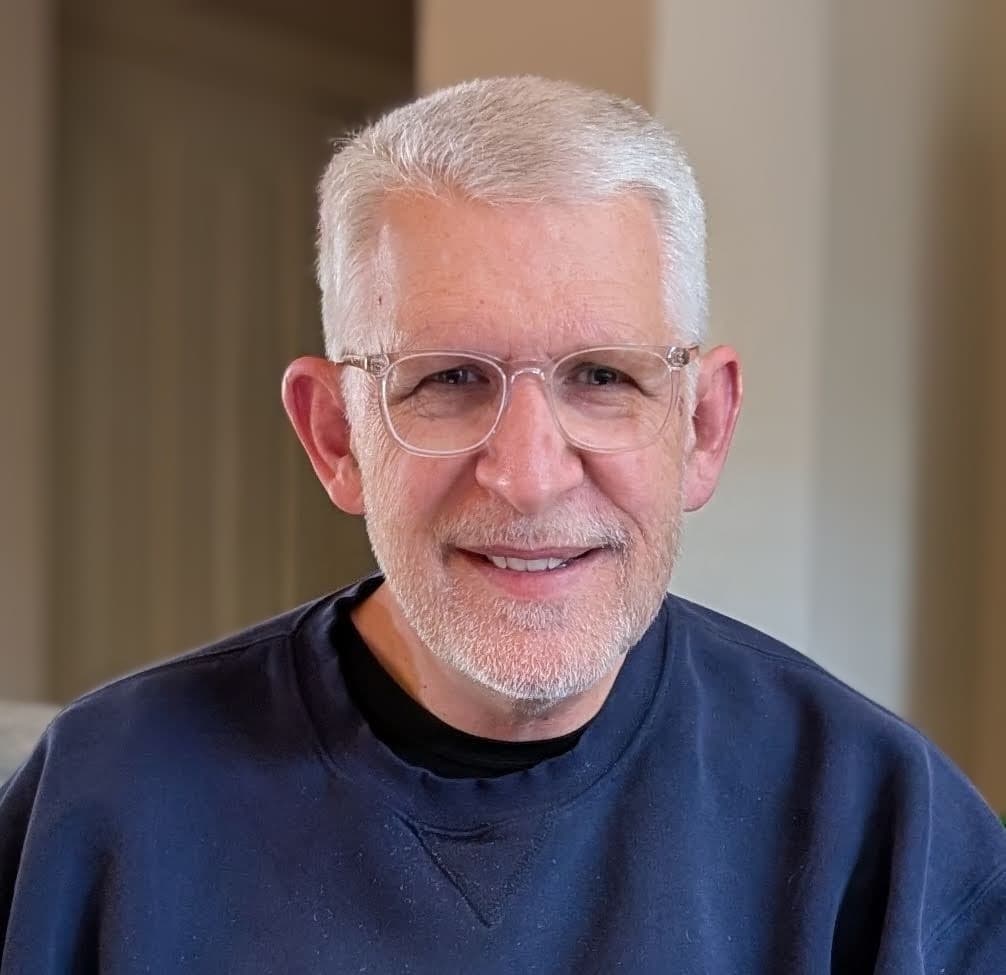
It is absolutely ridiculous, as if God is saying, you got to say my name and say it correctly or I'm not going to listen to you. You know, there's nothing in the Bible. There's nothing in the Bible that suggests that a specific interpretation or pronunciation of the Lord's name is required. Hello everyone, we are back with some more of your questions. This is Bible Q&A time. I'm Pastor Paul and I'm here with my wife Sue, and this is where we're going to tackle the questions that you've sent in over the course of the last week or so.
And the first one comes from Michelle.
Okay,
in 1 John 4:18 it says, there is no fear in love, but perfect love drives out fear because fear has to do with punishment. The one who fears is not made perfect in love. Does that mean when we fear, we don't have God or perfect love, even though we have Christ and show love?
Not really, because what we're reading there in John's words are that he's talking about the fear of judgment. He's not really talking about all fear. It doesn't mean, you know, if I'm afraid to go to the dentist, for example, or if I'm afraid to get into an airplane, that mean I don't have the love of God, or I don't have God in me, or I haven't been perfected in love? The context here is judgment versus salvation. When a person comes to know Christ as their Savior, the Holy Spirit begins to communicate with that person that they are a child of God, and that brings an end to the idea that when I stand before God, I'm going to be judged. You know, because I realize Jesus has been judged in my place. And so that fear of judgment evaporates. Now, having said that, let me just say that there are Christians out there who've been mistaught. They've been told that you need to come to Jesus to be forgiven of your sins and to walk with him and to be a child of God, but you may still stand in judgment. You may still— and so they may have an unrealistic fear because they've been taught badly.
Sure.
Um, the fact of the matter is we, we will not be judged for our sin because Jesus already was. And when you begin to really get a hold of that and you believe it by faith, then you don't have any fear about being with the Lord. You know, it's interesting, I recently taught the last chapter of Paul's letter, second letter to Timothy, when I was doing a pastor's retreat. And you know, it's interesting, as Paul talked about going to be with the Lord, um, there was not one word of fear or concern about judgment. He simply said, I'm going to receive the crown, the crown of life. And that's what he talked about when he considered his, his soon-coming departure to be with the Lord. He didn't say one single thing about judgment. Because he knew that Jesus had already been judged in his place. Yeah.
Okay, good. That should set her at ease.
I hope so.
Uh, Joe says, I have a question about ministry, as I've had multiple people from our church and our Bible study group tell me recently, after sharing at church and leading Bible study, that I'm gifted with speaking about the Word. I have a desire to do God's work, and I don't know how to pursue this, or if I should just wait and see what happens in the future. I'm in my young 30s, married with kids. I really want to do ministry, but also don't want to run ahead of God. How do I find my God-given calling? Any biblical advice is really appreciated. Thank you, and God bless.
Well, it's tough to give biblical advice because, you know, the Bible doesn't really speak on these issues, um, for, for someone who senses they may have a gifting from the Lord to teach the Word of God. Um, you know, I, I usually encourage people like this to just get busy teaching where you can. Just, just do what you can, whatever. Go to your pastor and say, are there any Bible studies that you need someone to lead? And are there areas where I can, I can just spend time teaching the Bible, teaching through God's Word? I would encourage this person just to do that and let the Lord lead and guide as he goes. But just be faithful to do what you can in the season of life that you're in. You know, he says he's a fairly young man, he's got young kids; there may be some things he can and can't do as it relates to ministry at this time or stage in his life, but what he can do, he should do, and just be faithful to do it. And the experience is going to be great, just even if you're teaching a home Bible study group.
Right.
Um, with people sitting around in a living room like this, and you're just sharing the Word, that is all just— you're never going to, you're never going to regret just spending time doing what you can do teaching the Word of God.
Yeah.
So even if it's like, you know, we started off teaching young kids.
Yeah.
Well, junior high and senior high.
Right.
Um, and that was a good place to kind of cut our teeth, or for me particularly, you know, since I was doing the teaching. at the time. Um, it was, it was great experience. And then when I moved on to starting to teach adults, I had that time, uh, spent going through the Word, and, and it was really beneficial.
Yeah, good. Remy says, is it possible that our convictions can change over time so we are able to do things or go places that previously we felt convicted about?
Absolutely, absolutely. There are a lot of gray areas in the Bible that people many times shy away from because they were told Christians don't do this. And, and so they've been just kind of following the rules, you know. But then they, they learn in the Word of God, well, it doesn't say that. Right. You know, like for example, somebody might have been raised in a home where their parents said, you know, going to a theater is a sin. Don't ever step foot into a theater. And then they get older, they, they become an adult, they, they become established and mature in their faith, and they realize that, you know, there are some movies out there from time to time, although they're getting rare, but there are some movies that aren't that bad to watch, and in fact, some of them are even good. And so, they realize, okay, whatever convictions I had when I was younger, I've changed those because— not because I'm walking in disobedience, but because I was kind of given a rule that was just carte blanche for all times, and I realize now that that really isn't you know, an issue. I have a greater discernment now. I have a greater ability to look at things and say, okay, should I be watching that? And if there are some that are okay to watch, I'm going to do it and I'm going to be okay with it. And that's just one example.
Sure.
There could be many other examples of things that people had a previous conviction about, but then they, they changed because they matured in their relationship with God. Yeah.
All right. Well, Tristan says, I'm wondering if getting a vasectomy is a sin. I've seen some Catholic priests say that it is. I'm already a dad of 2 with a 3rd on the way, but my wife and I are done having kids, and I'm wondering if, as a Christian, this is right or not. Thank you for your answer.
You know, obviously the Bible doesn't address surgical procedures that weren't even in existence at the time. Uh, if you talk to a Catholic priest or hear from them, they're go— they're going to be down on pretty much any kind of birth control at all. So, the question really comes down to, is it appropriate or is it acceptable for a husband and a wife to make a determination to say, we have the number of children that we want now, and we would rather not have any more; we've got our hands full, or whatever, and this is our decision? I believe it is, and one of the reasons I do is because In the book of— in the Gospel of John, we learn that he speaks of not being born of a husband's will. And the context is not talking about family planning.
Right.
Please understand. And I'm not trying to take it out of context for that purpose, because the context is how we are born again through the Spirit, not by the will of man, not by blood, but, you know, we're born of God. Well, it says, not by the will of man, or as the NIV says, not of a husband's decision, which tells us that even in biblical times, husbands made decisions based on how many kids we want, and we've decided to engage in whatever, some form of family planning, uh, to limit the number of kids that we have. I don't think that's wrong. I really don't. I, I don't see anything in the Bible that says you've just got to have as many kids as you're capable of having, and anything other than that is a sin. I don't see that,
right?
So, I believe family planning is a decision that God leaves up to a husband and a wife.
Yeah, yeah, good. Me too.
Yeah, yeah, good thing, huh? Yeah, good thing. And you know, the other, the other side of the coin is also true. If somebody comes to me and says, We've made a decision to have as many children as we are capable of having during the time when we can have children. Great!
That's your conviction.
That's your conviction. That's your decision. God bless you. I'm not going to go, what?
Yeah,
you know, that's— but by the same token, we have to give the same grace to a family that says, we've had 3 or 4, we're done.
Yeah, yeah, absolutely. Margaret says, what are your thoughts on the Gap Theory?
The Gap Theory is a clothing store. I'm just kidding. The Gap Theory is a theory that, um, there is a time gap between God's original creation of the world and then some kind of a, um, a flood of water, not Noah's flood, but a different flood. And this all happens within the— in the context of the first few verses of the book of Genesis. And there are people who I know and respect who have at least given credence to the idea of the gap theory. I don't accept it. I don't believe in it. I don't teach it.
Right.
Because I don't think it's— I don't— I think it's begging the issue. And it's called a gap theory for a good reason. It's, it's a theory.
Sure.
But I think it's a theory that causes some people to become a little more comfortable with the idea that maybe the Earth is billions of years old, and that explains it, that there's this other whole existence that took place between when God created the heavens and the Earth and when he actually started— made man. Sure. You know, that there— so yeah, I don't, I don't, um, endorse it. I don't subscribe to it.
Yeah. Denzel says, I have a question related to Ezekiel 34:23-24.
Okay.
Does this scripture mean that King David comes back to rule again in the future, or is this relating to Jesus Christ only ruling over Israel when he comes back? I thoroughly enjoy these YouTube videos. Thank you.
Well, anyone who has watched my teaching on that passage in Ezekiel knows that I teach and I believe that David is going to rule over Jerusalem.
Yeah.
He is going to be the king over Jerusalem in the millennial kingdom. And when we say David is going to come back, um, you know, we have to understand that there's a resurrection of the dead. And so we're all coming back in that sense, you know. Yeah, right. Yeah, we're all going to be raised, um, and we're going to live in the millennial kingdom with our new incorruptible bodies. And David is going to be given rulership That's pretty clear in the Bible. Now, there, there are Bible teachers who believe that when it says David is going to rule, they think it means the Son of David referring to Jesus. I think it's literal. I believe David is going to rule over Jerusalem during the Millennial Kingdom. Jesus is going to rule over the world, not just Jerusalem. So yeah, I believe David is going to rule during the Millennial Kingdom.
Good.
Yeah.
Michelle asks, why do churches buy and sell in the church? For example, coffee, books, clothing, etc., in light of Matthew 21:12-13 where Jesus turned over the tables of those buying and selling?
Yeah, the reason they do is because it's a completely different issue. It's not the same thing. If you read in the Gospels and really understand what was going on, it wasn't, it wasn't just buying and selling. That was bad enough, but what they were doing is they were buying and selling in a place that was reserved for prayer for Gentile believers, or as they called them, God-fearers. Okay, the Gentiles could not get into the temple area. They could only come as far as the outer courts of the temple. And there were Gentiles at that time, even in the time of Jesus, who believed in the one true God of Israel. Right. And they're— the only place they could come and pray and meet with God around the temple was in the outer courts of the temple, and the Jews completely ignored that and set up their buying and selling. Not only was it buying and selling, it was corrupt buying and selling.
Not only that, it was loud and smelly buying. It
was loud and smelly, and, and, and yes, there was—
It was a cacophony of just everything taking up that space.
It was, it was actually a way for the, the, the the priests to make money. And it was— and Jesus deplored the whole idea because, you see, people were, were told to bring a sacrifice during the feasts of Israel. But traveling long distances with animals just wasn't practical. Sure. So people would bring money instead. But once they got to Jerusalem, they didn't accept many of those foreign currencies, and so they had to have money changers who often cheated the people.
Yep.
And then they would use— once they got their money changed to a temple currency that was acceptable, they would then buy animals to go in and sacrifice. And then the priest sometimes would say, no, that animal's not good enough, you need to go back and buy another one. And it was a big sham. And Jesus knew it. So there was the taking up of a place of prayer that was for the Gentiles. There was all of the noise and smelly, and there was the corruption.
Sure.
That was going on at the same time. And that's why Jesus said, you know, he says, it is written, my house will be called a house of prayer. Yeah. But you have made it a den of thieves or a den of robbers. Well, that's not what's going on in churches when they're selling coffee or selling t-shirts or Bibles even. Um, in our church, we had a bookstore, and we told people, hey, you know, we sold Bibles at cost, and we had other trinkets and gifts and books and things that they could buy, but it never infringed on anyone's ability to pray, to meet with God, and you didn't have to go there if you didn't want to, you know. Mm-hmm. It's like, yeah, you don't want to, you know, buy a Bible, at the bookstore? Don't, don't do it. Nobody cares, you know. So it's a completely different matter. Jesus wasn't saying in his actions that there should never ever be any buying and selling in a church building or a building where a church meets. Um, that would just be taking that interpretation too far,
right? Yeah, I always— for, for my part, I really appreciated having our bookstore. For one thing, I don't know if anybody's looked around lately, but Christian bookstores don't exist anymore.
They've kind of gone away.
The standalone, you know, stores that we used to go to in the '80s, they're gone.
Yeah.
And so, uh, in order to, you know, really provide a service for our people to have a— we had a great selection of Bibles, a lot of different translations, a lot of different— and like you said, you know, we sold them at cost, but just to offer other good, uh, productive Christian living reading material.
Sure.
You know, if you can't find it at your church, where are you gonna— you're left guessing on Amazon.
Yeah, you got to go online and stuff like that. So yeah, it's just a completely different issue.
Yeah. Joan says, my brother is adamant that we should always say Yahweh for God and Yeshua for Jesus because that's his name. If we use the word God, and it's not, it's not actually addressing God. He's so serious that even when we discuss our faith in Jesus, he refuses to say the words God, Jesus, Lord, etc.
Well, Joan, your brother's caught up in legalism, and it is a form of legalism, and it is a, it is a pride issue. I know the name of God and I'm going to use it. Even to you, to say, you know, the name Yahweh, we're not sure it's pronounced Yahweh, right, or Jehovah. We're not really sure because the Jews didn't pronounce it. They wouldn't say it. They would say Adonai, which is Lord. And, and there are several other names, frankly, for God that the Jews would use. But it is, it is a form of legalism. It is a ridiculous form of legalism, I will even go on to say. And—
Clearly, there's been an influence. Nobody comes up with that on their own.
Nobody comes up with those decisions on their own. Yeah, they've been influenced by a group. Exactly. Your, your brother, Joan, has gotten influenced by someone who convinced him that you have to address God by a— in a specific way. You know, the Jehovah's Witnesses believe the same thing, and for them it's Jehovah.
Yeah.
And they talk about Jehovah all the time, and there's nothing wrong with using that name, but Again, to them, it's the only thing. If I, if I pray and say, dear Lord— no, no, no, no, you can't do that. It's ridiculous.
Yeah.
It is absolutely ridiculous. As if God is saying, you got to say my name and say it correctly or I'm not going to listen to you. You know, there's nothing in the Bible. There's nothing in the Bible that suggests that a specific interpretation or pronunciation of the Lord's name is required to speak to him. He hears from the heart.
Yeah.
You know? Yeah.
Yeah. So good. That was our last question.
Really? We went through those pretty quickly. We did. Yeah, good questions though, and I hope that those were helpful. If you have a question you want us to cover, just send it in to us at questions@lifebibleministry And don't forget to check out our website, lifebibleministry.com. You're gonna find a lot of resources there, even downloadable resources that will help you in your study of God's Word. Until we get together next time, have a good rest of your day, stay in the Word, and God bless you. Bye-bye.
Download the formatted transcript
PDF