
Bible Q&A • Episode 71
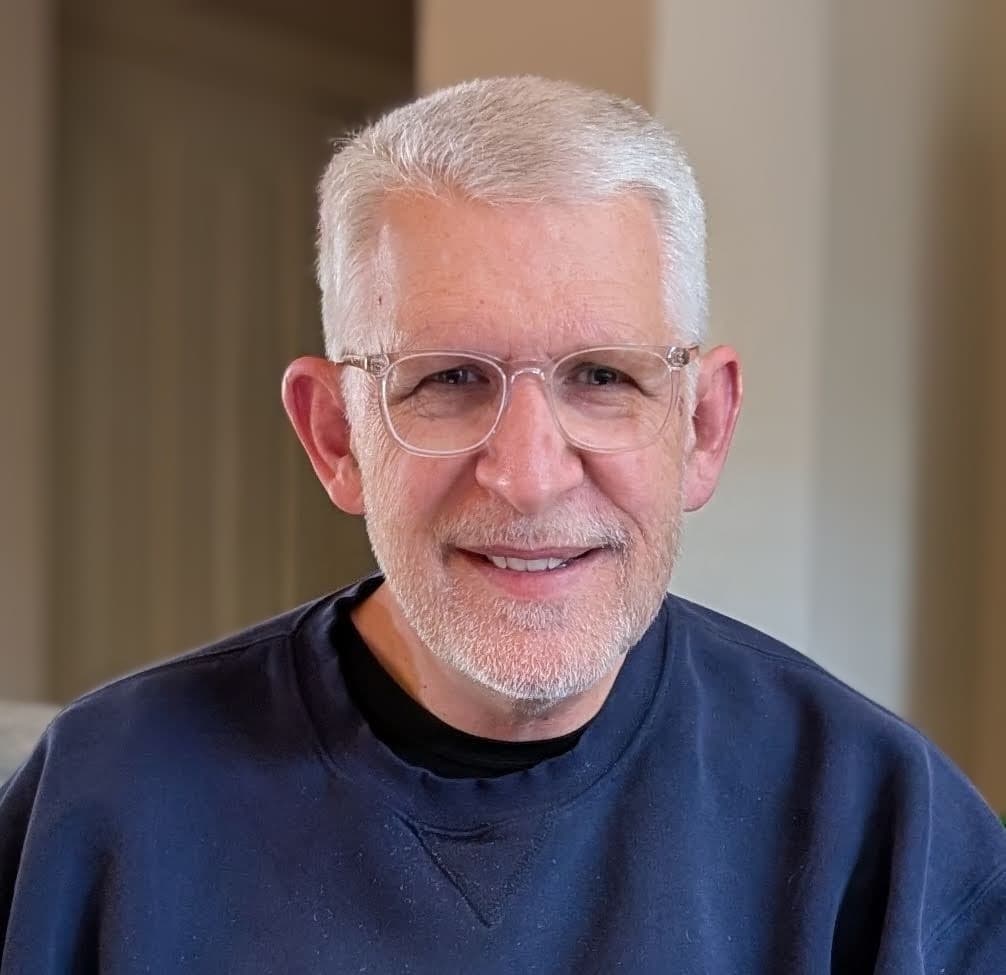
We cannot comprehend the nature of God. We can know that he is one God and 3 persons. We can't know how. There's no explanation that is good enough or deep enough to completely cover the how of how the— of the nature of God. Hi everybody, welcome back to another Bible Q&A. I'm Pastor I'm here with my wife Sue, and we're going to tackle some of the questions that you sent in to us this week. We've got some good questions, and the first one starts about Calvary Chapel. And so go ahead and read that question for us.
Alan says, what is your stance on Calvary Chapel Costa Mesa ordaining women and allowing women to teach in the Sunday services? Also, please explain the difference between the Calvary Chapel Association and the Calvary Global Network.
I appreciate the fact that Allen asked my views on what was going on at Calvary Chapel Costa Mesa and didn't just simply ask what's going on at Calvary Chapel, because those are two very different things. Right. And I need to give a little background for those who may not be aware of the history of Calvary Chapel, which is the church that you and I pastored for 35 years. We're still a part of the Calvary Chapel Association, and I love this group of churches and association very much. And so I look forward here now to the opportunity to kind of set some things straight.
Sure.
For many years, since the early 1960s, Calvary Chapel began with a single church down in Southern California, in the Los Angeles area, specifically Costa Mesa. There was a small church named Calvary Chapel that Pastor Chuck Smith took over and began to pastor, a group probably of about 25 people. And while Chuck was there, He began to teach through the Bible, chapter by chapter, verse by verse. He noticed what an impact it was having on that small fellowship. And as often happens when a pastor teaches through the Bible that way, the church began to grow. But then something else happened culturally at the same time. The '60s and even early '70s marked a time of really great revival here in the United States of America. Hmm. And it was particularly among young people, teenagers, early 20s, and that sort of thing, uh, because this was the hippie era, the time when, um, there was a, a huge cultural shift among the young people. And a lot of it was very worldly, very carnal, but there were a, a group of kids, many kids in fact during that time, that were searching for truth, and they were searching for it in the right place. in the Bible. And so many of them started to go to church. They thought, well, we're going to go to church and see what we can find out there. Well, you know, the churches of the '60s weren't prepared really for these young people to come in because, you know, the men had long hair. They walked in sometimes barefoot with their ragged clothes. Right. Some of them were homeless, living on the streets in their vans. And churches during the '60s were kind of square, and so it was a cultural shock to some of the older people, but there were a few churches, and Calvary Chapel in Costa Mesa was one of them that opened their doors to these young people, and as a result, had rather explosive growth. And many good things came out of that at First Calvary Chapel. Maranatha Music, which many people have heard of. They've seen booklets and, and CDs and, and so forth with Maranatha music. That came out of Calvary Chapel because Pastor Chuck began to open not just his doors to the hippies, he opened his services to the kids playing their music, getting out their guitars and singing the songs they'd written about Jesus. And it was so powerful, it was so explosive. So it was, it was an incredible movement. Calvary Chapel grew incredibly. But from that first Calvary Chapel church, other churches began to be established in San Diego and other areas around Los Angeles. And now I don't know exactly how many Calvary Chapels there are. I want to say there's worldwide somewhere like around 1,800, probably around 2,000 would be a closer guess. Sure. And again, I pastored a Calvary Chapel for 35 years. After Pastor Chuck passed away, and I want to say that was 2013?
Yes, fall.
Um, his son-in-law, a man by the name of Brian Brodersen, who had married Chuck's daughter Cheryl, took over at Calvary Chapel Costa Mesa. And from the very beginning, it had the appearance that he wanted to go a different direction than his father-in-law had gone. One of the last things that Chuck did before he went to go to be with the Lord is he established what he called a council, a council of men to kind of carry on the Calvary Chapel theme and vision. Calvary Chapel is not a denomination, but these men were just there to help facilitate fellowship, do conferences, help people get affiliated with Calvary Chapel if they so desired. And that was what Chuck wanted to carry on his vision of what Calvary Chapel ought to be. And so that council continued for a short time after Chuck passed away, but Brian Brodersen eventually tried to disband the council. He tried to dissolve it. And when the men who were on the council refused to allow it to be dissolved, Brian Brodersen, who was again now the senior pastor at Calvary Chapel Costa Mesa, what is considered to be ground zero for the Calvary Chapel movement and, and kind of the flagship church, he took it a different direction. He started going a different direction right away, and he decided to form a different group, which he initially called Calvary Chapel Global Network. When he was told or convinced that that was going to cause some confusion among the other Calvary Chapels, he shortened it to the Calvary Global Network, or if you will, CGN, and he carried on. Now, here's the deal. What Alan asked in this question is, what is my take on all of this? I believe it is a pastor's right to go whatever direction he feels the Lord is leading him to go. And so I don't necessarily fault Brian Brodersen for going perhaps a different direction. What caused huge confusion and problems for other Calvary Chapel pastors is that Brian continued to hold to the Calvary Chapel name, even though he was deviating from Calvary Chapel in many ways, even though he had created a group called the Calvary Global Network, which embraced churches that were outside of Calvary Chapel and other churches— didn't really matter, you know, he embraced them. And there were rumblings about women being allowed to teach in the main Sunday service, and that's something Calvary Chapels have, you know, never allowed according to the Scripture. All right, so, um, now that all went on for several years. And it has been an ongoing issue, an ongoing point of confusion and difficulty, mostly because Pastor Brian Brodersen refused to change the name of the initial, the first Calvary Chapel. Actually, you know, it's called Calvary Chapel Costa Mesa. It isn't even in Costa Mesa anymore. It's in Santa Ana. Right. But that's really irrelevant. And now his son, Charlo Brodersen, or Char as they call him, has taken over as the senior pastor. And Char recently came out with an announcement saying that Calvary Chapel Costa Mesa for the last 10 years or so had been open to and wanting to ordain women as pastors and allow them to teach in the Sunday services along with that and that sort of thing. And this created again just a huge groundswell of concern about every Calvary Chapel.
Sure.
Because it was done by Calvary Chapel Costa Mesa, which, by the way, is no longer and has for many years no longer been a part of the Calvary Chapel Association. They're not a part.
Right. And that makes it very challenging for anyone kind of on the peripheral or anyone looking in to understand.
Right. Because remember, Pastor Chuck started a group called the Calvary Chapel Association. When Brian Brodersen took over Calvary Chapel Costa Mesa, he withdrew. He withdrew from the Calvary Chapel Association and started his own group, which is not a Calvary Chapel group. It goes by the name, but it's not a Calvary— there's only one Calvary Chapel group, all right? And that's the Calvary Chapel Association.
Right.
I even continue to be one of the regional leaders for the Calvary Chapel Association covering southern Idaho. I've been doing it for about 11 years now, and I plan to continue doing it as long as they'll let me. And I love it. I help guys get affiliated and provide opportunities for fellowship. So The issue all surrounded a an egalitarian view, which is kind of a big word. That's that's not what Pastor Chuck taught. It's not what the Calvary Chapel Association has ever taught, and it's something that we never will because we're going to follow Scripture. Char Brodersen, the senior pastor now of Calvary Chapel Costa Mesa, has decided to deviate. from what his grandfather taught on that subject. That's his right, but that doesn't affect the Calvary Chapel Association at all. All right, so, um, you know, that's, that's my kind of my take. Sure. A little bit of the history on it, and, uh, nobody who is attending a Calvary Chapel needs to worry about those issues because it was one church that went by the name of Calvary Chapel that isn't even a part of the Calvary Chapel Association any longer.
Yeah, well, I hope that answers Alan's question.
I hope
so too. And many others.
Yeah.
All right, we'll move on to Nancy. She says, I used to be Catholic all my life, but I learned that the Catholic Church is responsible for changing the 7th-day Sabbath to the 1st day of the week, Sunday.
Yeah, which is a ridiculous claim. That's a claim that people make, that the Roman Catholic Church changed the Sabbath. You can't change the Sabbath. God created the Sabbath. He, he— the Sabbath, uh, has always been Saturday. It always will be Saturday from the standpoint of the day that God chose to tell the people of Israel to rest. And you also know that God brought that idea— well, more than an idea, that command— into the Mosaic Law and made it part of their law. Okay, that was part of the Old covenant. This claim that the Roman Catholic Church changed the Sabbath to Sunday is usually made by Seventh-day groups like the Seventh-day Adventists and others to kind of show how corrupt religious organizations have deviated from the Word of God and that the true day to worship God is on Saturday. And there are some within the Seventh-day Adventist Church, not everybody, But there are some who even still believe that during the Great Tribulation, Sunday worship will be the mark of the beast. All right. Now, that might be a disappearing belief, but it was one that Ellen White taught in the Seventh-day Adventist group. Yeah. Here's, here's the interesting thing about it. In the Old Testament, God set up one day to rest. He called it the Sabbath. The Jews, of course, added to the simple command of God to do no regular work on the Sabbath, and they created all these other rules and so on and so on. And people are still doing that. In fact, the belief by the Seventh-day Adventists that Saturday is the only proper and appropriate day to attend church is made up. God never told the people of Israel to go to synagogue on the Sabbath. That was something they chose to do because it was a day of rest anyway.
Sure.
But God, God never said that. God never said, this is the day you go to church.
This is church day.
It's church day. He never said that. What he said was, on this day, rest. Do no regular work. Right now, we know from the New Testament that the Sabbath was a picture. It was a picture of resting in God, trusting him for salvation, and so forth. And we also know from the book of Hebrews chapter 4 that we who believe in the finished work of Jesus Christ enter that rest. We as New Covenant believers are not under the Old Covenant commands. to rest on a specific day, which is why Paul said, let no one judge you by what you eat, drink, whatever, or a Sabbath day. He said these— and this is in Colossians— he said these are a shadow of the things to come. The reality is found in Christ. Yes. So Jesus is the fulfillment and reality of the Old Covenant Sabbath because we don't work for our salvation. We rest in what Jesus did on the cross. He is our Sabbath rest, and that's the bottom line. No one changed the Sabbath day.
Yeah.
Um, the new— the, the church at some point, yeah, they decided to worship on Sunday, but that didn't change the Sabbath.
Sure.
The Sabbath can't change. So as simple as that.
Good. Gloria says, how can I grow in my assurance that God loves and cares for me personally? I never doubt my salvation, but I struggle to believe that he truly loves and cares for me on a personal level.
Yeah, you know, this sort of a question really just comes down to faith. What she's saying without saying it is, how can I build up my faith? Because we know that God loves us by faith.
Yeah,
you see, he said it. He told us, I will never leave you nor forsake you. I will not abandon you. Um, so it all comes down to faith. It all comes down to believing God, believing his word. And so she's saying, how can I grow in this area? Well, spending more time in the word of God. That's how you build your faith. The Bible tells us that faith comes by hearing, hearing by the word of God. And so we— To build up your faith, It's always one thing: spend more time, dig deeper into the Word of God, and your faith will grow and it will be transformed.
Yeah, yeah, that's good. Margaret is from Mumbai, and she says, I've often heard sermons to the effect that men and women are wired differently. While I agree that God made us physically different, physically and in strength, I do not think we are different spiritually, mentally, and emotionally. What do you think?
I think we are. I do. I, you know, that's, that's kind of the whole idea. You know, we were talking about the egalitarian view, and we have more of a complementarian view, which is the idea that we're different, but we complement one another. But men and women are very different. I think they're very different emotionally. We share obviously many of the same emotions, but not in the same way. And that's one of the reasons why when you get to the New Testament and you and the Apostle Paul, starts talking to husbands and wives, he gives them different ideas of how they can please— best please their spouse.
Yeah.
For example, he says to the husband, love your wife as Christ loved the church. He's to love his wife sacrificially because that's her greatest emotional need. But when he gets to the wives, he says, wives, respect your husbands. That's at the very end of Ephesians chapter 5. And that's a need of the man. Emotionally, he has a greater need. Now, he does need to be loved, of course.
Sure.
But it is a greater need for him to be respected within the marriage relationship. So, emotionally, we are different. Spiritually, that's a hard one to pin down. I think a lot of our needs on a spiritual level are probably very similar. Obviously, we're very different physically. Emotionally, yeah, very different. I think that's okay. I don't think that's a problem. I don't think that makes men superior to women just because we're different. God made us different, and that's okay. I'm glad God made us different.
Well, and I think in the family setting with a mother and a father, the children are at a great advantage to be able to live under the roof of both of those differences. I mean, there's just some simple things. In general, men are more occupational,
right?
They are more doers. They take more— they get more gratification from what they do.
Yes.
In general, women are more relational. And we get more gratification from our relationships. Well, children being raised with those 2 tensions, that's very healthy.
Yes, it is.
You know, because it meets both of their needs. And so, and those are just some of the obvious ones. We could make a lengthy list.
Oh, yeah.
Of the emotional differences and therefore lifestyle differences, what we want out of life, what we put into other people because of what we want to receive. And,
you know, you know, we've been married 48 years, and we've, we've laughed along the way as we've noticed the differences.
Sure.
So many differences between us. We are not similar in many ways. We have the same goals, we have the same heart toward the Lord and all that. But as a man, I'm very different from you as a woman and you from me. And that's okay.
Yeah. It sure is.
Yeah.
So that's what we think. That was her question. What do you think?
There you go.
Okay. Austin says, hey, Pastor Paul, I've been running across a lot of modalists and oneness believers, and they're very adamant on what they believe. Would you consider it a salvation issue if someone believes that Jesus is the Father and not a separate person in the Trinity?
You know, I've really thought long and hard about this question. And I've run into that whole oneness modalism kind of a belief system for many years. I've debated people who were caught up in it. I don't know for sure that it is a salvation issue, but it is— it, as we've said many times before, it is a biblical interpretation issue. Mm-hmm. It is a— it is kind of a refusal to allow for mystery in the Bible, and that can be really dangerous. You know, I probably get on a fairly regular basis questions about the nature of God, and I expect to, because in fact, I had somebody write to me recently and say, I just don't get how God can be one God in 3 persons. And he said, maybe if you gave me a metaphor, it might help. And I said— I wrote him back and I said, I don't think so. Because you're asking to comprehend the incomprehensible. We cannot comprehend the nature of God. We can know that he is one God and 3 persons. We can't know how. There's no explanation that is good enough or deep enough to completely cover the how of how the— of the nature of God. I believe that modalism, or whatever you want to call it, oneness, is an attempt to take the nature of God and make it more understandable and therefore comfortable.
Yeah.
But it comes from a root that really struggles with mystery and wants to bring God and his nature, his very being, down to an understandable level. Basically, modalism teaches that there is one God, one person, who wears different hats. He has the hat of the Father, and of course, hat is, you know, a metaphor.
Sure, symbolic.
He wears the hat of the Son sometimes. He wears the hat of the Holy Spirit sometimes, but it's all the same person. Well, that runs into all kinds of problems with the Bible.
Yeah.
And, you know, the, the, the Trinity and the, the teaching of the triune Godhead is one that is clearly revealed in the pages of Scripture, but it, it eludes our intellect. And man doesn't like things to elude his intellect. He doesn't want it to be that way. That's why Joseph Smith came up with a different concept to— and, and Mormons will tell you, we believe in the Trinity. No, they don't. not what the Bible teaches. They came up with Joseph Smith's version of the Trinity, which isn't biblical. Again, these are attempts by people to make things understandable, and you just can't. You can't make something understandable when it is incomprehensible.
Les is from Australia and says, in your study of Ephesians chapter 1, you stated physical healing is not part of the New Covenant, but instead we have spiritual blessings under the New Covenant. But aren't we supposed to have a better covenant built upon better promises?
Yeah, I got this question. In fact, I responded to this person personally, and I wanted to respond to it here in a Q&A as well, because I think there's probably several people that might kind of wonder about that. I have made the point many times, uh, through— by, you know, during teaching the Bible, that, um, we New Testament believers have a spiritual covenant with God with spiritual blessings. Israel, by contrast, had a physical covenant with God with physical blessings. And that's one of the reasons I don't believe that physical healing is a covenant promise. Now, hear me now. I'm not saying that God doesn't heal anymore.
Right.
He does. God does heal. I've seen him heal. I've been a beneficiary of his healing. I don't believe it is a promise in the covenant, which is very different than simply saying God doesn't heal today. I would never say that. So, um, and the reason I don't believe it's part of our covenant is because the Apostle Paul makes very clear at the beginning of the book of Ephesians, as she's mentioning, or he's mentioning—
I think it's he. Yes.
that we, we have a spiritual covenant with spiritual blessings that are kept in heaven. Our blessings are kept in heaven.
Right.
And which is a good thing. Okay, so he's asking the question, wait a minute, aren't we supposed to have a better covenant? And that's what the Bible does say. It says that we have a better covenant built on better promises. Okay, well, one of the benefits of the Old Testament covenant with Israel was the land of Israel. Could that land be taken away? Oh yeah, and it was. How many times do we know in the Bible that it was taken away? Several,
right?
Several. How about the other blessings that God gave to Israel, the physical blessings that he promised? Could those be taken away? Oh yeah, and they were.
Yeah.
Okay, now let's look at the blessings we have in Christ. Can they be taken away?
Yeah.
No. Can they be stolen? Can they rust? Can they grow old? You know,
I love that verse. Is it in 1 Peter? Kept in heaven for you.
Kept in heaven for you. All of these promises are kept in heaven for you. We have— and by the way, Israel under the Old Covenant never had a promise of eternal life for keeping the law. God never said that. He never— because it was a physical covenant. He never said to the Israelites, listen, If you obey me, you'll go to heaven. He never said that to them. He said,
“I'll bless you in the land. The land will be yours. Your enemies won't be able to stand up to you, and on your crops will be great.”
Right.
And our promise is eternal life. That's a little better than, uh, all of the physical blessings. So sure, it is a better covenant. It is based on better promises, even without the covenant promise of physical healing. And by the way, let me just end by saying this: the only covenant promise that Israel got concerning healing was that God said, if you obey me, you won't have the same diseases to deal with that you did in Egypt, or the that the Egyptians struggled with. He didn't tell them they would be perfectly healthy.
Yeah.
You know, Elisha died of a disease. Um, so there was never a promise even made to Israel, and it wasn't made to the church either. But that doesn't mean God doesn't heal. He healed at times under the Old Covenant. He heals at times under the New Covenant. But in neither covenant was it ever promised.
Yeah, very good. Good clarification. Remy says, is it possible for a true born-again Christian to have a mental health crisis or a mental health disorder?
You know, I think so, because we live in a fallen world. Just as our bodies decay and have problems, and we get diseases, we get sick, we get viruses, you know, why can't that happen on an emotional level? on a mental level, I think that those things can happen. And I think they can even happen to a born-again believer. You know, so that doesn't mean that God's Word and God's Spirit in our lives isn't going to not only compensate, but at times sometimes heal those situations. Sure. And there have been healings, wonderful healings of people emotionally, mentally, that have taken place over the years, and I see no reason that those should, should not continue.
Yeah,
so, but yeah, I think it's a possibility.
Reed says, I recall that in your teachings and in a recent Q&A, you talked about the importance of making sure Christians do not assume that a promise given to Israel applies to Christians. The promise of the New Covenant in Jeremiah 31:31-34 is said to be with the house of Israel and with the house of Judah. Doesn't this point to the New Covenant being for the Jews?
Yeah, good question. Yeah, that is what it says in Jeremiah 31, that God was going to make a New Covenant with, with the house of Israel and with Judah. And, and he did. And he came to bring that promise, that New Covenant, to Israel, but they rejected the Messiah. And so Jesus came first to the Jews And even Paul thought, you know, his— whenever he would travel around to places, he went first to the Jews. Why? Because God made that promise to the Jews, but they rejected it mostly, by and large. And so it was then taken to the Gentiles. And as Paul explains in the book of Romans, we've been grafted in to the vine and as, as Gentiles. and that sort of thing. And now the church of Jesus Christ is made up of Jew and Gentile. In fact, Paul even goes so far as to say, uh, those, those differences have been obliterated in the church. He said in the church, in Christ, there is neither Jew nor Gentile, because it doesn't really matter. Now here's why in Jeremiah God didn't say, I'm going to make a new covenant with the house of Israel and the rest of the world, because it was offered first to Israel. Right. That's the first reason. And the second reason is the church does not appear in the Old Testament ever. So the gospel, the good news, the new covenant was made with— for— with and for Israel. But because they largely rejected their Messiah, and the gospel that his apostles came to bring, that was— the doors were opened wide to the rest of mankind. And that's, you know, kind of the beauty of how the gospel permeated, you know, the world. And yeah, it's a beautiful thing.
Okay, our last question is from Henry from New Jersey. What does it mean to be equally yoked. What are some key factors to consider when analyzing if 2 are unequally yoked? I have begun to intentionally pursue a woman I met, but she is struggling to take the next step to submit her life to Christ as I have done.
This is a good question because typically when people talk about an unequal yoke between a man and a woman, The Bible brings it down to a believer versus an unbeliever. In fact, when Paul speaks of the unequal yoke, he's speaking specifically about a believer joining or yoking themselves with an unbeliever. And he goes on to say, you know, what do these two have in common?
Yeah.
Right. So the question we're asking, and I think is being asked here, is does that include even someone who says I'm a believer, or I believe in Jesus. But as he says, maybe they're struggling with some aspect of their walk with the Lord, surrendering perhaps themselves completely to the lordship of Jesus Christ. Those are, those are challenging questions, and it's something that I believe you have to really pray about. Now, here's the problem. When people usually get around to asking these questions, They're already emotionally engaged.
They've formed an attachment.
They've formed— yes. And, uh, the formation of an attachment is such that we really lose perspective. We lose our objectivity, and we begin to look at the person that we love in a, in a better light than they deserve to be looked at, right? We see things in them that really aren't there. And I've, you know, heard from so many women over the years who said, you know, I was dating this guy and he was happy to come to church with me and happy to, you know, about me reading my Bible. But as soon as we got married, he put his foot down. He said he didn't want that stuff in his home, and he never comes to church, and he belittles me for my faith in Christ. Mm-hmm. Well, so what happened there?
Yeah,
well, you have a guy who is putting his best foot forward, and, and, you know, during the time that they were dating or whatever, you know, she probably had every reason to believe they were equally yoked,
right?
Hey, he comes to church with me.
At least through the lens of her infatuation.
Yes.
It's very easy to observe someone else's spiritual life in a better than average way.
So when I say you need to pray about it, I know how difficult that is going to be. But, you know, you got to take God's word seriously at some point. And there's a lot of men and women who, if they could, would stand up right now and say, oh, let me tell you the dangers of believing the best about someone and not really holding to the fact that this person has had a born-again experience.
Yeah.
And that they are a child of God who loves the Lord. And so when I get questions like this, I often write back to them and I say, is your girlfriend or is your boyfriend devoted to Christ? I don't ask, do they believe in the Lord? Anybody can say that. And as we know from the book of James, even the demons believe.
Right.
Right? So I don't ask that question. The question I ask is, do they love Jesus with all of their heart? Are they spending time in the Word and are they growing as a born-again believer. That's the kind of person you want to marry.
Sure.
Okay, so for this man who is dating this woman, I would say hold off. Wait for her to make that decision to truly give her heart to the Lord, and, and, and wait to see that hunger to know Jesus, to know his word, before you jump into a relationship. Because even though she may believe in God or even say, I believe in Jesus, and so forth, if she's struggling to surrender herself, there's still a battle going on.
Yeah.
And you're going to bring that battle into your home and into your own life, into your own heart, if you embrace this relationship before this person has really given her heart to the Lord. And that's, that's what happens. That's what happens when people are unequally yoked. But they think everything is good and they bring division and heartache and pain into their home. And many times the children that, that end up in that relationship or coming from that relationship suffer the most.
Yeah.
They really do, because they've got one parent who loves the Lord and one parent who couldn't care less. And, you know, do you know which one the kids are going to gravitate toward? The one who has— who, who seems to have the most freedom to do what they want to do when they want to do it. It's heartbreaking to sit with a wife or a husband of, you know, when they're unequally yoked and to hear about the pain in their home. The pain in their relationship. There's something that you can't share when you're married to an unbeliever.
You've in your marriage series, you talk about intimacy in marriage.
Yeah.
And you talk about the different levels of intimacy. And there's, you know, the physical intimacy, emotional, but the spiritual intimacy is missing from a marriage like that. It's just nonexistent.
Yeah, right. It is. So I would caution
Sure.
I would counsel caution in this situation and wait. Just wait. Don't be in a hurry. Wait for this woman to truly give her heart to Jesus. You're going to be so glad you did. Yeah. So that's it then.
That is it.
Those are our questions for this time, and that wraps up this episode. Hope this was important. I hope it was helpful, and I hope you got some of your questions answered or perhaps even found a way To give a good answer, uh, if a question comes your way. If you would like to give us a question that we can tackle on a future episode, just email us at questions@lifebibleministry.com. We'll get to it just as soon as we can. And until we gather with you again, God bless you. Keep studying through the whole Bible, chapter by chapter, verse by verse. We'll see you next time.
Download the formatted transcript
PDF