
Bible Q&A • Episode 65
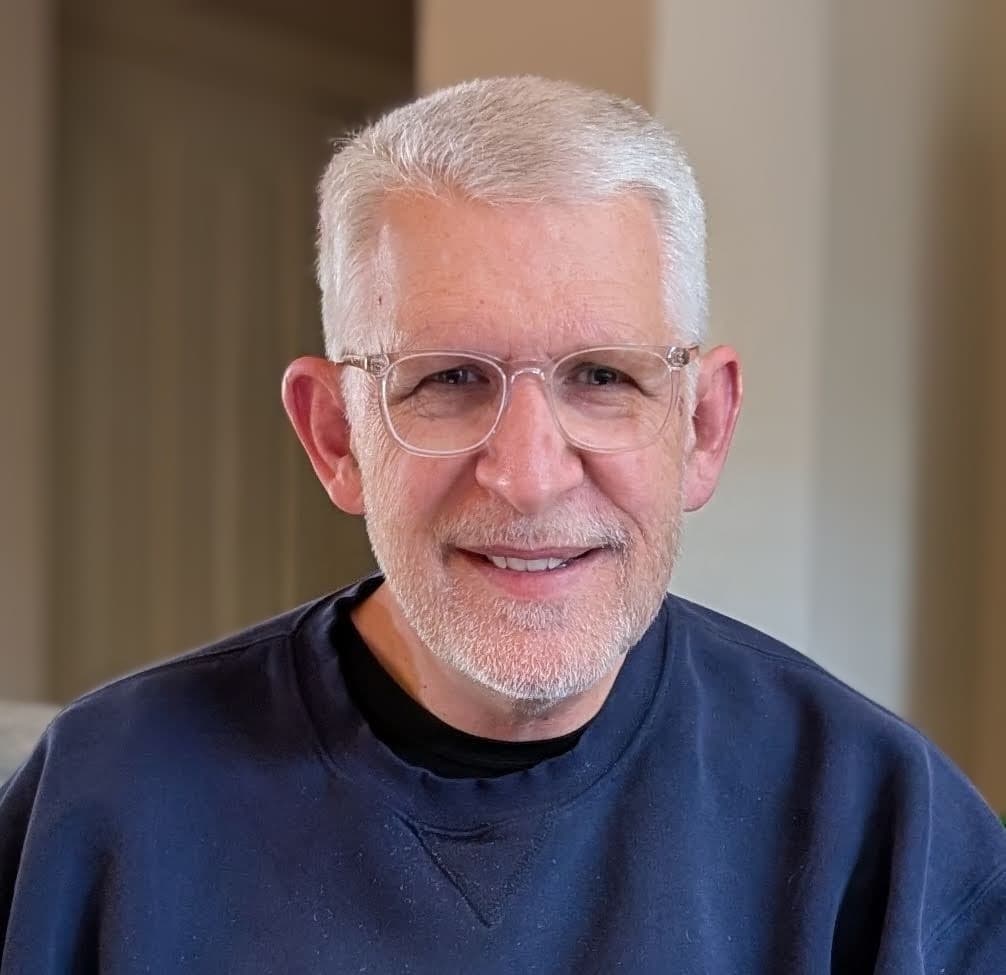
The Bible says we are saved by putting our faith in Jesus Christ for the forgiveness of sins. That's how our salvation is established. It is not established by making sure that we always repent just right of every sin. If you believe that your salvation is dependent upon you making sure you repent of every sin, before you die, then your salvation is based on works. Welcome back to another episode of our Bible Q&A. I'm Pastor Paul here with my wife Sue, and we're going to tackle some more of your Bible questions. What do we have?
First one comes from South Africa from Pierre.
Okay.
He says, I have a question in light of losing a family member. yesterday after a short time in the hospital. I'm sorry, Pierre, to hear that. Why do we pray if God is going to do what God is going to do?
I, I, first of all, I, I want you to know that I, I did write to Pierre personally.
Oh, good.
And expressed our condolences. You know, it's, it's so hard to lose family and friends, especially when you've been praying Yeah. And really believing for a healing and restoration is very difficult. It's very discouraging, frankly. And, and I, I— the reason I wanted to bring this question, uh, up in a, in a general episode is because I think it's important for people to hear the answer to this kind of a question. If God is going to do what God is going to do, and that's really what Pierre's asking, why pray? Unfortunately, that attitude can easily become what we call fatalism. And a fatalistic attitude is that, you know, everything is just all fixed and there's really nothing you can do to change it. And so you might as well just kind of, you know, forget about it and live your life and, and not be concerned with what the outcome is going to be because the outcome is out of your hands. And that can really, for believers, become a very dangerous attitude for various reasons, not the least of which God told us to pray.
Right.
And, you know, that's really where we need to start. God told us to pray. He didn't always promise that there was going to be this perfect solution as we see it. In fact, You know, God went to some trouble to tell us that, um, you know, his thoughts are not our thoughts and his ways are not our ways, and, and we don't always know the will of God. One of the reasons I think people get into trouble when they're praying is because they pray— instead of praying with faith, believing that God is able to do exceedingly abundantly beyond whatever they might ask or think, they pray with their own personal expectations really kind of put forward, as if to say, Lord, this is what I want you to do.
Sure.
And if you don't do it, I'm going to be disappointed. You know, Jesus taught us to say, Lord, yet not as I will, but your will be done. And that should be the guiding principle, frankly, of all of our prayers. The fact of the matter is, we don't know the will of God. When we're praying for someone's healing. We don't know if God is just ready to take that person home. We don't know the answer to those questions, and because we don't know, we get our hopes up, and we get our expectations set in such a place where, when God doesn't respond as we are asking him to respond, we become very disappointed, and this is really common, you know.
Sure.
People get disappointed with God all the time, and again, it's because we've set our expectations as the will of God, and that can be a very dangerous thing. The other thing we want to remember is that prayer is not just for having a particular outcome of whatever we're praying about.
Right.
Prayer is also that our hearts might be tuned to his presence, to his will, to, to his guiding hand. You know, when we pray, we spend time in the presence of God. We are, we are encouraged and filled by spending time with the Lord, which we need. And that can prepare us many times for whatever the answer that the Lord may end up giving. But I, I really think that prayer is about Strengthening our hearts.
Absolutely.
You know, not just getting a specific outcome, which we have to remember, we got to be careful not to treat God like a vending machine. You know, a vending machine is sitting there with candy or gum or, or soft drinks or something, and we put money in it and we hit the button and we expect to get what, you know, we want. And many times we go to God with that same attitude, rather than going to the Lord and saying, Lord, I don't know what you're going to do here. I'm asking you to do this. And that's what the Bible tells us to do. Lay your requests before him. You know, bring your requests to the Lord. But that's really where we then surrender to the will of God. Lord, I don't know what you're going to do, but I pray that you would prepare our hearts for whatever it may be. This is my prayer. This is my request, and I ask you to do this, but my heart longs for your will more than anything else. And I know, Lord, that I can't always know your will. In fact, rarely can I know your will unless it is laid out in the Word of God. So I submit to you, I surrender to you, and I lay this at your feet.
Yeah, you know, that is such a good, um, Reminder, good comfort, good exhortation. I'm sure there are a lot of people listening in a similar situation to Pierre.
Yeah, I would imagine there are.
And so that's a good reminder.
Yeah.
Randall says something in the Bible seems backwards. Okay. It says the servant is not greater than the master. The way we speak these days, we would say the master is no better than the servant. Why is it written that way?
Well, it's written that way because Jesus was talking to the servants. And so he was putting their understanding of suffering and glory and all the other things that go along with it in perspective to their lives compared to his own. He's the master.
Mm-hmm.
And he's saying the servant is not greater than the master. So you're, you're not going to exceed the master. You're going to get what the master gets, you know. Uh, you're going to be blessed the way the Master is blessed. You're going to be persecuted the way the Master is persecuted. You're not greater. You're not going to exceed these things. You're not going to go beyond them. That— it, it's important to, to see why Jesus was saying what he was saying and to whom he was speaking. And that's why it's put in the way that it is.
That helps it make sense.
Yeah.
Wendy says, were any of the individuals who were taken into exile by the Babylonians able to return to Judah after 70 years, or was it only their descendants?
Yes, there were people who were taken into exile for that 70-year period and lived to return to the land. And we know that because in the book of Ezra, we read this in the 3rd chapter: when the builders laid the foundation of the temple of the Lord— now this is when the exiles have come back to the land and they're now rebuilding the temple. They're just starting with laying the foundation.
Okay.
It says here that the priests in their vestments with trumpets and the Levites, the sons of Asaph, with cymbals, took their places to praise the Lord as prescribed by David, king of Israel. With praise and thanksgiving, they sang to the Lord, he is good, his love toward Israel endures forever. And all the people gave a great shout of praise to the Lord Because the foundation of the house of the Lord was laid. Listen to this, though. But many of the older priests and Levites and family heads who had seen the former temple wept aloud when they saw the foundation of this temple being laid, while many others shouted for joy. And the reason they wept is because they saw that this second foundation didn't hold a candle to the first one that Solomon had built. Well, they had to have been there to see the original temple. And so this passage tells us absolutely some people did, uh, go into exile and then return and live to see the Second Temple being built.
Yeah.
Yeah.
Wow. Uh, Steve says, what are your thoughts about Genesis 50:24? Is this a cultural nuance? Shouldn't his brothers all be dead by now? So we better go see what Genesis 50:24 is all about.
Yeah, we better. Genesis, uh, 50—
50:24.
50:24. This is a passage where Joseph is about to pass away, and he is speaking, and he says, then Joseph said to his brothers, I'm about to die, but God will surely come to your aid and take you up out of this land to the land he promised on oath to Abraham, Isaac, and Jacob. And this person is asking, he's speaking to his brothers, but wouldn't his brothers already be dead because Joseph was younger than most of his brothers? Yes, the brothers were dead. When it says he spoke or said to his brothers, it doesn't mean the other 11 sons of Jacob. The word brothers is used in a general sense to mean the offspring of or the descendants of And so he's speaking literally to the descendants and probably the direct children of his brothers in that passage. It doesn't literally mean he's speaking, you know, to Simeon and, and, and the others.
Yeah, that makes sense. Sue asks the question, is it wrong to say we are equal to Jesus in light of Romans 8:17, which says, now we are children Then we— sorry. Now if we are children, then we are heirs, heirs of God and co-heirs with Christ, if indeed we share in his sufferings in order that we may also share in his glory.
Yeah, I can understand the question, but yeah, it is wrong to say we are equal to Jesus because regardless of the fact that we will receive crowns, regardless of the fact that the Bible says that we will be glorified, Regardless of the fact that we are sons of God, we are not the only begotten Son of God who is God in human flesh. We will never become God. Jesus is one with the Father. That's what he said to his disciples. I and the Father are one. That will never be something that we can say in the unique way that Jesus holds that position. So, yeah, it would be incorrect. to say that we are equal to Jesus, really, in any way. We are created. He is uncreated.
We share in the inheritance.
We share in the inheritance. We, we share in the sonship, but we are adopted. He is a begotten Son. That's a completely different matter.
Sure.
Yeah.
Angela says, I live in Ireland, and a few days back I was walking near a Catholic church and I noticed the back door was open. I could see benches and glass paintings, and then something caught my eye. Inside was an LGBT Q+ flag. I was in total shock. How can an old church have this?
Well, all it takes is, you know, one liberal progressive individual who's in charge, you know. I mean, the, the age of the building really has nothing to say on the matter. And as long as there's someone there who has really kind of let go of what the Bible has to say on those subjects, and they begin to walk in the ways of the world, Then it's a very easy thing, you know, for that sort of thing to be there. Very easy indeed.
This question comes from Sheila in Melbourne. My grieving friend said that every woman is under the curse of Eve as recorded in Genesis 3:16. Is that true? I thought we are a new creation in Christ Jesus. I would appreciate hearing your view on this in order to help me walk alongside my grieving friend who's still mourning for her beloved.
You know, this is, this is a challenging, uh, situation or potential question just simply from the standpoint of the fact that we are a new creation in Christ, but that doesn't mean that the old curse is completely passed away, or should I say the results or consequences of the old curse.
Okay.
Now, Jesus did take our curse by becoming a curse for us. The Bible says that, and there's no question about that. But we're not yet in our new bodies. We are still living in this fallen world, in the fallen age in which we live, and we still deal with the curse that came upon all of mankind. This person is asking about the curse that was pronounced upon Eve. Well, I mean, think of it this way. There's even a curse that goes to both men and women, and that's—
Right.
And that's death. Now, Jesus has overcome death, but he has not eliminated it yet. And so you could ask the question, are men and women still under the curse of death? Well, yes, in the sense that we die, but death no longer has mastery over us. Jesus has conquered it, but he has not yet put it away. The passage she's referring to is when the Lord spoke that curse over Eve and said, you know, with, with pain you will bring forth children and so forth. Do women still experience pain in childbirth? Yes, they do. Are women still subject to the leadership of their husbands? Are wives? Yes, they are. That's all part of that curse. Are women still dealing with the, the consequences of that curse? Yes. Are we new creatures in Christ Jesus when we come to him?
Yes.
But that doesn't put aside all of the consequences and all of the fallout from the original sin. It's what we've talked about in the past. It's that, that area of tension between the now and the not yet. Now we are children of God. Now we are new creatures in Christ Jesus. We are a new creation. But not yet has death been put away. Not yet have all of the consequences of the original curse been put away. They will be. We're on our way toward that, but we are still dealing with the elements of that curse that continue to remind us of why Jesus had to come and sacrifice himself and become our curse so that that curse might be one day completely overthrown.
Yeah. Our next question comes from John in Florida, and he says, in 1 Samuel 16:14, Saul failed to do as as God commanded in Israel's battle with the Amalekites. The Word says that God's Spirit left Saul, and instead God sent an evil spirit to torment Saul. But James tells us in chapter 1, verse 13 to 15, that God does not tempt us with evil, but we are led away through our own evil desires. I am confused.
I think John's confusion— and you can maybe help me out, see if I'm guessing this correctly— it seems like John's confusion is the idea that James says that we're led away by our own desires, and yet in Saul's case, he seems to have been given a demon to lead him away.
Yes, I think so.
I think that's the inconsistency that John appears or thinks he's seeing, right? The fact of the matter is, uh, Saul was already led away by his own desires, and that's why he was disobedient in the first place. Even when the Holy Spirit was upon him, Saul had already been showing signs of his own self-will, his own disobedience, his own rebellion against the Word of the Lord. When God finally removed His Spirit from Saul and replaced His Spirit with a demonic presence, Saul was basically at that time being given over to what was already in his heart.
Hmm.
And this was God's way of just saying, fine, this is the way you want it. then this is the way it's going to be. So there's no contradiction here. Saul was already led away by his own desires. So, yeah.
Okay, good. And then Jackie had a question about a previous Q&A. Okay. And she says, I enjoy your teachings, but I am concerned about your statement regarding suicide. Exodus 20:13 states, thou shalt not kill. How do you know that this is a forgivable sin? If someone kills themselves, they may not be able to repent. How is that not a sin?
Okay, well, this is a very delicate, you know, question and deserves some thoughtful response. First of all, suicide is a sin. There's no question about that. We're not going to soft-pedal that at all. If somebody were to say to me, you know, I'm feeling like I want to take my own life and just end all the difficulty. I would say to that person, well, you know that this isn't the end of life. After this, you stand before God. So I would say, are you ready to stand before God? I see that you're ready to leave this world, but are you ready to stand before God? But the next thing that I need to address concerning her question is, first of all, now we are recognizing suicide is a sin, and the reason it's a sin is because it is a supreme act of self-will. Okay? Self-will is a constant issue with all of us every day. We're constantly putting our desires, our will in front of God's. All right? Taking one's life is a supreme and final act of saying, I'm in control.
Yeah.
Now, for a believer, you know, particularly, that is a very grievous sort of an act on their part because it's not trusting God.
Yeah.
It is, it is in fact a hopeless attitude. It is really despairing of life to the point where I don't expect God to help anymore, and I've kind of given up. And that's one of the reasons why it definitely is a sin. So we can agree on that point. No question there. I think her concern is that my response almost made it easy for people. To think about taking their lives. For a Christian, that should never, ever enter their mind because the Bible says you are not your own. You've been bought with a price. Therefore, honor God with your body. I believe it is an extreme act of dishonoring God for an individual, a Christian, to take their life. Okay. But the thing that troubles me about her response is she makes the point that if someone takes their life, they don't have the opportunity to repent. And the idea there is we are saved based on not sinning, or if we do sin, we repent of it.
Right.
Well, that's not what the Bible says. The Bible doesn't say that that's how we're saved. The Bible says we are saved by putting our faith in Jesus Christ for the forgiveness of sins. That's how our salvation is established. It is not established by making sure that we always repent just right of every sin.
Right.
Now, I know there's a lot of people who believe that to be the case, but that's wrong, because if you believe that your salvation is dependent upon you making sure you repent of every sin before you die, then your salvation is based on works. It is not through— by grace through faith. It is now by works.
It is not resting on the finished work of Christ.
No, it is not. It is resting on your work of repentance. Now, repentance is important, I grant you. But it does not secure our salvation. Faith secures our salvation. Okay, so is suicide a sin? Yes. Is it murder? You know, people like this often go on to quote a passage, various passages in the Bible about how God is going to deal with murderers. Sure. And they say, well, suicide is self-murder, and so they're lost, that person is lost. Well, the Bible is talking about those who have a heart of murder that, that, that, that walk that out in their, in their life and never ever come to the Lord for forgiveness. When we sin, and we've already agreed Suicide is sin. When we sin, that is a grievous thing, but it does not threaten our salvation.
Right.
If sin threatened our salvation, good grief, we'd have to get saved over and over again every day. Every time I sin, sometimes I'm not even aware of my sin, but when I become aware of it, I got to go, oh Lord, I confess that I've sinned. I repent now, Lord, save me, because If I would have died— and you know, I, I once had a woman tell me in my office, uh, she said that she was told by another pastor that during a time of backsliddenness in her life, had she died during that time, she would have gone to hell. He told her that even though during that period of backsliding she still had her faith in Jesus and what he did on the cross. I believe that that conclusion is in error, that we must repent of every sin in order to stay saved. Here's the deal. Here's the deal. One final word about suicide, which is always a tragedy and should never, ever enter the mind of a born-again believer.
Right.
If they truly have a biblical mindset. God knows the heart of a person. He knows what's in their heart at every moment of every day. He understands what goes into someone's thinking process when they actually consider the option of taking their own life. We don't know. God knows, and he's going to judge everybody according to what he knows. and sees perfectly. For us to say or to conclude that suicide is always the unforgivable sin is going beyond Scripture. It is making conclusions about certain Scripture passages that I believe are unwarranted. That being said, I'm not— I'm not suggesting that it's an— it should be an option for anyone.
Right.
Right. As I said before, we belong to Jesus now as believers, as Christians, and our lives are not ours to take. Yeah, they're not ours to do with as we see best, you know. So I grant you, it is a challenging question. But I think some of the conclusions people have reached about suicide are incorrect. And so, maybe we'll just kind of leave it there.
Well, can I add one thing?
Absolutely.
I do think it is very important what you have said about that every sin must be confessed before we die. That would put me into just a state of panic.
Yeah. Well—
Because throughout my day, you know, an angry word toward my children, A missed opportunity toward this or that, that puts a believer in just a paralyzed state.
With no assurance.
With no assurance.
Of their salvation.
Yeah.
With zero assurance. You could never know if you repented enough and do all the right things.
Right.
You know, so it— and like I said, it tumbles into the idea of salvation by works. Yeah, very easily. So we're not saved by works, we're saved by grace through faith, and this not of ourselves, it is the gift of God according to Ephesians 2:8-9. And, um, and, and that's how we're saved, and that's the end of that conversation. Everything else has to be discussed and understood based on that foundational understanding.
Yeah, very good.
So And that's it?
That is our last question.
Okay, well, that is episode 65. Hope there was something that, uh, was helpful for you there. If you have your own questions, we invite you to email us at questions@lifebibleministry.com, and we'll get to your question just as soon as we can. Until we gather next time, God bless you, stay in the Word, and we'll see you soon. Bye-bye.
Download the formatted transcript
PDF