
Seeking or Not Seeking the Lord
2 Chronicles 12–13
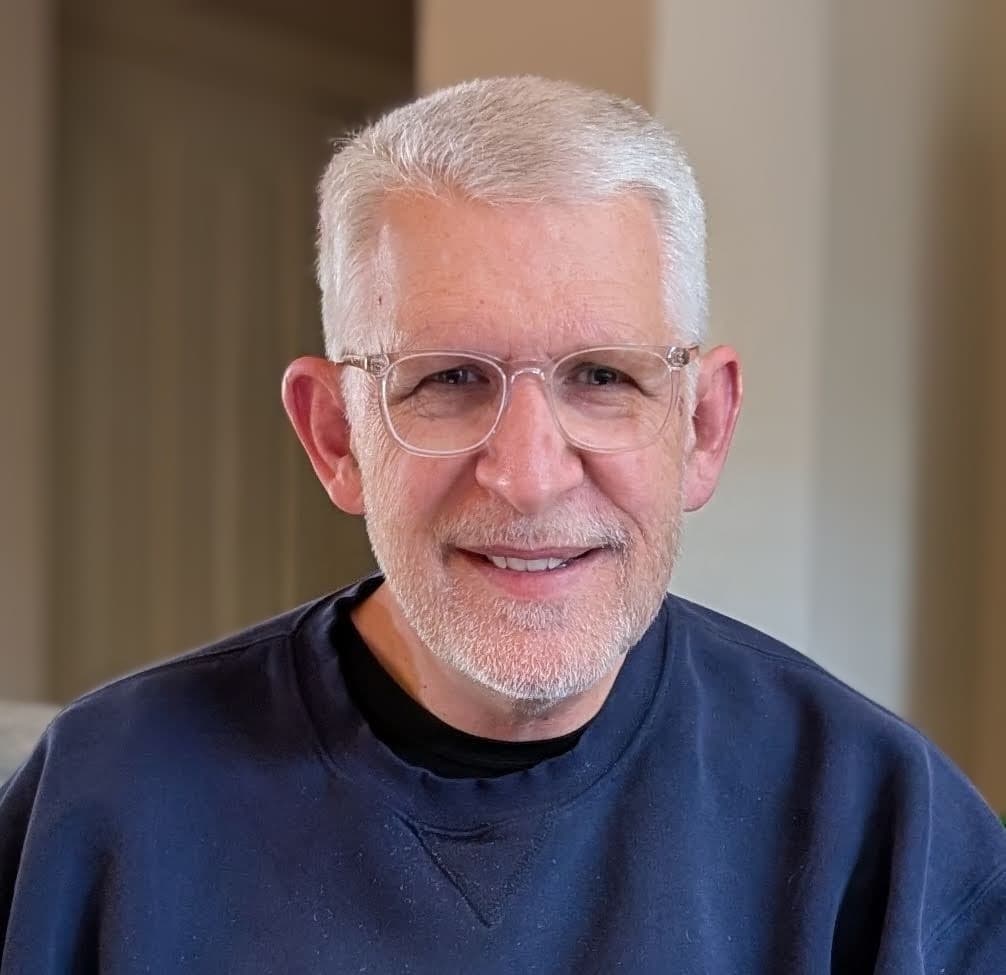
When we stray from seeking the Lord, we risk losing our way, just as Rehoboam did. Let’s choose to draw near to God and trust in His guidance for our lives.
2 Chronicles, chapter 12. As we continue our study through the Old Testament, reminder that 1 and 2 Chronicles is a written record of the reign of the kings of Judah who were the physical descendants of David, the second king over all of Israel. But then you'll recall that when David's grandson, a man by the name of Rehoboam, took the throne he acted very foolishly. And the result of that was that, he split the kingdom in two and he retained the southern section which took on the name of Judah. And a man by the name of Jeroboam, began to reign in the northern section of Israel, which took the name of Israel.
Eventually the capital city of the northern kingdom was Samaria, and the capital city, of course, of the southern kingdom was Jerusalem. After Israel was taken captive, which that happened before Judah was taken captive, Israel went first because they were unfaithful to the Lord. Of course, they no longer called the area Israel because there were no Israelites really living there, for the most part, and it took on the name of the capital city. So, the whole region became known as Samaria and so you now had Israel and Samaria and Galilee up above that, but I'm getting ahead of myself time-wise. Anyway, when we get into Chapter 12 or as we get into Chapter 12 here this evening, you're going to see that we're going to look at the end of Rehoboam's reign.
It says here that,
Stop there for just a moment. As you remember, Rehoboam, things got off to a very shaky start for king Rehoboam, but things have settled out since then. I mean the kingdom split, yes, but Rehoboam still retained a huge area of land, even though he only rules over two tribes. One of those is Judah, and has a huge section of land, so land wise, he's still king over a fairly significant area and as it says here, he established His rule and he became strong. ---
One of the things that made Rehoboam strong, interestingly enough, was what took place up in the northern kingdom. We've referred to it in some of our earlier studies. Jeroboam began to become afraid, because he knew that the temple was located in the southern kingdom of Judah. He knew that the people he ruled over were Israelites, and if they wanted to worship God they were going to have to go down into Rehoboam's territory to worship. And so, he's like a neighborhood without a church. Jeroboam's thinking to himself, well you know what, that doesn't sound good to me. If all my people have to go down to the southern kingdom to worship, eventually I'm going to lose the kingdom, so, Jeroboam came up with a solution, and that was essentially to create his own religion. He literally created a worship system that involved 2 golden calves, set them up in the area of, the northern area of Israel, and he said, Israelites here are your gods, and the people responded. And then after that, here's the interesting part, here's how Rehoboam got strong from that. Up in the northern kingdom of Israel, there were all these Levites and you remember Levites are the descendants of Levi, and they were tasked, by God, to do the work of the temple. Well, all of these Levites Jeroboam started to systematically kick out of the land. He didn't want them there. I don't know if maybe he thought they were a threat to his new religious system that he had created, but he started telling all of these Levites they had to leave their homes and their land. They did, they responded, and they moved down to the southern kingdom of Judah bringing with them a heart and an attitude to be true to the Lord, and to worship God, and to be true to the covenant that God had made with Israel. And that created a strengthening of the southern kingdom and consequently a strengthening of Rehoboam's reign. But it was all very short lived because once Rehoboam became strong he grew independent of God. Can you relate? It happens today, too. Once the pressure's off, once things are going better for us, we can do the same thing Rehoboam did. We can start to become independent of God, because our situation doesn't demand our constant attention to prayer, and waiting on God, and so forth and so, we begin to live our lives in a rather independent attitude, and it's very easy to begin to abandon the things of the Lord. And that's exactly what Rehoboam and the people of Judah did. They began to abandon the covenant that they had between God and themselves. "And Judah did what was evil in the sight of the LORD, and they provoked him to jealousy with their sins that they committed, more than all that their fathers had done. For they also built for themselves high places and pillars and Asherim on every high hill and under every green tree, and there were also male cult prostitutes in the land. They did according to all the abominations of the nations that the LORD drove out before the people of Israel." And Judah did what was evil in the sight of the LORD, and they provoked him to jealousy with their sins that they committed, more than all that their fathers had done. For they also built for themselves high places and pillars and Asherim on every high hill and under every green tree, and there were also male cult prostitutes in the land. (And) They did according to all the abominations of the nations that the LORD drove out before the people of Israel. You have to understand that Canaanite worship practices, which is what they were adopting, these were the things that the people, the Canaanites in the land did to worship their pagan gods. This was the reason God told the Israelites to drive them out of the land, but the Israelites were not successful in driving all of the people out of the land like God told them to. They didn't retain a sense of faith and so many Canaanites remained in the land. Subsequently, their worship practices stayed in the land, and their worship practices became part of Israel over a period of time. And most of, not all, but a large amount of the worship practices of these pagan deities involve sexual rituals where there were prostitutes, both men and women, who were available to help you worship the pagan god. You can see how these things played into the flesh. When you have a culture that has already been sexualized and those tendencies are there anyway, particularly for younger people, and then you begin to tell people that there are worship practices that actually require you to have sex with lots of people. It's an easy go. People are like, yeah and now I've suddenly got this excuse, right to sin sexually. Yeah, sounds good to me. Hey, all in the name of religion. We wouldn't want to, don’t cause any problem to these gods. We don't want to make them angry. By all means, let's worship. This is what was making its way into Israel, and it says that they were setting up these places of worship everywhere. Literally it said, "on every high hill and under every green tree," there was a place to worship these pagan deities. So, you can imagine. The hearts of the people are moving away from the Lord. What happens when the hearts of people move away from the Lord? There's a response, isn't there from God. Look at verse 2 in your Bible. "In the fifth year of King Rehoboam, (and it says right here) because they had been unfaithful to the LORD, Shishak king of Egypt came up against Jerusalem" (And he brought no small army, too. Look what it says in verse 3. He brought along) "3 with 1,200 chariots and 60,000 horsemen. (Those are just people on horseback. And then all the people on foot. They were people, literally it says here) …… without number who came with him from Egypt—(there were) Libyans, (there were) Sukkiim, (there were) Ethiopians." These are people that the Egyptians had conquered and brought into their military force to the point now that they had this vast army. You've got this enormous army now coming against the southern kingdom of Judah. And in verse 4, it says they started to conquer Judah. It says that "the king of Egypt took the fortified cities of Judah and came as far as Jerusalem." You guys understand, the fortified cities were on the outskirts of the nation, and they were meant to be outer defenses to protect the capital city. You've got these outer defense cities that are supposed to hold back an enemy. They didn't. The enemy just broke right through their outer defenses and made their way toward the capital city right up to Jerusalem, and it looks like it's lights out for king Rehoboam and all the people of Judah. Look what happens. It says in verse 5 that a man by the name of, "Shemaiah (he was a) prophet came to Rehoboam and to the princes of Judah, who had gathered at Jerusalem because of Shishak, and said to them, "Thus says the LORD, 'You abandoned me, so I have abandoned you to the hand of Shishak.'" 6 Then the princes of Israel and the king (very important) humbled themselves and said, "The LORD is righteous." In other words, what they're saying is, this is a righteous judgment, alright? You know what? My God cannot ignore people who humble themselves. He can't. He can't ignore them. Look what it goes on to say in verse 7.
--- "When the LORD saw that they humbled themselves, the word of the LORD came to Shemaiah: "They have humbled themselves. I will not destroy them, but I will grant them some deliverance, and my wrath shall not be poured out on Jerusalem by the hand of Shishak." What does God do? I know I'm stopping you there before verse 8, but it's important that we just look at this because people this is the mercy of God. Again, I want to just remind you of something. A lot of people have said in my hearing, and I bet in yours too, I don't really like studying the Old Testament because God seems so angry, and I would much rather hang out in the New Testament where Jesus is healing people and picking people up off the ground and rescuing them from being stoned. That's the picture of God that I like to have. This Old Testament God disturbs me a little bit. Well, may I suggest to you that what you are seeing here in this passage is nothing more or nothing less than the absolute incredible mercy of God, because based on what we read in that passage I put up on the screen in 1 Kings, Rehoboam had led the nation of Judah down a path of great apostasy. They had abandoned the Lord in every way, and they deserved judgment. They deserved Shishak to not just break through the outer defenses, but to get into Jerusalem as well. They deserved punishment. But the fact of the matter is they repented. They humbled themselves and they said, You know what? God's right in doing this. What are we going to do? All we can do is cry out to God, and God hears when His people cry out to Him in humility. He hears, and so what the Lord says here is, I'm not going to allow Egypt to destroy Jerusalem. I'm not going to allow it, but it's not going to be a complete deliverance. Listen to this. Look at verse 8, because this spells out how the Lord would deal with the situation. It says,
And that basically means that God is going to allow, for however long, the king of Egypt, Shishak, to rule over Judah Okay, that means Rehoboam, listen to this, okay, I want you to imagine for a moment that you're the king. You're the king of Judah, and you've apostatized, you've walked away from God, you've abandoned the Lord, and this foreign army comes, this massive army that nobody can even count, and they've broken through your outer defenses, and they're literally standing outside the wall of Jerusalem. ---
You humble yourself, you cry out to the Lord, and the Lord responds prophetically by saying, I heard you, I heard you, I've seen your humility, and I'm not going to allow this army to destroy you, however, I am going to allow him to humble you, and for Rehoboam, what that means is, he's going to be able to make a pact of peace with the king of Egypt, but it's going to be a very costly one. And essentially the king of Egypt is going to be allowed to say, in essence, my foot is on your neck. You are under my thumb. Is there another way I can put it that would show you? And then, after that, Rehoboam is going to have to just sit helplessly and watch while the king of Egypt goes into the temple, goes into other places and carries off truckloads, cartloads of treasures, gold, silver, things that his father Solomon had amassed and put in the temple. He's going to sit there while the king of Egypt walks away with this stuff. But, I mean, it is just gold and silver. God is removing the worst of the consequences, but He hasn't removed all of the consequences completely. And the reason I'm bringing that up is because it's important that you and I would know and understand the character of our God. There are times when we have lived in such a way that there are elements of the consequences of God that are inescapable, related to our actions and the things that we have done. And cry out to God, though we might for ultimate deliverance, the Lord says, I'm going to spare your life in this, but I'm going to allow you to continue to understand what it means to abandon Me, to turn your back on Me, and to throw these things between you and I behind your back. I'm going to allow you to understand that. Here's how He does that. Look at verse 8 with me again. He says at the first part of the verse,
All right, let me explain what that means. What God is saying is, I'm going to allow Shishak to remain here, so that Rehoboam and the people of Judah might learn the difference between serving God and serving a human taskmaster who is cruel and exacting, and I want them to know the difference. Here's the point. Everything that you and I serve outside of the Lord is ultimately going to take from us. We're going to literally sit back and watch as it carries treasures out of our lives, okay?
And I'm talking about anything, anything that we serve that is not the Lord. And God allows those things to happen. I have personally sat with individuals, who are lamenting the things that they've lost in their life because they frittered them away by their own sinful behavior and activity. They've made choices, and those choices come to fruition and they literally sit back and watch the treasures of the Lord taken out of their life, carried away by some enemy, and they're like, why doesn't God do something about this? Well, listen, He spared your life.
He spared your life. But He allows the enemy to loot the storehouses of the Lord, so that you might be reminded about the difference between serving the Lord and serving these other gods, small g, because all of those other things are only going to take from you. They're going to steal from you. The Lord is the only one who is going to bless you. All of these other gods, they don't care about blessing you.
Here's how it played out. Look at verse 9.
He literally walked into the king's palace, okay? He walked right into his home, and pulled those things out, and walked away, and said, there's nothing you can do about this. I'm taking these, goodbye. And took them on to Egypt.
Now we've got bronze shields, where the gold ones used to be, and it's a constant reminder, isn't it? It's a constant reminder. We gave in, we compromised, and we lost treasure, many of the treasures. What are the treasures of your life? It may not have anything to do with gold or silver, but I dare say that we have treasures.
Things that we treasure in our lives. And we don't want to see those things carried away, and yet sometimes we witness it.
See, this is again the mercy of God. Even under the failure of this situation, it says that God's wrath turned away from Rehoboam. Why, because he humbled himself, and then God in His grace actually allowed things to improve. Wow! He allowed them to live in peace.
Yes, under the thumb of the king of Egypt, but in peace. At least the king of Egypt didn't come in and just say, I'm going to decimate this place.
And that could have a large explanation right there of why Rehoboam was so confused. His father was obviously Solomon, but his father departed from the Lord toward the end of his life, and his mother was an Ammonite. Obviously, an Ammonite princess, whom Solomon had married, probably to strengthen the peace between Israel and the Ammonites. And yet he had all these children by these foreign women, Rehoboam being one of them, and there wasn't a whole lot of strength in the things of the Lord there. And here's the summary or this is Rehoboam’s report card in verse 14.
Not that good. Look what it says.
I want to take a look at this verse for just a moment. First of all, it says, "he did evil" and then it tells us why he was charged with doing evil. He didn't "set his heart to seek the LORD." And I got to thinking about that after I, as I was studying and I thought, how exactly does a person set their heart to seek the Lord? How? I mean, how exactly do we do that? Well, I think it speaks of a determined commitment because in this life, we ask ourselves the question, so how do I seek the Lord? But you know what? We go through our life seeking things all the time. In fact you can't go through life without seeking something. You're going to seek something. You're going to seek pleasure, in all of its various forms, and pleasure can come in so many ways. You can seek power, you can seek wealth. There's so many things that we can seek in this life. Somebody might say, well, I'm not seeking anything, I'm just seeking, all I want out of life is just to have a quiet life.
Just to mind my own business and have a quiet life. I don't want to bother anybody. I don't want anybody to bother me. That's seeking a life of pleasure. That is your pleasure. Your pleasure is to be alone, to be quiet, and you see what I'm saying? It’s all, pleasure, it’s this huge umbrella, and some of the things that we consider pleasurable might not seem bad in and of themselves, but they're not God and we seek them, like we should God. And this bent in us, to seek things and to have what we want. It's this gravitational pull that we're born with, and to seek things for ourselves, I mean. It is so strong that as believers There's, we get all these warnings in Scripture about it. I could bring up several. I'll bring up one. I'll put it on the screen for you from Philippians. "Do nothing from selfish ambition or conceit, but in humility count others more significant than yourselves. Let each of you look not only to your own interests, but also to the interests of others." Do nothing from selfish ambition or conceit, but in humility count others more significant than yourselves. Let each of you look not only to your own interests, but also to the interests of others. Why is that there in the Bible? Because that's not our natural inclination. It's not my natural inclination. My natural inclination is to look out for number one, and the only reason I'm okay and free to admit that to you is because I know it's yours too. I know I'm not alone in this room. And so you see, selfish ambition is what we're born with. And selfish ambition is essentially defined as wanting what I want, even if it comes at someone else's expense. Okay? And it literally becomes the focus of what we seek in life. What have you been seeking in life? Before you came to Christ, what were you seeking? What was your goal? After you met Jesus, did He change the things you sought after? Did He change all of the things you sought after? Or did the Lord continue to convict you of things that you had, you were seeking that we're not according to His will? I think that goes on, by the way, for our whole life. I think that the purification of our desires is something that goes on as long as we live with Christ in this body. That's my personal opinion. But, every one of us, we've come to Christ, now we can choose to either be self-seeking or to set our hearts to seek God, and there are wonderful promises in God's Word related to seeking Him. Let me, we'll go to the Deuteronomy passage that we put up a moment ago. "…you will seek the Lord your God and you will find Him. If you search after Him with all your heart and with all your soul." "…you will seek the Lord your God and you will find Him. If you search after Him with all your heart and with all your soul." And somebody’s going to go, man, does God have to make it hard? I mean, can't we just seek for Him, like yoo-hoo!, God, are you there? Why does it have to be with all of my heart? With all of my soul, and your soul is your emotions, right? Why? Because that's the same way we seek the things of this world. We seek those things with all of our heart. You think God's going to come easy on this thing? He's going to let you seek with all your heart the other things of the, of life but as far as Him, you can just have him at a moment. No. "Ask and it will be given to you; seek, and you will find; knock, and it will be open to you. For everyone who asks, receives, and the one who seeks, finds, and to the one who knocks, it will be open." Ask and it will be given to you; seek, and you will find; knock, and it will be open to you. (he writes) For everyone who asks, receives, and the one who seeks, finds, and to the one who knocks, it will be open. You think, wow, that sounds simplistic, yeah but when you put it with the other biblical passage you know that it's not a simple matter. It's seeking with all your heart. When's the last time you sought something with all your heart? We know what it's like, don't we, to be afraid to lose something or to have something very dear to us be threatened away and we begin to run after that thing, with all of our heart, with all of our passion. I don't want to let that go, man I don't want to let that go. We know what that's all about. We know what it's like to seek those things to make it our focus. What God is saying in the Word is make seeking Me your focus and you will find Me, but make seeking Me your focus. Seek Me with all your heart, like you would seek something else that you want. I remember when I was 17, 18 years old. I wanted a particular car.
Not just any car, I was into muscle cars. This was about 1970, well it was the latter half of the 70s, let's just put it there. Back when we had big glasses and weird hair, and very strange clothing. And I wanted a 1969 Roadrunner muscle car with a 383 Magnum. I wanted it more than anything, and I was determined to get it more than anything, and I had a car, but you know I didn’t like the car that I had and, even though it ran really good. So, I sought after this car with all of my heart and that was more difficult back then. I mean, we didn't have Craigslist and I couldn't hop on my computer and do a quick search. I couldn't see what somebody in the next county even practically had for sale. It was very difficult, looking for things for sale, but I threw my whole heart into it. I was passionate about buying this car. I finally found one. I found one in a nearby town, this is in southern Minnesota, and I drove there, and I test drove the car, and I absolutely fell in love with it. 1969 Roadrunner, and so I went to the bank. I was making peanuts I was working, where was I working? Oh I was working at a gas station during the day, and I was putting in a few hours at a radio station in the evening. I was working two jobs and made peanuts at both of them. And I didn't have enough money to buy this thing, so I went to the bank and I used all my powers of persuasion to convince this banker to give me a loan for like, and I think it was like $1,100 dollars. If I had that car today, it'd probably be worth $11,000. I don't know. Maybe more. Maybe more. I mean, they're classics. You get some of you that don't know, forget it. But some of you guys are like 1969 Roadrunner! The guy gave me the loan. Dumbest thing he ever did in his entire banking career, I'll tell you that. And I went and I bought that car and I sold my car and my other one, and now I had this car of my dreams. I know what it's like to seek after things with all of your heart. I put everything into it. My whole heart, my whole soul. Now, I will tell you, not as totally just an aside, but I will tell you, I never owned a car that was more trouble than that one. I got more tickets for speeding, but my excuse was, the speedometer goes up to 160, 110 doesn't look that fast. Policemen never bought that one very much. It guzzled gas. Gas was 50 cents a gallon back then, but I still couldn't afford to fill up the tank. My insurance was through the roof. 18 year old kid with a muscle car are you kidding me? My insurance agent looked at me and went, you're lucky we're even covering you buddy. Here's your premium payment, take a deep breath and pay it. And I had all kinds of mechanical problems. It was constantly in the shop, and the mechanics couldn't figure out what was wrong. I don't know, Paul, must be some compression problems or whatever. Oh, I ended up trading that car even up for a 350 motorcycle. That was probably worth a fraction of it, but I couldn't afford it. I couldn't afford to keep it. That's not the point. Well, it's the point. The point is I sought after this thing with all my heart and it was nothing but trouble, and that is pretty much the way it goes when we seek after the things of this life, the things of this world. They literally, we want them so badly, and they end up coming back and biting us. When we desire the things of the Lord, it comes with no trouble. But we understand, don't we about what it means to seek the Lord with all of our hearts. We get it, because we've done something. I tell you that story because I'm willing to bet there's been something in your life that you have sought. at least, to that level of passionate desire. Let's finish up the chapter.
Chapter 13, quickly. "In the eighteenth year of King Jeroboam, (a marker given you there) Abijah began to reign over Judah. 2 He reigned for three years in Jerusalem. (And by the way, I mis-spoke this last Wednesday when I was talking to you. I inadvertently said he reigned for three months, but it was three years.
And it says that) His mother's name was Micaiah the daughter of Uriel of Gibeah…" And again, there was war between Abijah and Jeroboam. It just kept going on, right? All kinds of border skirmishes, and in some cases outright war, which is what we're going to see now. It says in verse 3 that,
You’ve got king Jeroboam who has twice the army to Abijah’s 400,000. Well, what do you do when you're outnumbered? I think you try to talk him out of it.
It says, "Then Abijah stood up on Mount Zemaraim that is in the hill country of Ephraim and said, "Hear me, O Jeroboam and all Israel!
Stop there. What's he saying? He's first of all saying, Here we are, a divided nation, but don't you guys know, all of you, that all of Israel was given to the house of David? Now, he's not mentioning here, that God tore away some of the kingdom and gave the kingdom to Jeroboam, even though Jeroboam has been unfaithful with the northern kingdom. He's not saying that. All he's really saying is, God originally gave all of this to David and you'll notice he says there, he gave the kingdom over to David and his sons by a covenant of salt. Interesting phrase, isn't it? Salt is associated many times with the sacrifices that were made under the Mosaic covenant and as you know, salt is a preserving agent. We don't think of it that way anymore, really. Salt is something we put on our potatoes or green beans or whatever to make them taste a little better. But back in that day there wasn't anything like refrigeration so how were they going to preserve meat? Well, they did it with salt, and they, and not just a salt shaker they had big chunks of salt, and they would rub the meat, and if you prepared it just right you could make a piece of meat to be preservable for a long period of time. So, the idea of salt as a preservative goes into this idea of the salt of the covenant, meaning that God has preserved the covenant that he made with David to give him the kingdom, and that's the point of what Abijah is saying here. He's applying it to the house of David. Verse 6 goes on and says, "Yet Jeroboam (now he's telling, Jeroboam) the son of Nebat, a servant of Solomon the son of David, rose up and rebelled against his lord, 7 and certain worthless scoundrels gathered around him and defied Rehoboam the son of Solomon, when Rehoboam was young and irresolute and could not withstand them." It's not totally hitting on all cylinders here. You know, there's a little bit of historical revision going on. He isn't telling about how his dad, Rehoboam, was an idiot and spoke cruelly and harshly to the people and ended up splitting the kingdom by his own pride and that sort of thing. He's not really mentioning that. But he goes on to say,
"And now you think to withstand the kingdom of the LORD in the hand of the sons of David, because you are a great multitude and have with you the golden calves that Jeroboam made you for gods. 9 Have you not driven out the priests of the Lord, the sons of Aaron, and the Levites, and made priests for yourselves like the peoples of other lands? Whoever comes for ordination with a young bull or seven rams becomes a priest of what are not gods." He's taunting them a little bit here. Haven't you run all the Levites out of your land, the ones who God chose to serve him in the temple? Didn't you run them out and didn't you ordain Levi or priests of people who didn't matter where they came from, all they had to do is bring a few animals with them and you'd make them a priest. He's reminding them. "But as for us, the LORD is our God, and we have not forsaken him. (Again, not entirely true). We have priests ministering to the LORD who are sons of Aaron, and Levites for their service. 11 They offer to the LORD every morning and every evening burnt offerings and incense of sweet spices, set out the showbread on the table of pure gold, and care for the golden lampstand that its lamps may burn every evening. For we keep the charge of the LORD our God, but you have forsaken him." And basically what Abijah is saying here is he's saying that Judah has been faithful to the external ceremonial rules of the law, and that may be very true. I think during this whole time, the temple was still functioning. There was all kinds of other paganism going on, but the temple was still functioning. In other words, you got all these different religions going on in the land, and he’s right. He's ignoring the fact that there's also pagan religious practices going on in the land. He's not saying anything about that. He's just saying we've been true to the Lord. Well, not entirely, not completely and not wholeheartedly. You and I know that God cares more about what's in the heart than external obedience, right? We know that, right? Abijah is arguing, we have upheld external obedience. And I think for the most part, God goes, big whoop. "Behold, God is with us at our head, and his priests with their battle trumpets to sound the call to battle against you. O sons of Israel, do not fight against the LORD, the God of your fathers, for you cannot succeed." And, that's true. But I don't believe that's why the battle ends up going the way it does. Look what it goes on to say in verse 13.
"Jeroboam had sent an ambush around to come upon them from behind." In other words, while Abijah is waxing eloquent about all of this stuff, Jeroboam's going, he's talking to some of his guys over here and he says, alright, while he's talking, you guys go around that way, and go up behind them, and then we're going to just stay here, and then when he's done giving his little oratory we're going to smash him. Alright, so, that's what's going on. It says, "Thus his troops were in front of Judah, and the ambush was behind them. 14 And when Judah looked, behold, the battle was in front of and behind them. (So what do you do at that point? Time for another speech? No! It says, and this is why the Lord responded. Look at this.) And they cried to the LORD, and the priests blew their trumpets." What made the difference right there? They cried to the Lord. They were put in an impossible situation, so they cried out to God. And it says, "Then the men of Judah raised the battle shout. And when the men of Judah shouted, God defeated Jeroboam and all Israel before Abijah and Judah." 16 The men of Israel fled before Judah, (Look at this, look at this) and God gave them into their hand. "Abijah and his people struck them with great force, so there fell slain of Israel 500,000 chosen men." Wow! Is that crazy? Five hundred thousand. They started off with a double sized army, bigger than Abijah. Now they got three hundred left. And what's interesting is that Abijah and his army killed more of Jeroboam's army than they even had in their army. They only came with 400 guys, and they killed 500,000. Excuse me, they came with 400,000, they killed 500,000. Wow! God provided a victory here that completely defied the odds. Do you know that God does that? Do you know that God provides victories that defy the odds? Oh, I’ve got to tell you something. Speaking of defying the odds, you'll like this. People ask the question, how come God doesn't do miracles anymore? I'm surprised Bill Holdridge didn't mention this on Sunday when he spoke because he's on part time staff at Calvary Chapel Meridian, but there's a guy that I've known for a while. Calvary Chapel Meridian has in charge of running their low power radio station. His name is Danny, and about a year or so ago Danny was diagnosed with some form of cancer that ended up manifesting in his throat and they did a surgery and it looked good for a while, and then it came back and it got to the point where he couldn't eat. I mean, he'd lost like a hundred pounds and his doctor in Boise, and this is like 2 weeks ago, you with me? His doctor says to him. I don't know what else to do. I'm going to send you down to Salt Lake City. There's a team of doctors down there who are going to look at your situation and consider what they might be able to do possibly they know of a surgical procedure and so they shipped him down to Salt Lake City. This is literally like 2 weeks ago. They get down there and get him all prepped and they go in and they start scoping things out, and the doctor, one of the doctors finally comes in to Danny and he says, Danny I can't operate on what's not there. The tumor was gone. It was gone, and there was no sign of it ever having been there. And they shipped Danny back to his doctor and his doctor in Boise looked at him and said, I don’t understand. I have no idea what happened. It's gone. Now, you and I know, I mean, even though we tend to go wowzers, we know that God does miracles. And this is one of those situations where people were praying for this guy. I mean, they were praying for this man and God, here’s these incredible odds, right and God defied the odds, and I actually, I'm friends with Danny on Facebook and I saw his note. It was just a short note. He's like, right. Doctor sent me down to Salt Lake City for a final treatment of her, and they couldn't find any tumor, all caps, praise the Lord, all kinds of exclamation points. He's as blown away as everybody else. Anyway, God is good at defying the odds. "Thus the men of Israel were subdued at that time, and the men of Judah prevailed, (Why?) because they relied on the LORD, the God of their fathers." There it is right there. You might want to underline that in your Bible, highlight it, or something. Why did they prevail? Because they relied on the Lord. Did you notice it doesn't say all the stuff that Abijah was saying? Because they were faithful to his covenant, because they were going in and burning incense every day, and because they were doing all this activity. Doesn't say that. God doesn't care about all of that external ceremonialism! Abijah was making it sound like, this is why we're going to beat you today, because we're true to our God and the next thing you know they're screaming like a bunch of girls, because they see an army on both sides of them and then what happens? They did what they needed to do. And it wasn't burn more sacrifices. It wasn't go burn more incense. It wasn't rush back to the temple and make sure we have the table of showbread set out with some fresh bread. That's not what God wanted. It says they cried to the Lord! Lord, save us! What does it say here? That they relied on the Lord, the God of their fathers, and he defied the odds and brought them through.
20 Jeroboam did not recover his power in the days of Abijah. And (eventually) the LORD struck him down, and he died. We're not given any details here because, again, Chronicles is about the kings of Judah. It just mentions it as a side point.
Wish we could find that, but we can't. And we're going to find out that his son Asa is going to take up after him as king. By the way, let me, do I, did I put 1 Kings in there the last passage? Good. At least I was on that one.
Here’s a summary from 1 Kings of Abijah's reign.
"…he walked in all the sins that his father did before him, and his heart was not fully true to the LORD his God, as the heart of David his father." What does that tell you? Well, it tells me that God can do marvelous and powerful things in our life, and it doesn't necessarily change the way we live, right? You can have a miracle happen in your life and still turn away from God and still not be wholehearted. We'd like to think that if we were in a situation like he was in battle, completely outnumbered and we cried out to the Lord and defeated our enemy in incredible fashion, we'd like to think that for the rest of our days, we would say, oh, God, you are the focus of my life from here on out. We'd like to think that. But it doesn't always happen that way. Sometimes people experience incredible, miraculous works and they still turn around and go the other way. That's one of the reasons why we have to be careful even praying about miracles. Oh, God, I just pray that you would show my brother or my friend a miracle. Just do a miracle in his life. I know, I know Lord that's going to change his heart and he'll forever be Yours. Yeah, not necessarily. If you're praying for somebody, by all means, pray for them. Pray that God would change their heart. Pray that God would allow them to see things completely differently because miracles can be forgotten. We can get on down the road a month or a year and it's like, yeah, yeah that's pretty cool. Sue and I were just recounting here just recently some of the things God has done in our lives. His faithful way we were just talking about. What do you think about when you think of God's faithfulness? We started talking about how God rescued our marriage after five years of stupidity, and how God supernaturally plucked me out of radio and put me in the ministry, and then just graciously took us to the Seattle area where I went to college and provided for us a place to live even though we didn't have jobs at the time, and we just started recounting the ways God has super, and then we start talking about things that happened here at Calvary Chapel. Do you know that one years and years and years and years ago when we didn't even have this auditorium, we had a break in over at the other building and some guy broke in and took a whole bunch of stuff. Took speakers, and amplifiers, and a guitar, and just a bunch of equipment. And we were like, ah, and I don't have time to give you all of the details, but over a series of nothing but miraculous events that happened in the following weeks, God revealed who the thief was by bringing his parents. The thief's parents, attended our church a number of weeks later while they were visiting from Washington. And the Lord used that to bring about an understanding that this had happened and there were some other things that went along with it, I can't get into it. I can tell you the whole story someday, maybe I'll do that. It's amazing. It is flat out amazing. Did I tell that at our 25th anniversary celebration? I can't remember. Anyway, I look back on that. I look back on those events and I think, you can't explain that, right? It defies the odds, right? You can't explain. A church gets breaks into and a bunch of stuff is gone and we're just well, that's gone. And then we get it all back! And you know what? All of our stuff was up in Washington. It was up in Palouse, Washington. We had to go back up there and get it. The thief took it up to Washington. We still got it back. It was, it defied the odds. Do you know what's interesting about those kinds of stories? I can forget about them over time. I have to keep recounting that story to remember all the details.
I lose, sometimes I'll tell it and Sue will go, well now remember that one thing and I’ll go oh yeah, I forgot about that part. You know, it just happens. It happens to us. Things, God does amazing things in our life, and we tend to go, yeah, that's cool, for a while, and then the next challenge comes up, and we forget. We forget about the faithfulness of God, don't we? And we start fretting all over again. Instead of saying, well, God delivered us here, and God delivered us here, and he provided for us here and He took care of us there. My conclusion is, I think He's going to take care of us again. No, no, no, we forgot. We do don't we? I mean, we're very forgetful about that sort of stuff. We'll pick it up in the next chapter next time.
View the formatted transcript
PDF Transcript