
The Beginning of Solomon's Reign
2 Chronicles 1–3
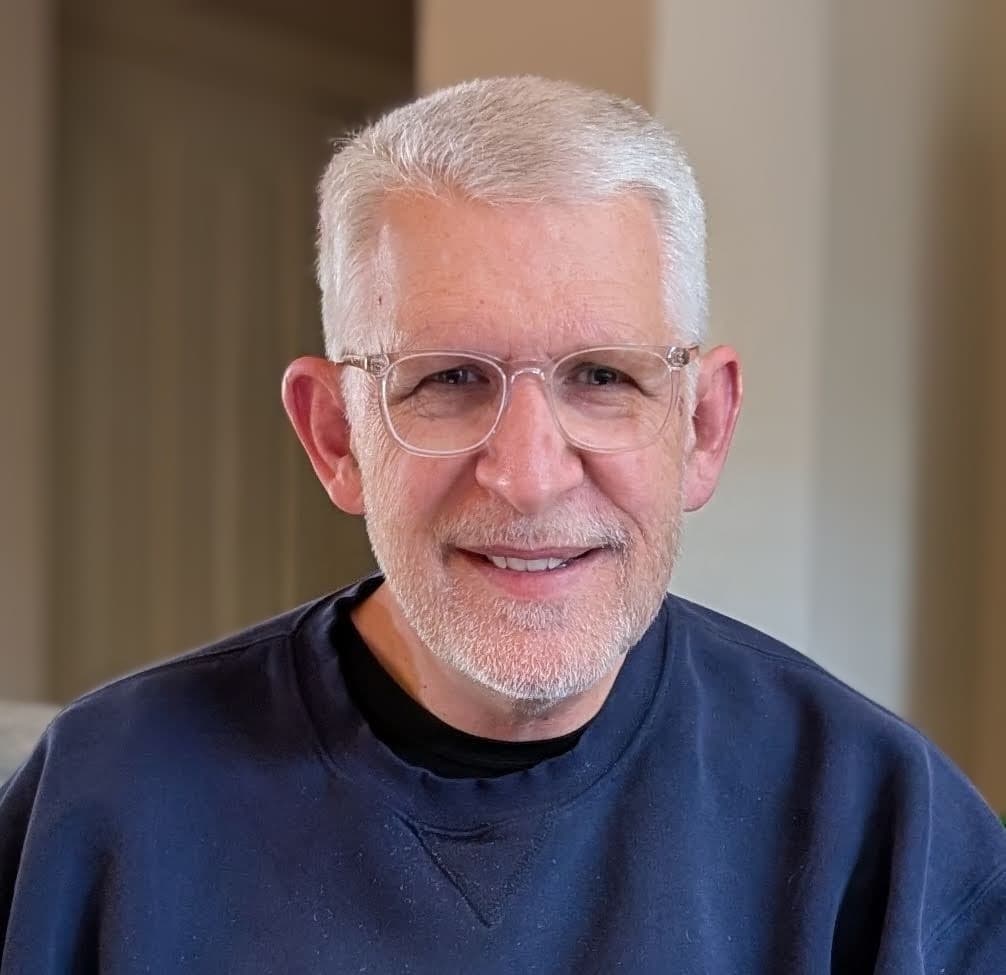
Discover how Solomon's reign marks a pivotal moment in Israel's history, highlighting God's presence and the importance of seeking Him in our lives as we build our own spiritual foundations.
We are going to be starting tonight in 2 Chronicles. You'll obviously notice, we talked about this as we started 1 Chronicles, you notice as you go through 1 and 2 Chronicles as it's different from 1 and 2 Kings, you'll notice that while 1 and 2 Kings covers all of the kings in both the northern kingdom of Israel and the southern kingdom of Judah, Chronicles only covers the Davidic kingdom, meaning the southern kingdom of Judah. We have a whole lot less going on here, but the purpose of this book is to follow the Davidic line. In other words, the line of David. And there is no separation in the Hebrew between 1 and 2 Chronicles, it's just all one book.
There's a separation in our Bibles but not so in the original Hebrew. And basically, 2 Chronicles can be divided into 2 sections. Chapters 1 through 9 are essentially dedicated to the rule and reign of Solomon, and then chapters 10 through the end, through 36, is essentially covering the collective reigns of the kings who came after him. And the deterioration of the spiritual life of the Jews in the southern kingdom of Judah to the point where they eventually were captured, taken captive, and exiled to Babylon, when Nebuchadnezzar came and destroyed the city and the temple. But what's interesting about this book, or the, I guess, 1 and 2 Chronicles, again as different from 1 and 2 Kings, is that Chronicles ends after the 70 year period that Israel was taken into captivity and that is, that's one of the marks of the difference of this book with 1 and 2 Kings.
And the reason that it is that way is because we believe very strongly that Ezra was the author of 1 and 2 Chronicles. And he's one of the men who came back after the exile, the 70 year exile in Babylon, and helped to rebuild the city and the temple. Chapter 1, 2 Chronicles begins like this,
(But David had brought up the ark of God from Kiriath-jearim to the place that David had prepared for it, for he had pitched a tent for it in Jerusalem.)” (ESV) Stop there just for a moment, let's explain what's going on. When Moses and the nation of Israel was going through the wilderness after their departure from Egypt, God commanded Moses to build a huge tent which they called the tabernacle, and it had various rooms and places and then in the inside, an inner room called the Holy of Holies, he was to place the Ark of the Covenant. I feel like I still need to be up a little bit further because I'm straining a little bit here. The tabernacle, as it was referred to also, the tent of meeting, survived all that time, and it had been pitched in Gibeah and it had stayed there a long time, but some 20 years before this time, the Ark was lost in battle with the Philistines. You'll remember it was during the time of Samuel, and the Israelites were treating the Ark of the Covenant a little bit like a lucky charm. Like a lucky rabbit's foot and they took it to battle into battle with them, but the Lord wasn't with them because they weren't faithful to Him and the Philistines not only defeated their army, they stole the Ark. Well, they took the Ark and kept it in Philistine territory for about 7 months, and then you'll remember that some really weird things started happening to them and so they said, we got to get rid of this thing. So, they sent it back to Israel where it ended up on an ox cart next to the home of a man named Abinadab, who happened to be a Levite. He took it in and it stayed at his place for 20 years. That's where the Ark has been staying. Now, the tabernacle has been over at Gibeah. Now these things were meant to be together. But they had been separated for the last 20 years. During David's reign, you'll remember in 1 Chronicles, we covered the fact that David finally decided we need to bring the Ark back and after a failed attempt to do so they did finally get it back to Jerusalem where instead of bringing the tent of meeting or the tabernacle from Gibeah, David just pitched a new tent.
We have no idea why. I don't know why David just didn't go get everything from Gibeah, bring it to Jerusalem and set it up and then bring the Ark and put it in there. Really not sure. Could it just have been that there had already been so many years of tradition? That's where they were doing things in Gibeah that it just stayed there. We really don't know. Anyway, the point is, what we're reading here in verse 3, is that Solomon, who's getting ready to build the temple, takes the leadership of Israel and they go to Gibeah to sacrifice to the Lord even though the Ark is already in Jerusalem. But remember the Ark doesn't give them any kind of a means of sacrificing animals. The Ark was not a sacrificial altar. It was just basically a beautiful golden box. It was wooden, but it was overlaid with gold and it had the mercy seat on top and it's where the blood was to be sprinkled to secure the forgiveness of Israel by the high priest, but it itself was not an altar. So, all these sacrifices were not going on in Jerusalem. They were going on at Gibeah, which was a high place. All right, let's talk about that for just a moment because this confuses people a little bit. What are the high places all about that you read about in the Old Testament? Well, a high place is really nothing more than a place of worship that was on an elevated piece of land, but why were high places important? Well, it stems back to pagan roots actually, the pagans believed very strongly that the closer they got to god, the more easy it would be for him to hear them. So they would pick hills and high places, rises in the ground, and they would set up their altars and their sacrifices there, thinking we're closer to our god he'll be able to hear us. It obviously is part superstition. Well, the Jews over the years adopted some of those same ideas and used the same idea in the worship of YAHWEH. Now, they also worshiped pagan idols on high places as well, but not all the high places were pagan places of worship. Some were worship for the worship of the Lord God, and Gibeah happened to be one of them. This is a legitimate place that they're going to worship the Lord, to offer sacrifices, but I wanted you to know why they're going to Gibeah and why they're not just staying right there in Jerusalem to do this thing. Verse 5, it says, “Moreover, the bronze altar that Bezalel the son of Uri, son of Hur, had made, was there before the tabernacle of the Lord….” (And that's something we just mentioned. That's where the bronze altar existed. That's where the sacrifices were taking place.)
5…And Solomon and the assembly sought it out. 6 And Solomon went up there to the bronze altar before the Lord, which was at the tent of meeting, and offered a thousand burnt offerings on it. 7 In that night, God appeared to Solomon and said to him, ask what I shall give you.” I want to stop there and just let you soak that in for just a moment. The God of the universe comes and says, ask me for anything. Did you ever stop to think what you might respond if the Lord said to you at, I mean, cause you're not just, I mean, I could say that to you ask me for anything I'll give it to you, but I don't have the ability to give you anything, that you might want. God does. He is the only one in the universe who has the ability to give you anything you want. Not that He necessarily would, but He's got the ability, right? What would you say? Well, here's Solomon's response. Verse 8,
(And so there in verse 10 is Solomon’s request. Give me wisdom, give me wisdom. And so) 1
Isn't that amazing? What God says to Solomon in response to his answer is hey, you asked me for wisdom. You didn't ask me for long life. You didn't ask me for the defeat of your enemies. You didn't ask me for riches and honor, and all these other things. You wanted wisdom. I'll give you a wisdom. In fact, I'm going to give you more wisdom than anybody who ever came before you or anybody who will ever come after you, but not only that, I'm going to give you everything you didn't ask for. I'm going to give you all these other things just as my blessing. Interesting, isn't it when you think about it? I guess it speaks of the generosity of the Lord. We see something of the heart of the Lord as it relates to those sorts of things. We see that God isn't afraid to bless His children. We also see something else. We see that He honors an attitude that is kingdom centric and what's interesting about that is that, again, Solomon could have asked for anything, but he wanted what was best for God's kingdom as it was established there in Israel and he said, Lord, who's able to do this? This is a vast people that you've placed me as king over, so, I need wisdom to be able to know how to do this. That's a really very selfless kind of a request, wouldn't you say? He's wanting something for them. I want to be able to convey wisdom and have wisdom so that I can do this job that I now have to do. The point that I'm making about all this is that Jesus actually spoke about this same principle when He talked about praying, and when he talked about seeking God and seeking God for the things that we want, and he said, seek first, right the kingdom of heaven, right? (Matthew 6:33) And then what did he say after that? Then all these other things will be given to you and isn't that exactly what we see Solomon doing and how we see God responding. Solomon is really asking for something that is very kingdom centric, and God is responding by saying, I'm going to give you everything else as well. It's this same principle playing out as a golden thread that runs through the Word of God. Verse 13. “So Solomon came from the high place at Gibeon, from before the tent of meeting, to Jerusalem. And he reigned over Israel.” And so, there's a statement in verse 13 that really is a quick summary, if you will, of Solomon's reign. Now we're going to get into some specifics, verse 14.
(And by the way, these are not horses for plowing, riding for pleasure or even for transportation. These are war horses. All right. We're talking about Solomon building up the, and establishing the armaments of his military forces, and it says) Likewise through them these were exported to all the kings of the Hittites and the kings of Syria.”
Who they obviously had a good relationship with. Otherwise they wouldn't be selling them armaments. Well, so you see here that the blessing of the Lord is just very apparent, right? God is blessing Solomon's reign. There's peace with his nearby enemies to the point where Solomon feels comfortable enough to sell them horses and chariots, not worrying that they're going to somehow come back against him, and then there's all this prosperity going on in the kingdom where silver and gold are like stones. I don't know about you, but I can walk outside and just pick up a stone anywhere and I don't think much of it, and apparently they didn't think that much of silver and gold as it relates to just how common it was in the kingdom. So you can see, this is a statement that is made to describe the overflowing abundance of God's blessing, but there's always a problem, isn't there, when God's blessing is being poured out. We hate to talk about this. Well, I do. I hate to talk about it, because every time we see in the Word of God where blessing takes place, there is the potential for backsliding, and for us to become so delighted with ourselves that we just begin to slack off in our walk with the Lord, and we're going to see that in the life of Solomon, unfortunately. But although we're being told in these early verses of 2 Chronicles that God's blessing was upon Solomon and the kingdom, we also see in these same verses the threads and the seeds of what would later be Solomon's downfall, because, let me show you a passage from Deuteronomy chapter 17. I'll put it on the screen here for you. Now, Moses is speaking to the people of Israel, and he says, listen, Deuteronomy 17:15a, 16-17 (ESV)
“...you may indeed set a king over you whom the LORD your God will choose. (and Solomon qualifies there. He says) Only he must not acquire many horses for himself or cause the people to return to Egypt in order to acquire many horses, (where did Solomon get them from? Egypt) since the Lord has said to you, ‘You shall never return that way again.’ And he shall not acquire many wives for himself, lest his heart turn away, nor shall he acquire for himself excessive silver and gold.” Now the only thing we haven’t been told so far in our description in Second Chronicles is how many women Solomon had in his life. Between wives and concubines, he had a thousand, one thousand. We already know he had excessive silver and gold. He had a thousand women, and he was regularly importing horses from Egypt where the Lord had told them through Moses, you shall not go back to Egypt. What is Egypt a picture of? We've talked about this in our studies before. Egypt is a picture of bondage to sin, right? Pharaoh is a picture of Satan who wants to keep us in bondage to sin. Moses is a picture of the Deliverer who comes to deliver us from our bondage, right? The Redeemer, and so what does God say to the nation of Israel as it relates to Egypt? Don't go back there. What does He say to you and I as it relates to sin and the life of sin that we live before Christ? Don't go back there. Don't go. We're going to be talking about that in Galatians in our study on Sunday morning very, very soon. As Paul is going to begin Galatians chapter 5 with the words, “it is for freedom that Christ has set you free.” Therefore, be free and don't go back and take on a life of slavery. He's going to refer to that right in Galatians chapter 5. It's that same message. Don't go back to Egypt. Don't go back. Don't turn back, and because here's the point. There are benefits back in Egypt that will lure us back into a sense of satisfaction and contentedness with that old life of sin because Egypt has things. In this case, they had horses, plenty of them, chariots, and Solomon was drawn to Egypt. I don't know if they had just the best going horses around or whatever, but Solomon was drawn to that. Let's go back to Egypt. Here's what's interesting about Solomon. It's not like he didn't know. It's not like he didn't know the Word of God as it relates to these things. Second of all, he's got more wisdom! Which, by the way, the definition of wisdom is the application of knowledge. Knowledge is to know. Wisdom is to understand what is behind that knowledge and to put it into practice and to live it out. And here's a man who, from God, has received more wisdom than any other man before that time or after that time, save, obviously, Jesus Christ, who comes in the form of man later. But nobody tops Solomon in the wisdom category, and yet in this area, he doesn't apply it.
In this area, he chooses to step beyond what he knows, which, by the way, is the definition of transgression, okay? A transgression means to violate a known truth barrier. He knew. He knew. And I remember as a young man in my teens, when I first started having my flirtation with God, I hadn't decided to follow Him by any stretch of the imagination, but I was flirting with Him. I was reading the Bible and I was impressed with Solomon. I have to tell you, as I read the Old Testament, and I was so impressed with Solomon that I began to pray regularly for wisdom. I don't think God ever answered that prayer, but anyway, that's beside the point. But I prayed very diligently for a period of time, and then I kept reading on in the story about Solomon and I found out what he did, and I found out how he turned away from the Lord. As he got older and his wives drew his heart away from God and he started building, we talked about high places. He started marrying pagan women and he built high places of worship for them, and then he even went there with his wives to worship and to sacrifice at those high places. Even to the point of doing some incredibly despicable things, because the worship of pagan gods many times included despicable practices. And I'm thinking to myself, wait a minute, I mean I was really disappointed as a teenager, thinking to myself I've been praying all this time for wisdom, and it didn't stop Solomon from messing up big time. What does it take, and I learned later on, that it's not just wisdom it's a choice to walk out wisdom. We're given knowledge. We're given understanding in the Scripture, but all every single one of us has a choice. We can decide to follow God, or we can choose not to, and as believers, we have a unique choice that even goes beyond before we knew Christ. Before we knew Christ, we didn't have as many choices as we do now. I was captive and dead in my sin before Christ. After Christ, I was made alive and I was no longer captive to those things in my life that once held me captive. Now, if I'm going to go back and live those things, I have to choose to go back. Before I knew Jesus. I didn't have to choose. I was just living there. I was living, that was my address, Captivity Lane 101 or something, but now I have to choose to go back there, and so do you. Why do we as believers sin? It's because we choose to. We choose to, okay? We've been set free. The Bible says Him whom the Son sets free is what? Free indeed!
That means completely free. Well, if you're completely free, that means nothing's holding you captive any longer.
Now I'm a slave to Christ, which means freedom, really a lack of captivity, because He's not a taskmaster. He sets us free when we're a slave to Christ, even though we use weird language there, so, it's a choice. We choose to live a life of sin, or we choose to live a life with Christ. And in Solomon's case, he chose to worship pagan gods. He chose, well, and of course it started way before then. He chose to amass gold and silver. He chose to amass a lot of horses. He chose to amass a lot of wives. And isn't it interesting? Can we put Deuteronomy back up there one more time? Deuteronomy 17: 15a, 16-17 (ESV)
“...you may indeed set a king over you whom the LORD your God will choose. (and Solomon qualifies there. He says)
I want you to notice toward the end of, look at the third from the bottom line there. “He shall not acquire many wives for himself, lest his heart turn away.” And Moses said that thinking, trying to think of my timeframe, probably 500 years before the time of Solomon, and it was as true then as it was during the life of Solomon, and it remains true today. 2 Chronicles chapter 2,
(and we're going to find out at the end of the chapter that these 150,000 men were basically aliens who were living in the area of Israel at the time and they were brought into this position of labor. And it's told that there were 3,600 men who were given the task of overseeing these 150,000 men. I decided to pull out my calculators to figure out what that was. That's roughly one overseer for every 40 workers. Interesting. It says here that)
3 Solomon sent word to Hiram the king of Tyre: “As you dealt with David my father and sent him cedar to build himself a house to dwell in, so deal with me. 4 “Behold, I am about to build a house for the name of the Lord my God and dedicate it to him for the burning of incense of sweet spices before him, and for the regular arrangement of the showbread, and for burnt offerings morning and evening, on the Sabbaths and the new moons and the appointed feasts of the Lord our God, as ordained forever for Israel. 5 The house that I am to build will be great, for our God is greater than all gods.” So neener, neener, neener. I don't, I mean, I assume Hiram, actually we find out later, actually kind of, he knows the Lord. He'll, you'll hear, see this later on, but I mean, typically you would think He's probably he's the king of Tyre, so he's probably a pagan or has pagan roots anyway. But boy, Solomon's just laying it out there. Our God, He's really the only God there is, and so there you go. He's greater than all gods. Verse 6, and I love this humility though. “But who is able to build him a house, since heaven, even highest heaven, cannot contain him? Who am I to build a house for him, except as a place to make offerings before him? 7 So now send me a man skilled to work in gold, silver, bronze, and iron, and in purple, crimson, and blue fabrics, trained also in engraving, to be with the skilled workers who are with me in Judah and Jerusalem, whom David my father provided. 8 Send me also cedar, cypress, and algum timber from Lebanon, for I know that your servants know how to cut timber in Lebanon. And my servants will be with your servants, 9 to prepare timber for me in abundance, for the house I am to build will be great and wonderful. 10 I will give for your servants, the woodsmen who cut timber, 20,000 cors of crushed wheat, 20,000 cors of barley, 20,000 baths of wine, and 20,000 baths of oil.” 11 Then Hiram the king of Tyre answered in a letter that he sent to Solomon, “Because the Lord loves his people, he has made you king over them.” 12 Hiram also said, “Blessed be (listen to this) the Lord God of Israel, who made heaven and earth, who has given King David a wise son, who has discretion and understanding, who will build a temple for the Lord and a royal palace for himself.” You know what's interesting about those two verses, 11 and 12? Again, this is Hiram, king of Tyre, not necessarily, I mean, again, probably a pagan background. I mean, later on in the life of the kings, this is Phoenicia. Okay. Tyre and Sidon is that area called Phoenicia and it was from that area that
Jezebel comes. She was a Phoenician princess, and she married Ahab, one of the kings of Israel, and of course led Israel in its downfall in its worship of Baal. And so, this is Hiram's kingdom, although albeit many, many years before that time. But regardless of that again, Hiram is a guy who comes from pagan territory and 2 times in those 2 verses, he refers to God as Lord. But I want you to look in your Bible, and look at how it's spelt. Obviously it's L-O-R-D, but I want you to look at the letters. Your Bible has them all in caps, doesn't it? It's either all in tall caps or in what we call small caps, and whenever you see that in your Bible, that is the name of the LORD, that is the unpronounceable name. Some people think it's Jehovah, some people say it's YAHWEH. We don't know exactly because the Jews never pronounced it for fear that they would commit an unholy act. And of course, it was only written with consonants, syllables, and no consonants, right. And you basically, you can't figure it out. It's like, what is it? YHWH, I think is all we basically had in that's transliterated into our alphabet. YAHWEH, Yehovah, we say Jehovah, but they wouldn't have had a J sound, pronounced like that. Anyway, the point is that is the name. That is the unpronounceable name. It is the name that God gave to Israel. That's why it's odd to see this pagan king talking about it. Right? Okay, I was thinking of vowels and consonants, wasn't I? I said that wrong. They didn't have the vowels in there. I think some of you were helping me there, and I got your brainwaves. Thank you. I appreciate that. The vowels are not there, so all we have is, yeah, the consonants. Okay, so anyway, pretty cool isn't it, that Hiram has a greater understanding of the Lord, and that could very well be because of his history with David. Verse 13, “Now I have sent a skilled man, who has understanding, Huram-abi, 14 the son of a woman of the daughters of Dan, and his father was a man of Tyre. He is trained to work in gold, silver, bronze, iron, stone, and wood, and in purple, blue, and crimson fabrics and fine linen, and to do all sorts of engraving and execute any design that may be assigned him, with your craftsmen, the craftsmen of my lord, David your father.” Boy, this this Huram-abi guy. Pretty talented, huh? I mean, think about it. All the things that he says that he can do, gold, silver, bronze, iron, stone, wood, and then also in all these fancy fabrics and engraving and executing he says, any design. Wow. Yeah. Very gifted. “15 Now therefore the wheat and barley, oil and wine, of which my lord has spoken, let him send to his servants. 16 And we will cut whatever timber you need from Lebanon and bring it to you in rafts by sea to Joppa, so that you may take it up to Jerusalem.” 17 “Then Solomon counted all the resident aliens (and this is where we get a little bit of a repeat here from where we started the beginning of the chapter. It says he counted the resident aliens) who were in the land of Israel, after the census of them that David his father had taken, and there were found (and here’s that, and he rounded it off at the beginning of the chapter but it’s) 153,600. 18 Seventy thousand of them he assigned to bear burdens, 80,000 to quarry in the hill country, (and then once again) and 3,600 (who were) overseers to make the people work.” And then we come to chapter 3, it says, “Then Solomon began to build the house of the Lord in Jerusalem (on where?) on Mount Moriah,” Mount Moriah is a very important place. Just recently we saw that Mount Moriah was the place where David was told to build an altar when he counted the fighting men against the will of the Lord and he was suffering for it, but much before that, Mount Moriah was also the place that Abraham was told to go to sacrifice his son Isaac. Now, of course, he didn't carry through with that sacrifice, but that's where God told him to go, and it was at that place that Isaac said to Abraham, father, the wood is here, the fire is here, where's the sacrifice? And Abraham said to his son,
, and that was the whole picture of the temple. (Genesis 22:7-8) Why the temple stood is that God was saying to the Jews, God will provide a sacrifice, and this is where the sacrificial system was put into place. It says in verse 2 that, “He began to build in the second month of the fourth year of his reign (You know what, I didn't finish reading verse 1, did I? No) 1“…on Mount Moriah, where the Lord (and I guess I told you this, where the Lord) had appeared to David his father, at the place that David had appointed, on the threshing floor of Ornan (your Bible may say Aranah, same name, different variation) the
Jebusite. 2 Now Solomon began to build in the second month of the fourth year of his reign. 3 These are Solomon's measurements for building the house of God: the length, in cubits of the old standard, was sixty cubits, and the breadth twenty cubits. The vestibule (or your Bible may say portico, which is like a porch) in front of the nave of the house was twenty cubits long, equal to the width of the house, and its height was 120 cubits. He overlaid it on the inside with pure gold. (That'd be pretty impressive) 5 The nave (and by the way, that's another word for the main hall) he lined with cypress and covered it with fine gold and made palms and chains on it. 6 He adorned the house with settings of precious stones. The gold was gold of Parvaim.” We don't know what that means. That was probably a place that was known to them where they mined gold that was especially pure, but it's been lost in antiquity. It says in verse 7, “So he lined the house with gold—its beams, its thresholds, its walls, and its doors—and he carved cherubim on the walls. It's interesting. If you find an artist's rendering of the temple, Solomon's temple, you will see how cherubim, which is a station or a, they're angels. Okay. Station wasn't the right word. It’s a level of angel if you will. They play pretty, they figure pretty powerfully in the temple design in the sense that when you, if you went into the Holy of Holies there were cherubim, huge cherubim whose wings were touching the outer walls and then touching together at the center. There were cherubim over the mercy seat, over the cover of the ark. There's all these cherubim that are carved into the sides of the walls and so forth. What's interesting is we have, we don't have a ton to go on when cherubim in terms of how they look. If you go to the book of, we're not going to do it tonight, but if you go to the Book of Ezekiel and you read some of the descriptions, they're pretty crazy and highly symbolic, I would guess. If you look at pictures of the temple, artists renderings, sometimes you're going to see cherubim depicted in human form with huge wings, and sometimes you're going to see cherubim depicted in animal form much closer to what we read in some of the descriptions, for example, that Ezekiel gave. Anyway, they were just a big thing in the temple, and it says,
8 “And he made (the holy place, excuse me) the Most Holy Place. Its length, corresponding to the breadth of the house, was twenty cubits, and its breadth was twenty cubits. He overlaid it with 600 talents of fine gold. 9 The weight of gold for the nails was fifty shekels. And he overlaid the upper chambers with gold.” Now, the most holy place is where the Ark sat, and once that room was finished and the Ark was brought in, nobody would go in there except the high priest. And we'll be told here that they put a garment, not a garment, a veil in front of the door, even though there were doors that were built between the most holy place and the holy place, but those doors never got shut. But there was a veil, and that is the same veil that would have been ripped in two when Jesus died on the cross. Verse 10, “In the Most Holy Place he made two cherubim of wood and overlaid them with gold. 11 The wings of the cherubim together extended twenty cubits: (And by the way, a cubit is about a foot and a half. Okay, so about 18 inches. And yeah, if you put that together, you'll see it says) one wing of the one, of five cubits, touched the wall of the house, and its other wing, of five cubits, touched the wing of the other cherub; 12 and of this cherub, one wing of five cubits, touched the wall of the house, and the other wing, also of five cubits, was joined to the wing of the first cherub. 13 And the wings of these cherubim extended twenty cubits. (Or a total of 30 feet right? I think that's right. And it says) The cherubim stood on their feet, facing the nave. (Or facing, if you will, the holy place. They wouldn't be facing the back of the room; they would be facing the doorway of the most holy place) 14 “And he made the veil (and here it is) of blue and purple and crimson fabrics and fine linen, and he worked cherubim on it. 15 In front of the house he made two pillars thirty-five cubits high, with a capital of five cubits on the top of each. 16 He made chains like a necklace and put them on the tops of the pillars, and he made a hundred pomegranates and put them on the chains. (And pomegranates were considered to be a favorite fruit of the Middle East, so they figured into the decorations carved into these areas of the temple.) 17 He set up the pillars in front of the temple, one on the south, the other on the north; that on the south he called Jachin, (which by the way, means, He establishes) and that on (the pillar on) the north (he named) Boaz.” Which means, in Him is strength. He establishes in Him is strength)
Now, if you know much about the design of the tabernacle that Moses was commanded to build in the wilderness, you know that the temple actually follows a lot of its same design ideas, obviously not a tent, a full building. But where Solomon departs from that design is in these last few verses where he puts these huge pillars in front of this portico and all of the measurements and all the things that went along with that.
View the formatted transcript
PDF Transcript