
Being the Body of Christ
1 Corinthians 12 (Part 3)
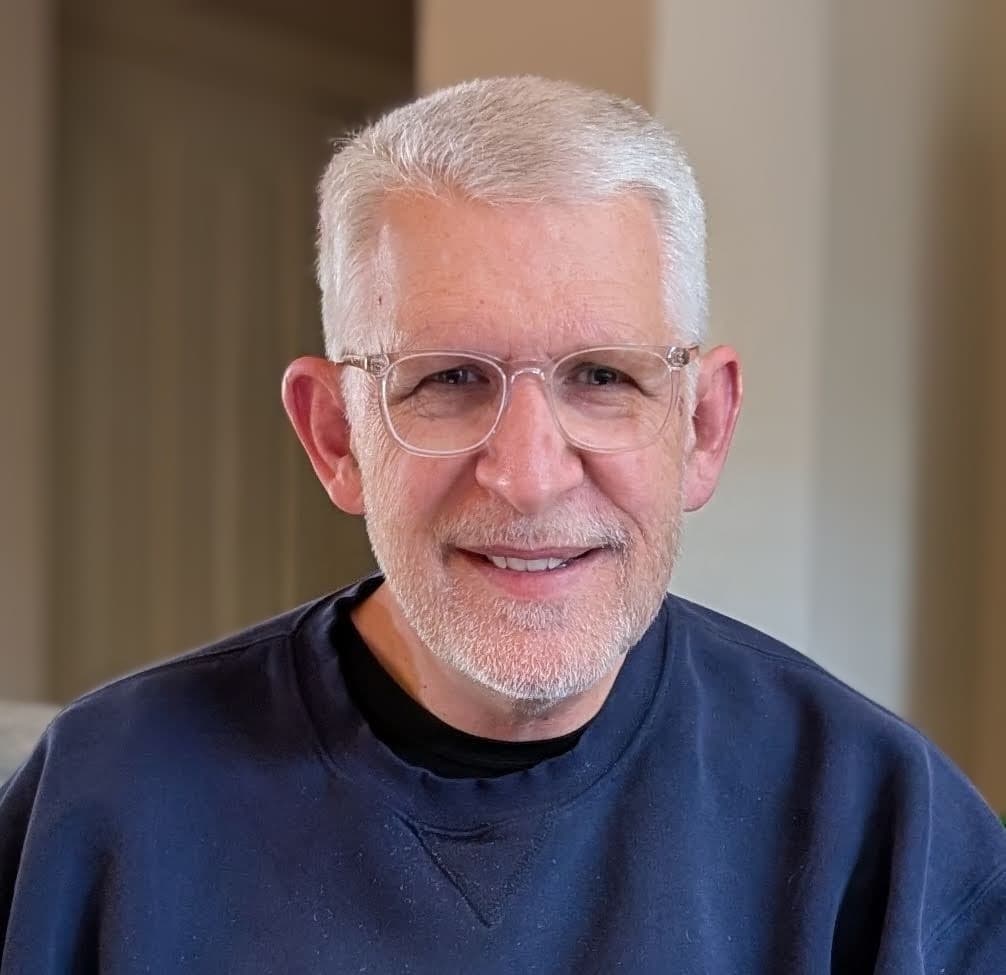
We are all unique members of the Body of Christ, each with our own gifts and roles, called to support and care for one another in love and unity.
1 Corinthians chapter 12. This is I think our third installment in this chapter, and we're going to complete the chapter today. We're going to be picking it up in chapter 12, verse 12, and then reading through the end. Follow along as I read.
Stop there. Let's pray. Holy Spirit, we invite You into this place. We invite You to fill our hearts with understanding, with insight, with peace, with revelation. You are the God who teaches and instructs us in the ways that we are to go, and we ask You to do that today. We ask You to bring this passage to life, and I pray my Father that You would guide my heart as I share Your Word today. Lord, we just humble ourselves before You, in Jesus precious name, amen. This section in Paul's letter continues the discussion on spiritual gifts and we're going to get back to specifics on spiritual gifts here very soon. And Paul is going to talk about some of that vital information. But beginning right here, this begins a change. Now, it's not a change in the sense of what Paul is talking about, but in a change in the sense of how he's talking about spiritual gifts. Because beginning here in verse 12, and ending through chapter 13, Paul is going to talk about all that is behind spiritual gifts. And this is the part people don't like to necessarily sit and listen to. We get impatient. We want to talk about spiritual gifts. Let's get into it. Let's talk about it, let's talk about the fun stuff. Let's talk about the exciting stuff, the supernatural stuff. And that's where the Corinthians were. They were into all that. And there's nothing wrong with that per se, but they had leapfrogged when it came to spiritual gifts over what Paul considered to be the heart behind it, the essence of it. And this is where we got to be careful not to make the same mistakes that the Corinthian church made related to that. And so Paul is going to use here, as you've already seen in these verses, the illustration of the human body to help us understand the makeup of the body of Christ and the functioning of spiritual gifts. And as we get into these verses, and certainly not just these verses, but frankly, in any of Paul's letters, if you read any of Paul's letters, you realized that he was a wordy guy. If you'd have met the apostle Paul in the street and talked to him, you probably would have come away saying, and I do this sometimes with Sue. We'll talk to somebody and then we'll come away and get in the car and I'll go, well, he sure had a lot of words. You know the type. There are people that are just really good at talking, and they'll just talk your leg off if you let them. And you don't have to say a word, you just got to stand there, just give them a breathing, breathing human being and they're ready to go at you. Paul was a little bit like that. He was semi-wordy, verbose. But what he would do in his writing style, and he does it here in these verses is, Paul would say a bunch of things, and then make a statement. And then he'd say a bunch of things, and then make a statement. And then he'd say some more things and then make a statement. Okay. That's just his m.o. That's the way he does things. In order to help maybe make this passage of scripture a little more understandable to you, I've pulled out those statements. Okay. And that's not to say we're going to ignore the rest of it, but this might help you understand where Paul is making his emphasis. Because again, he'll talk and then punch. This is what I want you to know, and I've told you about it. Now here's the statement about it. Okay, here are those statements. First of all, Key statements in this passage. Key statements: For…we were all baptized into one body (:13) God arranged the members in the body…as he chose (:18) God has so composed the body…that there may be no division…that the members may have the same care for one another (:24-25) …earnestly desire the higher gifts (:31) Number one, the first thing is, For we were all baptized into one body. That's the first thing Paul wanted you to know. He talks about it and then he punched it out. He says, we were all immersed into one body, and we'll get into that, in what he means by that. The second statement is that, God arranged the members in the body, the parts of the body, the members in the body, as He chose. That's the next statement Paul wants you to see. That's a stamp. Right. The third one is, God has so composed the body that there may be no division, that the members may have the same care for one another. That's the third thing he wants to punch through.
And then the fourth statement comes as an exhortation, where Paul says, earnestly desire the higher gifts. These are the things Paul wanted you to know from these verses. Now, as we get into the verses and begin to unpack them again, you're going to see the reason behind these emphasis or these statements that Paul makes. All right, so begin looking with me again in verse 12. He starts in verse 12.
And then comes the first statement, verse 13. This is the first punch.
Remember the word, baptized means immersed and it is not referencing water baptism. It is not referencing necessarily, spirit baptism. Those are beautiful pictures and spirit baptism is the one that is more in view. But remember the word baptized means dunked, immersed, filled, surrounded by. Okay.
We were all immersed, he says,
Paul is making the point here in this first section, these first 2 verses, that just as our own human bodies are made up of lots of parts, also is the body of Christ. But did you notice the word usage here, guys? This is really important. Did you notice the word usage? You would expect Paul to say, just as our human bodies have a lot of parts, so it is with the church.
Wouldn't you expect him to say that? Just like our bodies have lots of parts: arms, legs, eyes, ears, mouth, so also is the church. He doesn't say that. Look what he does say. He says,
Isn’t that interesting? Now he's not talking about Christ's physical body in the sense that the body that, by the way, I believe Jesus still has a physical body seated at the right hand of the Father. It's His resurrection body, but it's still a physical body. It's a glorified body. We know that He still bears His scars. He showed them to the disciples. We know that with His physical body, He can do pretty amazing things like just pass through walls. He can also eat fish, because you'll remember on the resurrection evening, they were all sitting there like the whole deer in the headlight thing when He showed up.
And so in order to just settle them down a little bit, He just said, hey, anybody got something to eat around here? And they had a piece of broiled fish. And so they gave it to Him and He sat in and ate it in front of them, which, they were probably sitting around just watching Him eat this piece of fish. But this was His resurrection body. I believe He still has it. I believe He still has it because the Bible says that when He returns, it says, the Jews will look upon him whom they pierced. (Zechariah 12:10, John 19:37) They will see the marks of His crucifixion. And when John, in Revelation, saw the majesty of heaven, he said, then I saw, standing in the midst of the throne, a lamb as if it had been slain. (Revelation 5:6) Still bearing the marks of his crucifixion. Jesus has a body, but that's not the body he's specifically talking about here. Although he's talking about Jesus's body, he's talking about you, and me, us together. We are the body of Christ, the church. Paul said the same thing in Romans chapter 12. You might recall our study in Romans. He went through a lot of the same information talking about the body of Christ. Guys, do you understand? We are the body of Christ. We are His body upon the earth. In Colossians, he added an interesting little point that,
And he (Jesus) is (actually) the head of the body, the church. He is the head. We are the members. Isn't that amazing? Now, what does it mean when it basically says that we are the body of Christ. I mean, what does all that mean? We think that our bodies are all that we are. Our body is not all that we are. Our body is only part of who we are for a very short period of time. But your body is used by you during this life to communicate and to interface with other people. And we talk to people right, with our bodies. We communicate God's love with our bodies by taking our hands and doing things, taking our feet, going places so that we can bless people, and show God's love to people. In other words, the body is the means by which we interact with the world around us.
What is the body of Christ? It is his means by which He interacts with the world around us. We, the church, the body of Christ is the means by which Jesus is touching the world. How is He touching the world? Through you, through me, through us? We are His body. It is through…, people say, oh, I just wish Jesus was here. He is, because we are. He is here through us. We are His body. And I understand how mysterious that sounds and even a little bit weird, but it is a reality. Blows me away that He would allow me to be a part of His body, to represent Him. That means that all of us have a function. That's what Paul's getting at. We all have a function of that body in the kingdom. And so again, what is the thing Paul wants us to know about our different functions? Look again in verse 13. I'll only read little bits of it here. “For in (or with) one Spirit we were all (immersed) baptized into one body…” And that's a very simple statement, but it's very profound. And simply saying here that through one Spirit, we've been made into one body. And the idea here is that since you're one body, you really ought to function as one body. This is almost lost on modern audiences today. Because we're one body, we ought to function as one body. Gee, what a revelation. But you know that bodies work best when they function as one? Think about your own human body. It has to function as one. In fact, if it doesn't function as one, then what happens? If you look at your physical body, a picture… Have you ever seen, and I got to be sensitive about this. But have you ever seen somebody who's trapped inside a body that doesn't function as one? Their mind, the nervous system no longer sends the right signals. Either that or the limbs just aren't getting the signal to move. And they're trapped inside a body that basically is not functioning as a whole. It's functioning, well, it's barely functioning because the mind can no longer make the arms work, or the legs work properly, or the mouth. Have you ever sat and tried to have a conversation with somebody who lost their ability to really speak? They have no problem forming words in their mind, but they don't get out through their mouth because there's just an interruption in the neurological ability to make that happen. And it's a body that is now disjointed, and out of whack, and it can hardly move. Sometimes it even needs people to come along and feed it cause it can't do it itself. This body literally can't feed itself anymore. It can't care for itself anymore. Why? Cause it's not functioning as a united body any longer.
And you and I look at that and we say, wow, that's really sad. Right? Right? We look at people like that and we go, wow, that's terrible. Guys, that's us. That's the body of Christ. We don't function as one. We're not functioning as one. It's like the head who is Jesus, it's like the messages aren't getting to the arms, or to the legs, or to the mouth, or the eyes, or the ears. We're just not getting it. We're not functioning as one. We're not acting as a family. We're not acting as a united group. Paul is making the point here that it is through the one Spirit that we have been baptized or immersed into being the one body of Christ, yet we're not one. Not very much anyway. People wonder sometimes why… We look at the Book of Acts and we see the church turning the world upside down. I mean, literally on its ear and we think, why aren't we doing that today? We're in more places in the world than they were. We have more capabilities in terms of technology, sharing the Word of God. It's your satellite internet, you name it. Why aren't we turning the world on its ear like they turned the world on its ear. Now, one of the reasons is because they were one. They were much more one than we are. The functioning of the body, or should I say this, in the last 2,000 years, the body has lost a great deal of its function. And we're not operating like we should. We need to get back doing that, and even as a local fellowship. It seems a little overwhelming to think about functioning with the body of Christ worldwide. Let's just start right here. How about in Calvary Chapel, Ontario? How about that? Let's just let's keep our scope, let's just try to act as one. Even that we find challenging. Paul says, look at verse 14 again.
And then Paul asks the obvious question in verse 17.
Hearing is pretty important, and I'm learning that more and more, the more I lose my hearing.
Smell is very important too. It can save your life, right? Okay. Which brings us to statement number 2, verse 18.
Guys, this is the next thing Paul wants you to know. God arranged the members in the body as He chose. We look at our human bodies and we go, wow, I mean the arrangement is pretty good. I like the fact that I got ears on each side of my head. I wish I had eyes in the back of my head, sometimes.
Well, when I was raising small kids, let's put it that way. But I mean, there's a few things. Have you ever done something where you're thinking if I just had one more arm, I could get this job done. But by and large, we look at our physical bodies and we go, wow, this is a masterpiece of uniformity, and design, and it's so forth. And it's because this way God made it.
Well, it's the same thing with the body of Christ. It is a master of design. It's masterful. It's beautiful. It's incredible.
And yet we have this interesting tendency in the body of Christ to elevate certain members of the body who we think are more important. And we demote those who we think are not as important. And Paul makes it clear that when we pass judgment on the importance or the lack of importance related to a member of the body of Christ, we're actually judging God. Because he says here, it was God who arranged the parts. He did it.
He arranged them. That means, as much as we tend to have this American Idol sort of a picture of life and we see people that way, God doesn't. And if your gift doesn't happen to fit in with that particular picture of American Idol, that's okay. God sees you as just as important in the body of Christ, as those who may be up ministering in front of others, or singing, or whatever the case might be. God arranged them, all of them gave each of them their function and as if to illustrate just how dumb it is to demote some parts of the body, as unimportant, Paul returns to the idea of our physical bodies here in verse 19.
Look with me in your Bible, verse 19, and he even begins to ask all these rhetorical questions.
Well, that would look pretty weird. If every part of your body was just like just one part. What if you were just a big nose? I mean, that might work on cartoons, right? But that doesn't work for you and I, because it's lacking the parts that it needs to adequately function as a body. He says, verse 20, “As it is, there are many parts, (but they all make up just) yet one body.” And so therefore, verse 21, “The eye cannot say to the hand, “I have no need of you,” nor again the head to the feet, “I have no need of you. 22 On the contrary, the parts of the body that seem to be weaker are indispensable, 23 and on…” And then he goes, skip down and to the end of verse 24, actually verse 24 where He says, “which our more presentable parts do not require.” Then comes this statement, number 3, boom, here it is. “But God has so composed the body, giving greater honor to the part that lacked it, 25 that there may be no division in the body, but that the members may have the same care for one another.” I want you to think about what he's saying here for a moment, because this is really an amazing statement. Paul is saying that the body was created in such a way, that functionally it should have no division. It should have no division. And in fact, each of the parts should care for the other, right? Isn't that amazing? In my physical body, if one part hurts, the whole, my whole body is like, oh! I mean, if I hit my thumb with a hammer, my other hand is just right there. It comes right now to take care of it. And then, physiologically, there are even things that go on if I cut myself. My body starts going, hey, we've got a cut going on and it starts doing things to take care of it. There are parts in the body that Paul wasn't even, he didn't even know about back in his day, but we've learned about through science and physiology. And we know that there are cells and there are things that their whole job is just to like stop bleeding, or something like that. And they're like, hey, we got a cut going on. They race to the thing and take care of it. And there's mix of oxygen, and these blood cells, and it's an amazing body But what happens? What am I saying?. I'm saying the body knows how to take care of itself, right? It knows how to take care of itself. It is such an intimate arrangement of concern that it is expressed. That concern is expressed in verse 26 in your Bible. “If one member suffers, all suffer together; if one member is honored, all rejoice together.”
I want you to think about that statement for just a minute, because it's certainly true of your physical body, is it not? Right? It's certainly true of your physical body. If one part suffers, your whole body is just really suffering. And you're focused on that one part, that one cut, that one sprain, that one break. And your whole body is just focused in on it. Right? And if things are going well, the whole body is just rejoicing. Why is it not that way in the body of Christ often? Why is it that way, when we see one member of the body honored we don't rejoice in that honor? But instead we are jealous. Why is it when one member of the body is hurting, we don't all rush to that one member of the body to help, and to take care, and to minister to that one member of the body that's hurting? Because we will have lack of concern. It's not me hurting. Gee, I'm really sorry you're going through that. What we mean by that is I sure am glad it's not me. The fact of the matter is, it is you, it's your body because you're all part of the same body. Paul's talking about, the intimacy, the connectedness that ought to be demonstrated in the body of Christ that is certainly demonstrated in your physical body, but it's often not demonstrated in the body of Christ. Why don't we treat one another with the care and concern that we ought to? The body was made in such a way that there'd be no divisions. Isn't that an interesting terminology? That there might be no divisions, that there might be no problems, there might be no quarrels. My right hand does not quarrel with my left hand, and vice versa. My hands do not quarrel with my feet. My feet do not quarrel with my eyes. They just work together that there might be no division. That there might be no schism. That there might be no separation. And that's the way it ought to be in the body of Christ. My feet don't sit around complaining all day. Oh, I wish it wasn't I. They just do what they do because that's what they do. That's what God made them to do. My hands don't sit around crying that they're not my ears. If only we could hear. My hands can't hear, but they can do things the years can't do. And they are made in such a way that when they work together, they function properly and they ought to rejoice in one another. Right? That's what Paul's saying here. And it's really a beautiful picture. But the fact that the spiritual body of Christ often doesn't act like this, shows us how far we've gotten away from what God intended us to be as the body of Christ.
And then we come to the last 4 verses. Verse 27 and following, look with me in your Bible. “Now you are the body of Christ and individually members of it. 28 And God has appointed in the church first apostles, second prophets, third teachers, then miracles, then gifts of healing, helping, administrating, (he’s talking about gifts here) and various kinds of tongues. (and then he asks the question) 29 Are (you guys) all apostles? (no) Are all prophets? (no) Are all teachers? (no) Do all work miracles? (nope) 30 Do all possess gifts of healing? (no) Do all speak with tongues? (or how about) Do all interpret?” The answer is no to all of these. And then we come to the final statement that Paul makes. Here's his stamp. “31 But earnestly desire the higher gifts. And (he goes on to say) I will show you a still more excellent way.” Which leads into the next chapter. Alright, what does Paul mean when he says higher gifts? “…earnestly desire the higher gifts.” Well, the New American Standard Bible (NASB) and the NIV, use the word, “greater gifts.” The New King James (NKJV) refers to them as, “the best gifts.” Well, I know you've read on past what we're studying here in 1 Corinthians. If you read on into chapter 14, it's not hard to figure out that Paul considered some gifts more important than other gifts in the body of Christ when we come together. And that's an important thing to keep in mind. When we gather together, there are some gifts that are more important. When we meet together, in order for the body to function properly, there are some gifts that naturally function in a more prominent way when the body of Christ comes together, and they are prophecy and teaching. How do you like that? By the way, Paul is not going back on himself. What he just said a moment ago about how we elevate some members of the body and we demote others. He's not contradicting himself here because there he's talking about members. Now he's talking about gifts within the context of when the church gathers together, there are some gifts that naturally come to the forefront. Because when the body gathers together, they gather together to be encouraged, to be taught, to be encouraged and that sort of thing. And what I'm going to do is I'm going to show you a couple of scriptures from a couple of chapters from now, and we'll actually get into these more thoroughly. But when the body comes together, Paul believed that prophecy and teaching were very important. Let me show you. 1 Corinthians 14:1,
If you're going to hang out and really desire from God, spiritual gifts, make sure prophecy is one of the ones, one of the biggies. Why? Because prophecy is speaking to the body, a message from the Lord. And then look at the next one, 1 Corinthians chapter 14 verse 19 says,
Alright. I want to keep this verse up for just a moment, this is an important verse.
Now, I want you to take note of something very important, and that is that word, instruct, okay? Take a look at that word. That is the word, ka·te·kheʹo. Katekheo in the Greek. Does that sound like anything you might have ever heard before? How about catechism? Ever heard of, catechism? Some of you went through catechism, and it was probably like, boring, right? Catechism, you know what the word can also be translated? Teach. In fact, this word, katekheo, which is translated, instruct, here, can also be translated, teach. All right.
Paul says when I come together, when we come together as the body of Christ, and that's a key again. When we come together, I would rather speak 5 words to teach you than 10,000 words in a language that you never understood. What Paul is saying here is that when the church comes together, teaching needs to be going on and it's more important. He's saying, I would rather teach you than speak in tongues. Now, you know what? The apostle Paul spoke in tongues. He said to them, he says, in fact, I'm glad I speak in tongues more than all of you. But when we come together, I want to impart something useful to you. I would rather teach you. Paul is saying when we come together, let there be prophecy and let there be teaching, right? This is a very important point. And by the way, it answers a question that some of you might have going through your mind. And we'll talk about this more. But the question you might be wondering about is, why have you not, and do you not hear tongues and interpretation at a service here at Calvary Chapel, Ontario? And I will tell you in 25 years, it hasn't happened. You might be wondering, why don't we do it? And I am going to speak to this issue much more thoroughly in the coming weeks. But right here, Paul makes it clear that when we come together, when we gather together as the body of Christ, there are gifts that are more important to function. And that's why he makes reference there to speaking forth with prophecy and teaching the Word of God. Paul considered those things vitally important: prophecy and instructional teaching. And he is not elevating one member over another. He's elevating gifts over another when we gather, when we gather. Okay. So many people try to interpret what Paul says about spiritual gifts outside of the context of gathering as the body of Christ and they get so messed up. Paul is writing to a church you guys. He will talk about some private individual usage of some gifts in chapter 14, and we'll talk about that. We'll separate that out for you to understand it. But by and large, he's addressing the church. He's writing this letter to many people, right? When he talks about the gift.
What would you normally, if you were the apostle, what would you say to people if you were talking to them as a group? You'd be talking about things they did when they came together as a group. And he says, when you guys come together as a group, there are things that are more important. There are certain gifts that rise to the top as more important for group usage. That's what he's saying here. And there are things that are more needful. And that's why we focus on teaching here at Calvary Chapel. And occasionally you will hear a word of prophecy. You will hear someone who will say, the Lord would say to you and they begin, and that's a word of prophecy. You're hearing it. You hear it on a semi regular basis around here. You can't force prophecy. Prophecy happens whenever God wants to do it, and whenever we happen to be listening. Teaching, we can do it all the time, and we try to do it every time. But these are the things Paul said to focus on. That's why we focus on them. You see? We're not going to sit and focus on things that Paul said were least important when the body of Christ comes together. Now, that doesn't mean that the gift of tongues and interpretation isn't important or can't be used. It doesn't have a function within the body. It does. But it's not important when the body comes together. And in fact, we're going to see when we get to chapter 14, Paul warned about the usage of tongues when they came together. He warned about it. He said, guys, you guys are just you’re speaking in tongues like a bunch of weirdos and don't you know that when some people come in and they don't get it. They don't understand. They're going to listen to you guys and they're going to think these guys are nuts. He says aren't they going to say you're out of your minds. Is he forbidding the speaking of tongues? No. He's saying but when you come together be thoughtful of people coming in. They've never heard of this stuff before, they're not initiated. They don't understand. They don't understand the Word of God. They've never been exposed to this stuff. Care about those people. The body ought to care about the body. When people walk through the door, you ought to care about them. Care about how they feel. Care about whether they're welcome, whether they're comfortable. Whether they're getting their needs met. Right? That's the way the body ought to function.
View the formatted transcript
PDF Transcript