
It is God Who Works in You
Philippians 2 (Part 2) :12-18
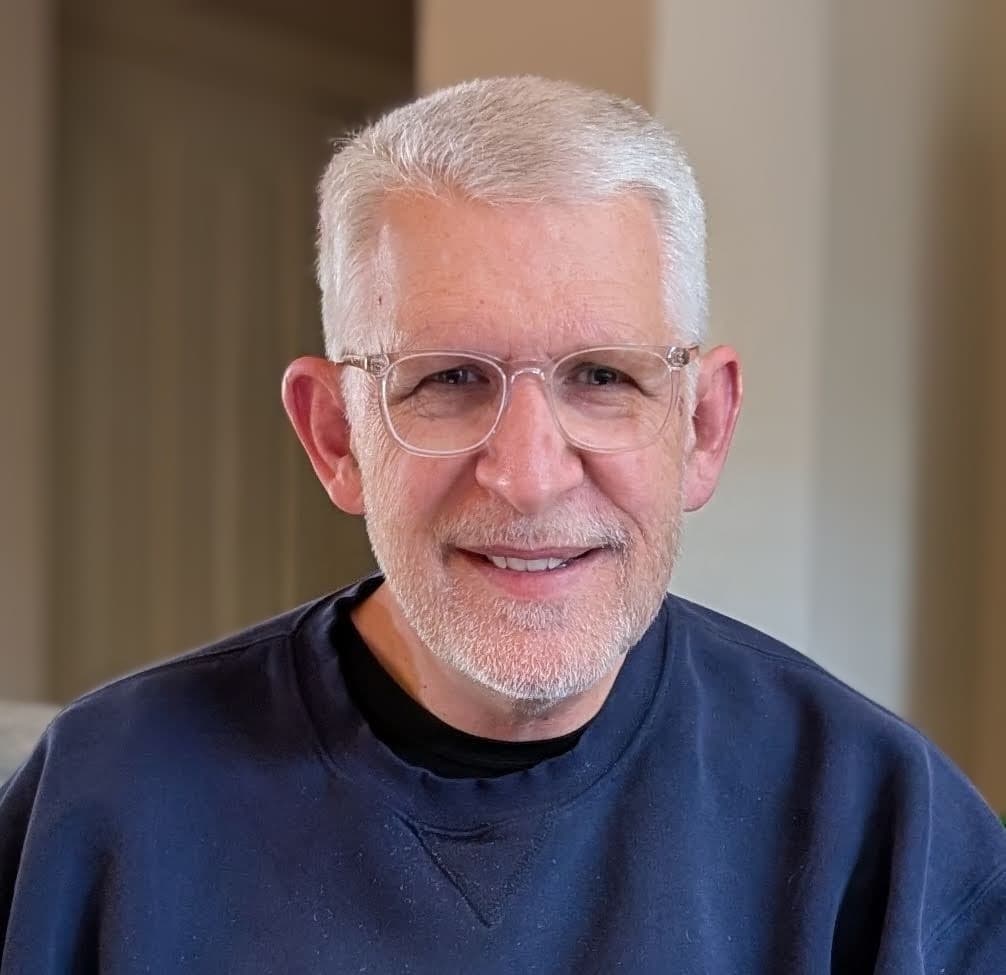
Embrace the journey of faith with reverence and joy, allowing God to work within you as you live out your salvation, shining brightly in a world that needs His light.
Philippians chapter two. We're in verse 12, going to be reading through verse 18. Let's read it. And it says,
(ESV) Let's pray. Thank you, Father, for giving us your Word, and we pray that you would open our hearts to it today, and that you would help us to understand what you're saying, and then also to apply this Word to our lives. You are the teacher. We sit at your feet. Teach us today, oh Lord God, in the name of Christ, our Savior, amen. As Paul gets into this section of his letter to the Philippians, he begins to speak to them about obedience. And he says to them, even as you have obeyed when I'm around, I want to encourage you to also obey when I'm not around. And he says, in the midst of that, I want you to, “work out your own salvation with fear and trembling.” Before we talk about what that means, let's clear up any misunderstandings about what it does not mean because Paul is not saying work for your salvation. If he were, he would be contradicting himself, frankly, because elsewhere, he said the exact opposite. Let me show it to you on the screen, Ephesians chapter 2, you know this.
Ephesians 2:8-9 (ESV) For by grace you have been saved through faith. And this is not your own doing; it is the gift of God, not a result of works, so that no one may boast. For by grace you have been saved through faith. And this is not your own doing; (Pretty clear there. He goes on to say) it is the gift of God, (and it is) not a result of works, so that no one may boast. So since we know that Paul is not reversing himself here in Philippians, and we know he's not saying, work for your salvation, now we can ask ourselves, what is he saying? Well, the single Greek word that is translated here, work out, where he says, work out your salvation, means to produce or to accomplish. Okay? In our American vernacular, we would say something like, walk it out, make it a reality. Right? So Paul is saying, walk out your salvation. Walk it out to completion alright, with fear and trembling. The other thing you need to understand about his usage of the word salvation here. Guys, salvation doesn't always refer to eternal salvation. When the Bible uses that word, it can have different shades of meaning. And in this particular case, the word salvation refers to simply your life in Christ that you walk out every single day. That's what he's referring to. He's saying walk out your life in Christ. Walk it out in obedience to the Lord and live it to completion and so forth. So, it's all about shining our light for Christ while we're doing the things that we need to do to stay out of trouble. That's another part of walking out your salvation. It's living your life in such a way, not so close to the edge that when temptation comes along, you fall off that edge. Rather, he's saying, walk out, live out your salvation in such a way that you understand the pitfalls, and the difficulties, and the challenges that come your way as a Christian so that you can walk it out, and in so doing, shine your light for Jesus Christ. And that's, you can see that's huge. And just in case you think that all this walking out of your salvation in Christ is all up to you, notice that he goes on in verse 13 to say, “for it is God who works in you, both to (have the) will (right, to walk out your salvation) and (then also) to (do, he says, to) work for his good pleasure.” What he's talking about is the Holy Spirit living within you and living within me. He's talking about you and I relying on the power of the Holy Spirit to give us the will and the power to walk out our Christian lives. You know, when you think about those things, have you ever had a desire to do God's will? That's Him. That's Him doing that in you. It's Him who works in you to will, that means to desire to do it and then to walk it out. Let me show you how Peter describes this in 2 Peter chapter 1. He says,
His divine power has given us everything we need for life and godliness through our knowledge of him who called us by his own glory and goodness. So interesting, isn't it that here in Philippians he says, its God who works in you to will and to walk out or work out His good pleasure. And then we see here in 2 Peter that His divine power has given us not most of what you need, it's given you everything you need for life, which is the continuation of life and godliness, which is Christlikeness. He's given you everything you need. You know what God just did to you and me between these two passages? He literally robbed us of every excuse that we could possibly throw in His face about why we couldn't obey. He absolutely took it away. And now you and I have nobody to blame but ourselves if we walk into sin. Because as a Christian, as a born again Christian, the Bible makes it very clear, God has done His part, and He's given you and I everything we need to walk in victory over sin. Now, the fact of the matter is, we don't walk every day in victory over sin, do we? That's just the reality of the situation. But the point here that we're making is that it's not God's fault. It's because you and I have made a decision or a choice to go against His will. It's basically that battle of the wills, again, here in Philippians, Paul says, it is God who works in you to will, well, sometimes my will comes up against God's will. And my will is the contrary to Him, and I say no. And you know what's interesting about that? I don't know if it's interesting or not. He lets me, He lets me say, no, He lets me oppose His will and the reason He lets you and me oppose His will is because our will is part and parcel of that freedom that He has given to us to choose our path. It is what makes us uniquely created in the image of God, that free moral choice. And He's not going to take it away because it makes you part of who you are. It is the essence of who you are, created in His image. And so, He's not going to remove it. I sometimes wish He would, but He won't. And He will let you and I set our will against His. The fact of the matter is, He will also allow us to experience the consequences of setting our will against His, and so forth. But, I mean, there's nothing that you're hearing here that you haven't heard before. You've always known that when it comes to living a righteous life, you were the weak link in that chain, right? I mean, we all knew that.
And so, we know that it's us. It's us who struggle sometimes to merge our will with God's will. And that's why Paul is encouraging the Philippians here. And of course, obviously encouraging you and I through that to walk it out. Walk out the reality of that obedience. Walk it out, he says. He says, I know that your will fights against the will of the Lord sometimes. So walk it out. Live it out. Right? Here's the point. The very same power that raised Jesus Christ from the grave is the power that now resides in you and I to walk out our daily life in Him and believe me, that power is enough for you and I to conquer sin. But here's the problem. It's not automatic. I wish it was. I wished when I got saved there was just this switch that got flipped in me that went from darkness to light where I now used to live in darkness, and now I always live in the light. The fact of the matter is I can choose to go back and wallow in the darkness if I want to. And believe me, in the many years that I've walked with Jesus, I have. And I know you have too. But when that happens, it is our own decision to walk backwards. And that's why Paul tells us to not just walk out our life in Christ, but to walk it out with fear and trembling. That's so important that we understand what that means because fear and trembling is an attitude of the heart that says, I can't do this without You. To fear God and to tremble before Him is to say, Lord, I am weak in and of myself and I cannot live this Christian life apart from you and I know that we all try to do that from time to time. We all try to be a good Christian. People say it to me sometimes when they come and they've just gone through some kind of a failure of sin, related to walking with the Lord and they say, Pastor, I don't know why I did this, I'm trying every day. And I get it, I understand what you're saying, you're trying. And what fear and trembling tells us is, my trying isn't enough. I need to walk it out by faith, not by effort. Listen, the Christian life is not lived by your effort and by gritting your teeth and gutting it out and saying, we're going to do this thing! It's fear and trembling, you guys. It's coming before the Lord on bended knee and saying, Jesus, I can't, but you can. Right? It's literally admitting your weakness. I can't live the Christian life! I can't do it. I can't be the husband my wife needs. I can't be the father my children need. I can't be the pastor and teacher that you need apart from Jesus. It’s only through His power, only through His ability. See? Now, that ought to set you free. I hope it does. Because, when you walk it out, you begin to just walk out what God has already done in you. He's already given you the ability to both will and to work, according to His good purpose. It's already there! You don't have to go looking for it. You don't have to prevail upon Him to give it to you. It's there! Now walk it out. But not by effort. By the power of the Spirit, humbly, fearfully, trembling before Him. Lord, only You can do this! Only You can enable me to live this life that You've called me to. Only You. I can't. I cannot do this. So, Paul goes on here and he begins to describe some actions that are consistent with walking out your salvation. Let's look at what he says here in verse 14. He says, “Do all things without grumbling or complaining.” Don't you hate this verse? What I'm doing is, I'm complaining about it. “Do all things without grumbling and complaining, 15that you may be blameless and innocent children of God without blemish in the midst of a crooked and twisted generation (and by the way, Christians are still living amidst a crooked and twisted generation), among whom you as a believer shine as lights in the world.” It's funny, isn't it? Of all the sins and vices Paul could have pointed to as it relates to walking out our salvation, he brings up these, “grumbling and complaining.” Grumbling and quarreling, actually. The first one he talks about is grumbling, which is the same as complaining. And then he talks about disputing here in the ESV. Your Bible may say arguing or quarreling. Paul basically tells us to stop arguing and stop complaining. Nobody likes to be around a complainer. We all kind of know that because, they're just constantly, a
Debbie downer all day long talking about everything that's rotten and bad and stuff like that. But here's the point. It's even more so a serious matter for believers, to be complainers because you see the Greek word that we translate complainer literally means, one who is discontented with his life. So, you see when you and I complain to others, especially unbelievers, what we're doing is we're preaching. We're preaching, and we're telling people we're not satisfied with God, not satisfied with the way He's treating me. I'm not satisfied with the things He's given me. I'm just not satisfied. I'm not content, and I'm going to complain about it. Believe me, that's not the kind of preaching that we want to do. The fact is, it's unbecoming of a Christian, complaining. It's unbecoming and it shows just how worldly we still are if we're constantly giving in to complaining, because here's the deal. You and I have the best Father in the universe. He has promised us that He would never leave us nor forsake us and He never will. But for you and I to complain about what's going on in our lives, is essentially to declare to others our lack of faith in God and His ability to take care of us and to be that loving Father that He has promised to be. And that's a pretty serious issue and we need to think long and hard before we complain. We need to think about what we're saying about God to others. Wouldn't it be great if when somebody was complaining, we just turned to them and said, what are you telling me about God? Well, I'm not telling you anything about God, I'm telling you about my circumstances. Yeah, I know, but isn't He the Lord of your life? Yeah. Doesn't that mean He's the Lord of your circumstances? I suppose. What are you telling me about God? Get it? Yeah. The other way that Paul encourages us to walk out our salvation is by not arguing or quarreling. You remember when you'd get into an argument with your sibling or something like that and your parent would come along and say, alright, what started this? And we, of course, you both point to the other person. He said, and then you tell him what happened or he did this or, or she, if she wouldn't have just, sort of thing. And, that kind of carries over into our adulthood. We think that arguments are caused by the other person. But James tells us what causes arguments. And it's kind of in your face because James, he's an in your face kind of a guy. Let me show you.
James 4:1-2 (ESV)
What causes quarrels and what causes fights among you? Is it not this, that your passions are at war within you? You desire and do not have, so you murder. You covet and cannot obtain, so you fight and quarrel. You do not have, because you do not ask.
(Meaning you don't come to God) You ask and do not receive, because you ask wrongly, to spend it on your passions.” So, that's one thing I love about God’s Word it just doesn't mince words with us and try to wrap it up in flowers. It just kind of says, here's the deal. If you're getting into all these arguments and quarrels here's why, here's what started it. Your evil heart.
Wouldn't that be something if someone admitted that? Somebody walks in the room and you're arguing with someone. Alright, what started this argument anyway? Oh, my evil heart. It's true, I mean that's the fact, isn't it?
It's my evil heart that started it. And that's why it's happening. And that means that when I'm walking in the Spirit, and not in the flesh, I can resist the temptation to enter into an argument or a quarrel. Which, by the way, always takes two people. And I can say, no, I'm not going there.
So, we see here what we're not supposed to do. What are we supposed to do? Verse 16, look with me in your Bible. “Holding fast to the word of life. So that in the day of Christ, I may be proud that I didn't run in vain or labor in vain.”
Paul tells us that an essential part of walking out our salvation with fear and trembling is holding fast to the Word. By the way this term, holding fast, this is one of Paul's favorite phrases. Let me show you other times when he used it. You can see it in 2 Thessalonians 2:15 where he said, 2 Thessalonians 2:15 (NIV2011)
So then, brothers and sisters, stand firm and hold fast to the teachings that we passed on to you, whether by word of mouth or by letter 2 Timothy 1:13 (NKJV)
Hold fast the pattern of sound words which you've heard from me, in faith and love which are in Christ Jesus. 1 Corinthians 15:2 (ESV)
…by which you are being saved, if you hold fast to the word I preach to you… 1 Thessalonians 5:21 (ESV)
…test everything; (and) hold fast (to that which) what is good. So, it's pretty clear this is a pretty common phrase used by the apostle Paul. Here's the question. What does it mean? If I tell you to hold fast, what am I saying? Well, interestingly enough, hold fast translates a word in the Greek that means two essential things. First of all, it means, “to hold your position.” Boom! Stay there. And then secondly, it means to hold your gaze, okay? To hold your gaze. Remember when Peter and John were walking to the temple at the time of prayer and it says there was a man that was begging there and Peter and John walked up to him and said, look at us, because they wanted his attention. And the Bible says, he fixed his gaze on them. (Acts 3:4-5) It's this exact Greek word. Now, Paul is saying do this to the Word, okay? First of all, be unmoved, stay, and then fix your gaze. Hold fast to the Word. He's saying, stay with it, right? Stay with the Word. Fix your mind on the Word of life. Stay connected to the Word of life. What are we talking about here? We talking about just reading your Bible? You know, we encourage people to read their Bible. We encourage people to read through the Bible, in a year or two years or whatever. It's like, we all ought to be constantly reading through our Bibles but the thing that you got to understand about this, reading through the Bible is wonderful, but it's not magical. And what we're talking about when we say, hold fast to the Word of Life, is more than just reading your Bible, okay? The Pharisees knew the Word. They had read the Scriptures, and yet Jesus constantly rebuked them for their hard heartedness and their stubborn pride. And so, we're obviously talking about more than that. And that is why the Apostle Paul, when he prayed for believers, he prayed for more than just them reading the Word. Let me show you this. It's from Ephesians chapter 1. This is Paul's prayer. He prays, He says,
…that the God of our Lord Jesus Christ, the Father of glory, may give you the Spirit of wisdom and of revelation in the knowledge of him, having the eyes of your heart enlightened, that you may know what is the hope to which he has called you... That's why Paul prayed that prayer because just reading the Bible isn't enough. There are liberal scholars who have read through the Scriptures from beginning to end and they have walked away unchanged, and untransformed by the Word of God. Why? Because their hearts have not been enlightened. They have not received a revelation of the knowledge of Jesus Christ, and they do not understand the hope to which they have been called, you see? I found a wonderful quote that I wanted to share with you here, one I agree with. John Piper said this. He said, The Bible is the infinitely precious and infallible Word of God. But if the living God does not open our hearts we can read it a hundred hours a week and never see the glory of what it says or the One who gave it. — John Piper
The Bible is the infinitely precious and (also the) infallible Word of God. But if the living God does not open our hearts we can read it a hundred hours a week and never see the glory of what it says or the One who gave it. —John Piper I think that's an excellent quote. I really do. And that's one of the reasons why every time here on a Sunday or Wednesday before we get into the Word we always pray. It's not just that we're doing it because it's time to pray before we… it's not like we're following something. No, we're praying because we need God to open our eyes. We need God to give us the ability to receive what His Word has to say, because otherwise it's just going to, bounce right off our hearts. And have you ever read the Bible and kind of walked away and closed it and went I was, I am not even sure what I read. You ever had that happen? Yeah, me too. You think that doesn't happen to me? Sure, it does. The point is my heart isn't always in a place to receive from God’s Word. There are times I open up my Bible and I read through a chapter and my heart's just not in a place to receive and it's like, well, that was kind of a waste of time. We have this idea somehow that there's this magical thing that happens whenever we open the Bible and I read it. Lord, I need You to open my eyes. I need You to open my heart. I need You to fill me, with understanding. Finally, Paul says in verses 17 and 18, “Even if I am to be poured out as a drink offering upon the sacrificial offering of your faith, I am glad and rejoice with you all. Likewise you also should be glad and rejoice with me.” Interesting here, he refers to his life, his ministry, his effort as being poured out like a drink offering. This was known to the Jews. Actually, pagans did drink offerings too, but in the law, there was an element related to the offering where when an animal was on the sacrificial altar someone would pour out a drink offering, and it was usually wine that would be poured either on the offering or next to it. And the thing that was interesting about a drink offering is it was poured out and then it was gone. There was really nothing left to even show that an offering had ever even been made and that's the way Paul saw his life. He saw his life as something that was being poured out. He actually used this metaphor one other time when he wrote to Timothy, speaking of his impending martyrdom in Rome. But he saw his life that way, as something that was poured out for the Lord, given completely and totally to the Lord. And as sad as it might
--- sound when speaking of a life to say that life was poured out, Paul relates it to rejoicing in gladness. Did you catch that? He says, even if I am to be poured out as a drink offering, I'm glad and I rejoice. And you ought to be glad and you ought to rejoice too. Here's why, here’s why. Paul understood the principle that when you give your life, when you pour your life out for the Lord you receive your life. When you seek to hold on to your life and retain it for yourself you lose it. Isn't that what Jesus says? Isn't that what we're given in the Gospels? If you seek to save your life you will lose it, but if you pour it out, if you give your life for My sake, you will find it.
And at that point, the pouring out of a life becomes an opportunity for gladness and rejoicing. You know what's interesting about that? In a fleshly sort of a sense, my natural tendency is to hang on to my life. It's to hang on to everything that I've ever been given, including my number of days. I'm just hanging on to it, holding on to it, with all I'm worth.
That's the flesh. That's the life of the flesh, to seek to save your life. But the work of the Spirit in you and I is to pour our lives out. Literally to give them away, to spend them on behalf of others. And Jesus is telling us in the Gospels, and Paul is reiterating here, that it's a matter of great gladness and rejoicing because that is the path to finding your life is to have it being poured out and given completely to the Lord.
So, a life given is a life gained. ---
View the formatted transcript
PDF Transcript