
Having a heart in tune with the Lord’s
Jonah 1-4
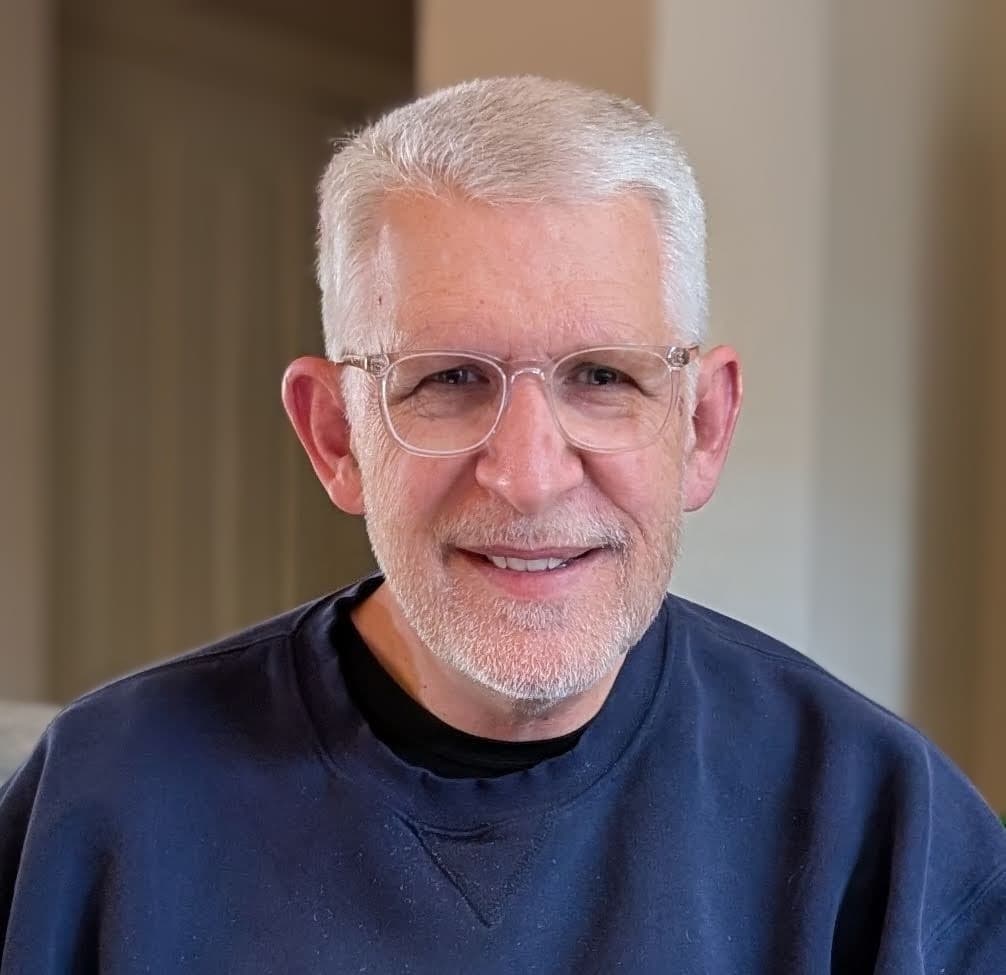
Discover how Jonah's journey invites us to align our hearts with God's will, reminding us that His grace and purpose can transform even the most reluctant among us.
We're going to start a new book study tonight. We're going to be doing that a lot here through the summer, just because we're in the minor prophets here on Wednesday night. And the minor prophets are called minor because they're shorter, not because they're minor in significance. And we're in the book of Jonah. So open your Bible please to the book of Jonah. It's going to be toward the end of the Old Testament. It's just 4 chapters long and they are not very long chapters at all. So that means we're going to get through the book of Jonah tonight here in 1 sitting. So, let's pray and ask God's grace here as we study. Father, as we get into your word tonight, we pray for the ministry of your Spirit to speak to our hearts and bring wisdom and insight into this book so that we can draw from it what you would have us to. We thank you, Lord, for your word. We thank you for keeping it for us these many years and for helping us, Lord, to lay hold of it through your Spirit, that we might grow in grace. And that's our heart, Lord, to be tuned with yours. So we ask you to speak to each and every heart tonight. May we truly be open. In Jesus' precious name, amen. Amen. Whenever we start a new book study here at Calvary Chapel, we always take just a moment to do a little bit of an introduction and no different tonight. Jonah was a prophet that most likely was the contemporary of Amos, the prophet that we just finished last week. They might have even known one another. But Jonah was a man who was raised up in the north country up near Nazareth where Jesus ultimately was raised. And it's fascinating to me, Jonah is probably one of the Old Testament books that is most known. When I say most known, I think, there's a lot of people who have never darkened the door of a church or cracked open a Bible who know the story of Jonah because it's one of those stories that is often told to children. And, for that reason, I think a lot of people believe that it might in fact be a fantasy, and this kind of fascinates me, because of the fact that this book tells us that a big fish swallowed Jonah and he remained inside that fish for three days. There's just a lot of people who assume the book is fictional and if we're going to apply it in any way, it's probably just allegorical. There's probably some spiritual meaning behind it. And there always is a spiritual meaning behind things, but that doesn't mean they're allegorical. We believe that this really took place. But here's the question: why? If somebody were to meet you on the street and they asked you, 'What did you do last night?' "I went to church." "Oh, really? What did you do at church?" "Well, actually, we studied the Old Testament book of Jonah." "Oh, the book of Jonah. I remember that when I was a kid. Fish, right? Big fish swallowed…is that Jonah?" "Yeah, that's the thing. Yeah." "Do you believe that? Do you believe that really happened?" What would you say? Well, there are reasons to believe that the book of Jonah actually took place, not the least of which is we accept the fact that the Bible is historical and authoritative. But for somebody who doesn't have that understanding, and you are going to give them your reason for believing that the book of Jonah is real, where would you begin? Well, for starters, there's a mention of the prophet Jonah that appears elsewhere in the Old Testament. Let me show you up on the screen: (slide) 2 Kings 14:23-25 (ESV) In the fifteenth year of Amaziah the son of Joash, king of Judah, Jeroboam the son of Joash, king of Israel, began to reign in Samaria, and he reigned forty-one years. And he did what was evil in the sight of the LORD. He did not depart from all the sins of Jeroboam the son of Nebat, which he made Israel to sin. He restored the border of Israel from Lebo-hamath as far as the Sea of the Arabah, according to the word of the LORD, the God of Israel, which he spoke by his servant Jonah the son of Amittai, the prophet, who was from Gath-hepher. And so there's a reference that right there to the same Jonah that we are talking about here in the book of Jonah. Now, this would mean that Jonah lived and ministered prophetically sometime between 793 and 753 BC, or before the time of Christ. But concerning the events of the book of Jonah, now going back just beyond the person of Jonah, we have some rather powerful statements made by our Lord Jesus Christ Himself. If Jonah is not a real person, and the events of Jonah were not real events, we got a big problem. Because Jesus talked as if they were. Let me show you. And Jesus is speaking to the religious leaders who refuse to believe, and it says: (slide)
And so you'll see in that very passage that Jesus not only references Jonah, but references the events of the book of Jonah and connects them to His own resurrection from the dead. Which of course, is another historical event. You don't mark a historical event by a fictional event. In the very next verse of Matthew 12, it says: (slide)
So once again, Jesus makes reference to the events of the book of Jonah as real historical events. So if you believe Jesus is who Jesus said He was, and who the Bible says that He is, then you're really in a place where you don't really have an option here in terms of embracing the book of Jonah or not.
I mean, unless you're prepared to believe that Jesus was somehow deceived about the historicity of the person of Jonah and the events of the book of Jonah. Or that He knowingly used a fictional character to speak of His own historical resurrection. We're pretty much only left with one conclusion. But finally, and this is interesting, I think that the book of Jonah has a very unique place among the other prophetic writings, in that it doesn't focus on the writings of the prophet. It focuses on the prophet. The book of Jonah is about Jonah. It's not really about the message that he came to bring. I mean, his message is like 1 sentence long. His message was really a pretty easy 1 to go to the people of Nineveh and say, '40 days is about all you guys have and God's going to wipe you off the map.' And that's a paraphrase, obviously, but this is about Jonah. This is about God not only dealing with the people of Nineveh, but dealing with the man Jonah. This is about dealing with attitudes. This is about dealing with people whose hearts have become detuned to the heart of God. And Christians, can I just tell you that can happen. It can happen to any of us, to the point where we begin to speak in a way that is inconsistent with the heart of our Lord. And our words may come out angry or too soft for that matter. We are detuned as far as the heart being alongside or with the heart of the Lord. So, let's get into it here, chapter 1 of Jonah and we have an overall title for the book of Jonah. But even each chapter kind of has its own title and the first title of chapter 1 is Jonah and the storm. Here we go:
(ESV) Now let's stop there for just a moment and let's talk about what is happening here and what God is telling to Jonah. First of all, Jonah is being told by the Lord to go to the city of Nineveh. You need to know something about the city of Nineveh. The city was the capital of a particular nation, and the nation was Assyria. Now, Assyria was just some 30 to 50 years away from invading and conquering the northern kingdom of Israel, and so that's an important thing for you to know. God is going to use the nation of Assyria as His disciplining instrument to come against His own people in Israel. And that's the first thing. But the second thing you need to know about the Assyrians or the people of Nineveh, who we call
Ninevites, and God says it right there in verse 2, when He says, "their evil has come up before me." And that's the next thing you need to know. They were evil. And that's not me talking. That's not you talking. That's God talking. And when God says that people are evil, the people are evil. And the fact of the matter is, we know even from history that the people of Nineveh and the Assyrians as a nation were an incredibly brutal, cruel, and intensely evil people. In fact, archeologists have actually uncovered journals that were left behind and discovered where Assyrian soldiers would recount the things they did in battle. And honestly, I'm not going to read any quotes from those because, well, let's just suffice it to say they make the Taliban look like a pack of Girl Scouts. They were a wicked wicked people. Many times when the Assyrians would go in and conquer a people, they didn't want to have any of these people rising up against them. So they would just begin to slaughter them, by the hundreds and thousands. They'd just kill them, and they didn't really care how they did it. And as I said, I'm going to spare you the details. Well, what that kind of means is the Assyrians, and particularly the Ninevites from that capital city, were a people that others kind of liked to hate. They were an easy people to dislike because of their brutality. Look at verse 3 with me as we go on. It says, "
" And I probably should have put a map up for you, but Tarshish was kind of like what is now the south of Spain. And it was about the farthest that you could go in those days in kind of the known world for Jonah. In the opposite direction of where God had called him to go. Because the city of Nineveh would be in present day Iraq. But he's going the opposite direction. And he's trying to get away, it tells us here, from the presence of the Lord. And I don't think that we should assume from that, that somehow Jonah believed that Tarshish was beyond the reach of God or that the presence of the Lord didn't extend to Tarshish. I don't think that's what he was thinking. I think what is being told to us here is that he was leaving the vicinity so that he wasn't in a place where God could easily call him. It's like there's other prophets, like I said. He probably lived during the time of Amos as well. And so, and maybe, I'll just remove myself from the availability of God to call me to go to Nineveh. Because there's other people He could call. So I'll just kind of say, yeah, I was going to take a vacation anyway and I think I'll just head to Tarshish . . . and essentially he's kind of resigning from the ministry. In a real sort of a sense, he's kind of resigned. Here's what's interesting. He felt so strongly about not going to Nineveh, that he was willing to leave his homeland probably forever. I mean, we don't know this for sure, but he was most likely leaving for good. And the Jews felt very strongly about their homeland. And they still do to this day. And for a Jew to leave willingly and say I'll leave and never come back, that's a big deal. Now, we're not told at this point why Jonah left. We're not told why he's running away or why he's resigning from the prophetic ministry. In fact, it's really not going to be completely until chapter 4 that we discover what is kind of behind all this. What's happening or what's going on in Jonah's heart. But we'll get to it. Verse 4.
This is a kind of a reader's digest version of what happened. You're going through this very rapidly. But throwing the cargo overboard, that would've been a last ditch effort to save their lives. Because the whole purpose of these ships sailing to and from these various ports was to bring cargo, merchandise and make money. That's how you paid for the trip.
You would rent the boat or hire a captain and hire the ship. And you'd get your wares to this place where they would sell and you'd make money. So this was the whole reason for the trip. I mean, you might have some people like Jonah, who hop on and just want to ride along. But primarily your income is from that cargo.
So they fought this storm probably for a long time before they finally came to the conclusion 'we have to get rid of the cargo to lighten the load so that this ship isn't going to be destroyed in the winds' and so forth. Now we're told at the last sentence of verse 5,
So there's this storm that's just raging going on and he's sleeping. I don't know how that's even possible. I can't, when there's movement going on.
Last time Sue and I flew to Minnesota we probably hit the most turbulence that I have ever felt. And I've flown a lot of times, and I love flying, but I don't like turbulence necessarily. I mean, I'm just not that thrilled with it. Not that I'm afraid the plane's going to fall down out of the sky or anything. I just don't like turbulence. So I look over and I'm kind of sitting there going, 'oh, when's this going to end?' And the pilot comes on and goes, 'yeah, sorry folks. We're being told that there's turbulence on pretty much every level. So it doesn't really matter how high or low we fly, we're going to be in rough waters here.' And I look over to my wife and she's sleeping. She's got her eyes closed. And I'm thinking to myself, that's a gift. And Jonah had the gift. He's down in the lower decks of the ship and he's fast asleep. "6So the captain" it says, "came and said to him, "What do you mean, you sleeper?" If that's the worst thing you could call him. I think this guy he needs to learn how to use profanity because he says, "Arise, call out to your god!" This is not just an all hands on deck thing. This is all gods on deck. We're all talking to our gods because we don't know who's doing this. So he says, "Perhaps the god will give a thought to us, that we may not perish." 7And they said to one another, "Come, let us cast lots, that we may know on whose account this evil has come upon us." So they cast lots," and you have to know the Lord was in the casting of these lots, "and the lot fell on Jonah." How fun is that? "8Then they said to him, "Tell us on whose account this evil has come upon us. What is your occupation? And where do you come from? What is your country? And of what people are you?" 9And he said to them, "I am a Hebrew, and I fear the LORD," now the Lord is in capital letters in your Bible, right? Or at least it's in a capital L with small caps. And that means that he used the divine name. He said, I am a Hebrew, and I fear Yahweh. All right? It is simply translated the Lord in your Bible. He says, "the God of heaven," and look at this, "who made the sea and the dry land."" Now this tells you something about Jonah right here. He's not a fraidy- cat. I mean, he didn't run from the presence of the Lord because he was afraid. He didn't run the other direction from where God told him to go because he was afraid of going to Nineveh. He could have lied to them. But he said, yeah, actually I serve Yahweh and He made this sea. I mean, what are you telling these guys? By saying that you're telling them 'I'm responsible,' aren't you? You're saying it basically I'm responsible. That's what he's saying. So you got to know that he's not afraid here to die. Verse 10. "10Then the men were exceedingly afraid ". Now you're going to see that word repetitiously through the book of Jonah: exceedingly. Which, of course, means 'to a great extreme.' They were very "afraid and said to him, "What is this that you have done!" For the men knew that he was fleeing from the presence of the LORD, because he told them." So again, here's Jonah kind of letting the cat outta the bag. Yeah, I'm running from God who made the sea. "11Then they said to him, "What shall we do to you, that the sea may quiet down for us?" For the sea grew more and more tempestuous." As they're talking and going through this conversation. "12He said to them," (and again, no fear) ""Pick me up and hurl me into the sea; then the sea will quiet down for you, for I know it is because of me that this great tempest has come upon you."" Now, this is interesting people. You have to stop for just a moment and really hear what's going on. Jonah's not afraid to die. In fact, we're going to see at the end of this book in the last chapter, it's preferable to going to Nineveh. It's preferable. He would rather die. Now he has no word from the Lord that he's going to be saved if they throw him into the sea. He has no word that we know of. There's no message from the Lord saying, don't worry, let them throw you into the drink and then I'll rescue you out of the . . . none of that. He probably thinks, I'm going to die. And he's okay with that. That is preferable to going to the Ninevites. Now, it's interesting that these men are not amenable to that idea right away. It says in verse 13, "13Nevertheless, the men rowed hard to get back to dry land," so they're trying to spare Jonah's life, "but they could not, for the sea grew more and more tempestuous against them. 14Therefore they called out to" Yahweh. Now they're talking to the Hebrew God, the God of heaven and earth, personally, and here's their message to him. Oh, Yahweh, ""O LORD, let us not perish for this man's life, and lay not on us innocent blood, for you, O LORD, have done as it pleased you."" Isn't that interesting? You are seeing a greater attitude of godliness among pagans than you are the one person on that ship who should have been godly and spoken to God about His will. In verse 15, it says, "15So they picked up Jonah and" they did exactly what he said "hurled him into the sea, and the sea"
instantly "ceased from its raging." And it says that, "16Then the men feared" Yahweh "the LORD exceedingly," there's that word again, exceedingly, "and they offered a sacrifice to the LORD and made vows." And I want you to notice verse 17, which is the last verse of the chapter: "17And the LORD appointed a great fish to swallow up Jonah. And Jonah was in the belly of the fish three days and three nights." The reason I want to call your attention there to verse 17, first of all, this is commonly referred to as the story of Jonah and the whale. There's no reference in the Bible that it was, in fact, a whale. It could have been a whale, but it could have also just been a fish that God created for this one time. I mean, God can do anything He wants to do. And it says here that God appointed a great fish. I mean, this could be a fish that is no longer living. It could be extinct for all we know. It doesn't say. What's interesting here is that when people read this, they assume the world has always kind of been the way it is today. And they'll say, well, there's no way a guy could survive inside the belly. They think probably if it were to be true, it would've had to have been a whale because they're the biggest fish that we know of. And they're really not a fish, which you know. But still, they would probably say, well, there's no whale, because there's all this that, and they'll start talking about the stomach acids and you couldn't live three days and three nights, and there's no oxygen and stuff like that. Yeah. But there's God. See, that's the thing. Whenever you try to rationalize these things and say, well, here's why that couldn't work, here's why. But 1 thing they don't factor in is God, for whom nothing is impossible. Right. For whom nothing is impossible. So, if you believe in God and you believe that nothing is impossible for God, then none of these things are a problem. It's only when you think that it has to go according to what you know in your limited understanding of how life works. All right, chapter 2. We're going to title this chapter, Jonah and the Fish. "1Then Jonah prayed to the LORD his God from the belly of the fish, 2saying," now as we go through and we look at Jonah, he's going to be quoting from some of the Psalms. So he was obviously aware of the Psalms. And by the way, I'm sure he was aware of Psalm 139 where David said, where can I go Lord, to escape your presence. If I go to the highest heights, you're there. If I go to the lowest depths, you're there. I'm sure he was aware of that. He knew that running to Tarshish wasn't going to be beyond the reach of the Lord because he's quoting the Psalms. He says: ""I called out to the LORD, out of my distress, and he answered me; out of the belly of Sheol I cried," (if you will, the heart of the grave, which is what Sheol means) "and you heard my voice. 3For you cast me into the deep, into the heart of the seas, and the flood surrounded me; all your waves and your billows passed over me. 4Then I said, 'I am driven away from your sight; yet I shall again look upon your holy temple.' 5The waters closed in over me to take my life; the deep surrounded me; weeds were wrapped around my head" (I don't know if that's literal) "6 at the roots of the mountains. I went down to the land whose bars closed upon me forever; yet you brought up my life from the pit, O LORD my God. 7When my life was fainting away, I remembered the LORD, and my prayer came to you, into your holy temple. 8Those who pay regard to vain idols forsake their hope of steadfast love. 9But I with the voice of thanksgiving will sacrifice to you; what I have vowed I will pay. Salvation belongs to the Lord!"" (ESV)
So he's spending these three days in the belly of this great fish, quoting the Psalms and praying to the Lord. And talking to the Lord. And the Bible says, and this is how chapter 2 ends: "10And the LORD spoke to the fish, and it vomited Jonah out upon the dry land." Wouldn't that have been a sight? To see this fish, this big fish, literally belly up to the beach and out comes this guy. You don't know is if this is projectile vomit. We don't know. It's just, he just . . . yeah, there he is, on the beach and there it is. And what a crazy sight. I'm sure the Lord cleared the beach first so nobody could see what was going on. That would've just been weird. I mean, very weird. Chapter 3, we're going to call this Jonah and the City.
oh, that's interesting, isn't it? God, didn't say to Jonah, all right Jonah, you blew it. I gave you a job. You ran. I had to literally pluck you out of the water with one of my fish.
There, you're on dry land. Now go home and I'll think about what I'm going to do with you. It says,
I really like that. Because you can see right here from this book that you served the God of second chances. And frankly, not just second chances, but third chances, fourth chances, and on down the road. And I like that about God. Because if He were not the God of second chances, I don't think I'd be sitting here teaching the Bible today.
So the Lord says,
Nothing's changed. Same commands given to Jonah.
(he kind of learned his lesson here. There's no getting around the Lord)
Now, again, we're not told exactly how far out in the waters they were. We don't know how far the fish brought Jonah back or to what beach he brought him when he spit him up on the beach. We don't know if, in fact, Jonah was deposited back near Joppa, where he got on that ship to sail to Tarshish. He was looking at somewhere between a 500 and 600 mile journey to get to the city of Nineveh. So he had a while to think about everything that had transpired.
Now we're here at the end of verse 3, where it says,
And he called out, "Yet forty days, and Nineveh shall be overthrown!"" That's his message right there. That's the entire message. He doesn't even say repent. He just says, in 40 days you're all toast. That's it. It's really kind of a doom message. And it's really funny. Even though it takes three days to get across the city, it says that in the first day, he goes and he speaks. He just goes a day's journey across the city. And it says in verse 5, "5And the people of Nineveh believed God." This is the craziest thing about this whole story. Not only did they believe, now that's the point. They believed God. They didn't believe Jonah. They believed God. They knew that the message came through Jonah. They knew that it was a man they heard it coming from, but they believed he was sent by God, and he was. And this was a genuine message from the Lord. They believed. Not only did they believe, but it tells us here, "They called for a fast and put on sackcloth, from the greatest of them to the least of them." Now, we've talked about sackcloth before. It was a very rough, itchy sort of a thing that people would put on to show their grief, sorrow, and mourning. It was often made out of goat skin, and it was not a fun thing to wear. But it was something that signified my repentance, my grief at my sin. And you'll notice that this attitude of grief and this belief begins with the common people. It just begins with the people. The people begin responding to the message of Jonah. In fact, we're told that all of them did it. Well, finally, it tells us here in verse 6 that "6The word reached the king of Nineveh," now it's gotten to the top. And he hears that there's prophet who's going through his city speaking, and that the people are repenting and they're wearing sackcloth and they're fasting. And it says that "he arose from his throne, removed his robe, covered himself with sackcloth," just like the rest of the people were doing. And in fact, he "sat in ashes." Well, didn't stop there. "7And he issued a proclamation and published through Nineveh, "By the decree of the king and his nobles: Let neither man nor beast, herd nor flock, taste anything. Let them not feed or drink water," (so he calls for a fast, not only among the human beings, but among the animals) "8but let man and beast be covered with sackcloth, and let them call out mightily to God. Let everyone turn from his evil way and from the violence that is in his hands." Now I want you to stop and think about what this would be like for a people. Well, think about what it would be like if your president came on national TV and said, we have sinned as a people. We have sinned against God and we need to repent. And I'm calling for a national fast. And he actually did things visibly to show that he himself was genuinely in mourning and full of sorrow over sin. And he called upon the people of this country to fast and to pray and to call out to God for God's mercy. Now, first of all, that would be crazy, wouldn't it? Here's what's interesting. Jonah didn't say repent. He didn't tell him there was any hope at all. He just said in 40 days you're toast. That's all he said. Look what it goes on to say in verse 9: "9Who knows?" (This is still the king talking) "9Who knows? God may turn and relent and turn from his fierce anger, so that we may not perish."" Where did the king get that? Where did the king come up with that? Jonah didn't say that. He didn't want to give him any good ideas, frankly. That's what we're going to find out. There was this natural sense of expectation, of mercy, that they . . . who knows, let's just do what we can, but we're going to do what we can. We are going to repent. And by the way, their repentance was more than just putting on itchy clothes and not going to McDonald's for a few days. Look what it says in verse 10. It says, "10When God saw what they did, how they turned from their evil way," people, this is real repentance. It tells us here "God relented of the disaster that he had said he would do to them, and he did not do it." That's incredible. These people didn't even know God and they had an expectation of mercy. Isn't that amazing? It'd be one thing if they'd have known the scriptures. Why? Well, because God had told the Jews in the scriptures that if a nation repented, He would relent. Let me show you on the screen. God's speaking here: (slide) Jeremiah 18:7-8 (ESV) If at any time I declare concerning a nation or a kingdom, that I will pluck up and break down and destroy it, and if that nation, concerning which I have spoken, turns from its evil, I will relent of the disaster that I intended to do to it. Now, that's wonderful. We have that in the word of God. We know that. We know that God is a God of mercy (Exodus 34:6). We know what the scripture says concerning God. He says, I get no joy out of the death of anyone (Ezekiel 18:32). God is not a God who delights in punishment. The Bible tells us that hell wasn't even made for man. The Bible tells us hell was created for the devil and his angels (Matthew 25:41). When you say, well, Pastor Paul, then why do men go there? Because they choose to. They go because they reject God and His free gift of forgiveness through Jesus Christ, His Son. They choose. People have to choose. That's the thing we forget. Our God is a God of mercy. His heart is a heart of mercy. And when we understand His heart and are in tune with His heart, we can speak to people who don't know the Lord, and we can convey that mercy. Why? Because we are in tune with God's heart. Do you know one of the most challenging emails that I get, and I get from a lot of people, is this distressed question that after telling me every rotten thing they've ever done, it ends by saying, can God forgive me? Can I be saved? I know the heart of God. I know that God's heart is the heart of mercy. And I know that all who call upon the name of the Lord will be saved (Joel 2:32; Acts 2:21; Romans 10:13). I know that. All who call upon the name of the Lord will be saved. That's what the Bible says. That's not my truth. That's God's truth, okay? All who call, everyone who calls on the name of the Lord will be saved. But see, there are people who don't know that. Interestingly enough, the people of Nineveh did. I believe that there was a genuine spirit of revival going on there. But there's a lot of people that don't know about the mercy of God. And they don't take for granted the mercy of God. And they struggle and all they do is they look at their sin and they keep looking at their sin. And then Satan comes along and forces them to look at their sin by accusing them, look what you did, you dirty scumbag. And pretty soon they're so overwhelmed with their sin, they write me finally in a moment of desperation and say, Pastor Paul, can I even be saved? And even once I tell them, yes, you can be saved. Call upon the name of the Lord, trust in Jesus and what he did on the cross, and you will be saved. They write me back and they say, you got to prove it to me. I can't prove it to you. If you don't believe God, you're not going to believe me. What's my word? I'm just echoing His word. Yeah, you can be saved. I believe that anybody can be saved, I really do. I mean, if we're going to be honest with ourselves, we'll have to admit there are some people . . . we don't always believe everybody can be saved.
There are some people we hear about the things that they do and we hear that they had a prison conversion. Some serial killer somewhere we find out that, this person came to Christ and we're like, yeah, right, right. After everything they did. And we think that, isn't that interesting? Somehow God could save me, but not them. Their sin was way worse than mine. Even though Jesus told me in the Sermon on the Mount that if I hate my brother, that's tantamount to murder (Matthew 5:21-22). That's what He told me. That's what He told you too. And yet we think somebody that committed real murder and maybe was even on death row, but then came to Christ in prison. Yeah, well that's not going to do anything. He's going to burn in hell. That's what we say. I've heard people say it. Isn't that crazy? That's not a heart that's in tune with God's mercy. That's a heart that's out of tune. And we are the ones then that need to repent because we're no longer in tune with God. Somehow we think that there's some sin that just put you off the edge. Chapter 4. I will title this Jonah and the Lord. All right, you ready for exceedingly again? Well, the last thing we read was that God relented of destroying Nineveh. Verse 1, "1But it displeased Jonah exceedingly, and he was angry." Now, I want you to stop here for a minute because this is really the first opportunity that we get in this whole study of Jonah to get a glimpse of why Jonah didn't want to go to Nineveh. We weren't told before this, but now we know. He knew God was a God of mercy and he didn't want the Ninevites to be on the receiving end of that mercy. Because he knew, if I go to Nineveh and I'd tell them . . . you'll notice he didn't say cry out upon the mercy of God or anything. He just said, in 40 days, you're toast. And he didn't leave them any hope. But they grabbed onto hope anyway. They grabbed onto faith, they grabbed onto repentance. And God saw their repentance and He relented. And Jonah knew that was a possibility and that's why he didn't want to go to Nineveh. So verse 2, it says, "2And he prayed to the LORD and said, "O LORD, is not this what I said when I was yet in my country? This is why I made haste to flee to Tarshish; for I knew that you are a gracious God and merciful, slow to anger and abounding in steadfast love, and relenting from disaster. 3Therefore now, O LORD, please take my life from me, for it is better for me to die than to live." And what he means by that is it's better for me to die than to see these people receive mercy.
That's what's going on. Talk about copping an attitude with God. I mean, it's one thing if you cop an attitude with me, that's no big deal. You cop an attitude with God? Now you're in trouble. Isn't that something? I mean, he just comes right flat out and admits it. I knew you were gracious. I knew you were merciful. This is why I didn't want to come. I knew that you would relent. I knew you'd spare these people. I'd rather die than see these people thrive. Once again, we're seeing a heart that's out of sync with the heart of the Lord. Verse 4.
And that's not the way we would say it. The New King James Version says, "Is it right for you to be angry?" Or He's saying, do you have any right to be angry about this situation? And again, Jonah felt like he did because he hated the Ninevites. He hated them. He wanted them obliterated. And he believed he had good justification for feeling that way because, as I said earlier, the Ninevites were easy to hate because they were a cruel people. And Jonah had heard about the things that they had done. They hadn't yet come and conquered the northern kingdom of Israel, but they're going to. But even so, Jonah knew their reputation. And as far as he was concerned, they deserved no mercy. No mercy. So God is asking him, do you have a right to feel this way about this situation? But here's what's happening. Jonah's so angry, and he's in this mode of self- justification for his anger. He's gotten to the place where he's devaluing the grace of God in his own life, just because he personally disagrees with the fact that God wants to extend grace to someone else's life. Do you remember that it wasn't just a few days earlier that God rescued him from the open sea by sending a big fish, whale, whatever, to swallow him up. Save him, and then spit him out onto the beach, and then gave him a second chance. People, if that isn't grace, I don't know what is. I don't know how to define grace if that isn't grace. But what happens when I get angry, and my heart becomes detuned to the heart of the Lord? I begin to actually devalue the grace that God has shown me, you see. And that's what God is asking Jonah. Do you have any right to feel this way about what's going on? Look what I just did for you. You think you're deserving and they're not.
Isn't that crazy? But that's just the way we are. It's something about human nature. I want God to show me grace. Justice for other people. Show me grace. Give justice to them. Well, it's really interesting in verse 5 because it says here that
And that gives you the impression that he's going to stick around for a while. Because remember what he told him? He told him there was going to be 40 days and then God . . .
so he decides he's going to stay. He could have just gone home knowing, okay, God, is going to relent or whatever and this isn't going to happen the way I said. And not only do I look like a fool, but I hear these people are living and I didn't want them to. I'm just going to go home. He doesn't do that.
He says, I'm going to make a little booth for myself and I'm going to stick around because who knows, in 40 days a lot of things can happen. In 40 days they might just mess up and my God might come after them after all, and then it'll be great. And I'm going to watch. I am literally going to have theater seats right here and I'm going to have front row. I'm going to watch Nineveh fall and never rise again.
So he decides to make a booth and it says,
I'm going to see what's going to happen. They might still mess up. Maybe, just maybe, God will still nuke the place. Verse 6.
probably some kind of a gourd plant that has these big, huge leaves. I'm not an expert on plants. That's my daughter-in-law's place. But anyway, it says this plant came up literally
notice there's exceedingly again. A moment ago, he was exceedingly angry. Now he's exceedingly glad because of a plant. Guys, catch that. Don't let that slip by you. He's exceedingly angry a little while before because people are being spared. And by the way, we don't know exactly how many people the city had. We're going to find out here at the end of this chapter that there were 120,000 people who didn't know their right hand from their left, which we believe is a reference to children. Which would mean that maybe there were somewhere between 500,000 and 600,000 people in this city.
So he is exceedingly angry that God is going to show mercy to this city, but he's exceedingly happy that this plant grew up and is giving him shade from the hot sun. Are we out of tune or what? Verse 7. "7But when dawn came up the next day, God appointed a worm" you got to love this "that attacked the plant, so that it withered. 8When the sun rose, God appointed a scorching east wind," notice how God is in charge of this whole thing, He appoints everything, "and the sun beat down on the head of Jonah so that he was faint." He was literally starting to have heat exhaustion, but he's not going to move because he's going to see if this city's going to fall. And look at this once again, "And he asked that he might die and said, "It is better for me to die than to live."" I mean, he's really depressed. But this is really kind of interesting here, this whole thing. But it's not just about God and about the Ninevites and their sin and their evil wicked ways. This is about Jonah. Do you guys get this? This is a book about Jonah. It's about his heart. It's about God dealing with a heart that is out of sync with His. And Christians, can I just tell you, God will deal with you when your heart gets out of sync with His. He'll deal with you and you'll be miserable. I don't know if you'll come to the place of actually saying to God, it'd be better for me to die than to live, but you will be miserable. Because when our heart gets out of sync with God, it's just a miserable place to live. And it was a miserable place for Jonah. I mean, think about it. God could have sent any prophet to Nineveh to give this message. He picked Jonah. Why? Because He knew there was an issue in Jonah's heart that needed to be dealt with. I'm going to say something that's going to be pretty radical. And you might get a little bit annoyed at me for saying it. Have you ever wondered why God picked your spouse for you to be married to? I mean, I want you to think about that. I'm not saying anything bad about your spouse or about marriage in general. But one of the things I hear the most from married people when they're struggling in their marriage is, 'he just pushes my buttons.' Right. And vice versa. What they never say to me is, 'I've got buttons that can be pushed.' They never say that. They always say, he's pushing my buttons, she's pushing my buttons. They don't say, look, I've got buttons. You see? That's how out of sync Jonah was. That's how out of sync we become when there's something going on in our lives and we're not dealing with it before the Lord. We're not dealing with our own issues.
All we're dealing with is those people or that person. It's the Ninevites that's the problem. And God is speaking to Jonah and saying, Jonah, that's not the problem. Your heart is the problem. The Ninevites pushed your buttons, yes. But you had buttons. That's the point. The Lord allows circumstances in life to bring out our buttons. And your button could be anger, could be fear, could be impatience, unkindness, I mean, lots of things. Unbelief, doubt. Circumstances will happen in life that will reveal your buttons and God wants you to see them. He wants you to see your buttons because He wants to reveal your heart to you in such a way that you would bring it to Him. And you say, Lord, this is me, and I know this isn't right. And that's where Jonah should have been. When he got that very first call to go to Nineveh, he should have gotten on his face before God and said, God, you know my heart. He should have said, Lord, you know that I have hatred in my heart for those people, and I would rather die than see you give mercy to them. And so this call upon my life is going to press upon me in ways that nothing has ever pressed before. And I guess you better deal with me now and you better deal with my wicked heart. Because when we feel that way, all we can see is the wickedness and the wrongs of other people. We can't see our own wickedness. Jonah couldn't see his own wickedness, and that's why God is asking the questions that He's asking. Now this plant dies. Notice the question comes kind of a second time in verse 9, "9But God said to Jonah,
In other words, does it seem right to you, Jonah? Does it seem right to you that you have experienced more emotion over the loss of a plant than you would for a city of 500,000 to 600,000 people? Does that seem right to you, Jonah? And I want you to notice Jonah's response. "And he said, "Yes, I do well to be angry," and that's his way of saying, yes, I have a right to be angry and I am angry, and you can't make me not be angry.
And that's all there is to it. And I'm "angry enough to die."" Incredible, isn't it? It's like God's talking to this spoiled brat. But the Lord is so gracious and so patient to deal with us, even when we act like children. And you notice God in verse 10,
you didn't make it grow. Who did? God said, I did. That plant was a work of my grace. And instead of recognizing it as such, you just ignored that whole element of it. And that thing even, He says, "came into being in a night and perished in a night." And you're all whacked out and lathered up over this plant. And He says, "11And should not I pity Nineveh, that great city, in which there are more than 120,000 persons who do not know their right hand from their left," (speaking of the children) "and also much cattle?"" If you can't dredge up a ounce of pity for people, what about the animals? Jonah, can you even think about those? I mean, we're getting down to the bottom of the barrel. We're scraping the bottom here. Isn't it interesting that's where this book ends? Although we're not told, I have to believe that Jonah was the author of this book. I mean, there's obviously things going on here that nobody could have known but Jonah. There are intimate details of this whole situation that nobody could have known but him. And I have to believe that there was some place sometime in Jonah's life when he came to terms with the wickedness of his own heart and the fact that his heart was so detuned from the heart of the Lord. And so I want to end here this evening with a question for you and a question for me. And here it is: is there anyone in your life that if God were to save that person tonight, you might have a negative reaction to that saving? I'm not asking you to speak out or to come up and tell me afterwards that there is. This is between you and the Lord. Is there anybody in your life that if God saved them tonight, you'd be disappointed? I know that this attitude of Jonah is not entirely uncommon. I've had people tell me to my face, 'I'd pray for that person, but I'm afraid if I do, they might get saved.' I had somebody tell me that. It was a long time ago, but I remember it like it was yesterday. And that person knew, if they get saved, then their sins are going to be under the blood of Jesus, and they won't get punished. 'I want them punished.' That's a heart out of tune with the Lords. The Bible tells us in no uncertain words that God is not willing that any should be lost, but that all would come to repentance
God is not willing that any should be lost. Do you guys understand? People, there is a perfect will of God and there is a permissive will of God, and we see that very clearly from that very scripture. In other words, it is not His will that any should be lost. Will some be lost?
Yes. Jesus told us as much:
So will some be lost? Yes, some will be lost. Is God willing that any should be lost? No. God's perfect will is that none would be lost.
He permits. Why? Because he's a God of love and love must be received freely. Forgiveness must be received freely. We are not automatons.
We are not robots who God programs into us salvation. That's where we're going to stop because we're at the end of the book and we're out of time. So let's pray. Heavenly Father, our prayer is very simple tonight. Tune our hearts to yours.
Tune our hearts to yours that we might convey to everyone with whom we come in contact the mercy of God. And may we, Lord God, desire to see that mercy in their life just as much as you do. And Heavenly Father, I pray tonight that if there's anyone here who recognizes a lingering anger or bitterness in their heart, for someone who has hurt them badly, that they would respond tonight by simply bringing their heart to you and saying, Lord, this one is completely out of my hands in terms of me being able to change this. If I'm going to change, Lord, it's got to be you. But I surrender my heart to you to bring about the change that needs to happen for my heart to be in tune with yours.
I thank you and praise you, my Father, God. In the name of Jesus Christ, and all God's people together said: Amen.
View the formatted transcript
PDF Transcript