
Jesus and the Good News
John 3 (Part 2) :16-21
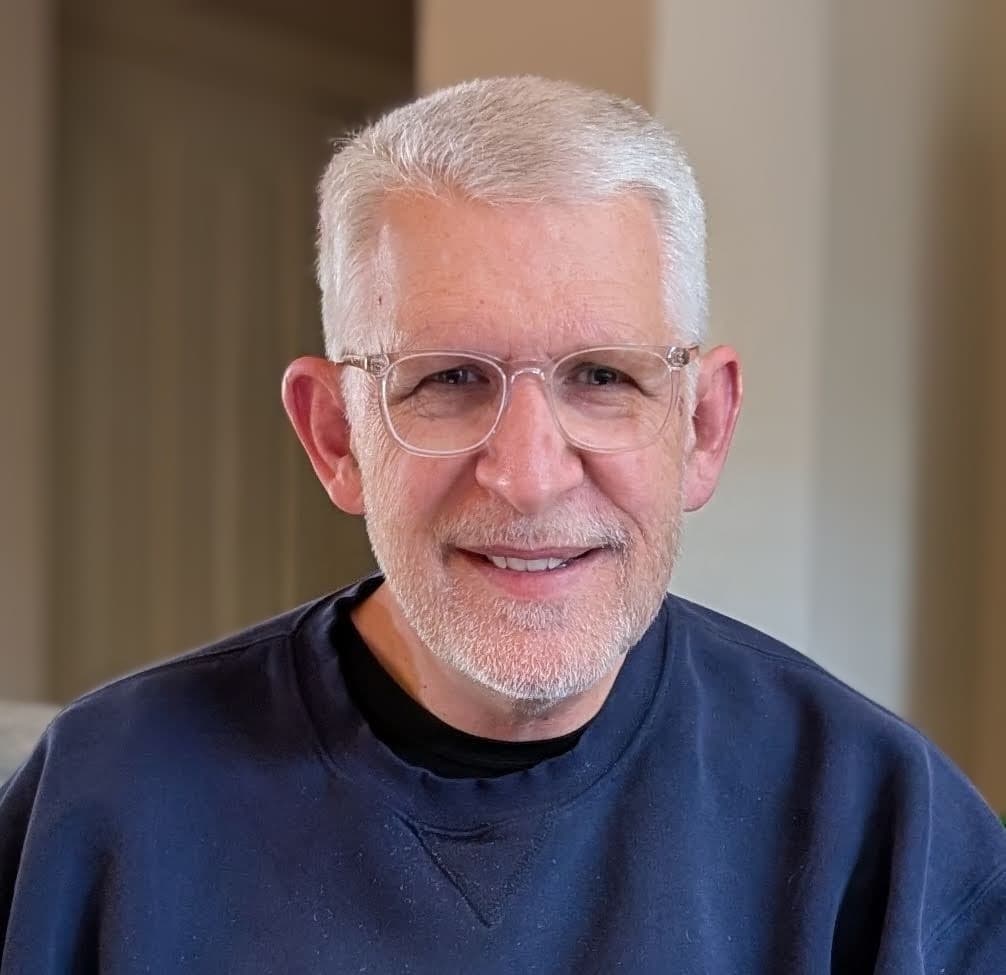
God’s love shines through Jesus, offering eternal life to all who believe. Embrace the light and let your true works reflect His grace in your life.
Join me in John chapter three, if you would please, John chapter three. Here on Sunday morning as we're making our way through the New Testament. John chapter three. We're going to begin– beginning with a verse– verse 16 is a verse I'm sure you've never heard before. It's one of those rare verses that nobody ever quotes–John 3:16.
You ready? We're going to read down through verse 21.
I'll have you stop there. Let's pray. Father, open our spiritual eyes, open our spiritual ears, and fill us, LORD, today. Whenever we come to a passage that is very familiar, Father, there's a great temptation to just kind of move quickly and say, I know those things. I've read it and I've heard it many times before, but LORD, I'm asking this morning that You would breathe new life into these verses. Challenge us, encourage us, speak to us, LORD, at the place of our greatest need. We ask this, Father, in the Name of Jesus our Savior, amen. So, I was kind of joking a little bit. We're looking today at probably, what is you know, the most popular verse you know, in the Bible. A couple interesting facts though, about Koinonia Greek, which is the level of Greek that is used in the majority of the New Testament. Two things you might not know about
Koinonia Greek as it is used in the Bible or in the New Testament: One is that there are no capital letters. It's all lower case. It's a little weird then when it gets to names, I mean, we usually know but you know, if you can imagine somebody writing a letter or typing a letter to you and nothing is capitalized, and that's the way it is in the New Testament. The other interesting thing though about Koinonia Greek, is that they don't employ the use of quotation marks when people are speaking. So– once again, if you're reading a book and it is a conversation between two people or more, you and I are used to looking for those quotation marks to tell us where somebody started speaking and when they stopped, and then when the next person started speaking and then they stopped, and sometimes where the narration continues on that is not part of the conversation, and so on and so on and so on. The reason I bring this up isn't to give you a lesson on Koinonia Greek. The reason I bring this up is because, you know, we've been following a conversation here in John chapter three; a conversation between Jesus and a man named Nicodemus. We really covered the majority of that last week, but the problem that exists here is that because of the way Koinonia Greek is given to us without quotation marks, it is rather difficult to kind of know exactly where things kind of start and stop. We know when the conversation begins. That's pretty easy. John's speaking and talks about Nicodemus coming at night, and then the conversation begins. You know, Nicodemus begins speaking and Jesus responds, and that's all good and fine. And we know that all starts for us, that conversation in like verse three or so. But the debate is where it ends, and where Jesus' words end, and where John's commentary begins. That is the question. Now, if you have a Bible that has the words of Jesus in red– some of you do, probably some of you don't. Actually, interestingly enough, the one that I have up here it's just all black, but the one I have at home that I read, the words of Jesus are in fact, in red. And in that Bible it is basically verse three down through the end of verse 21 that is all in red. However, some Bibles, not all of them, but some Bibles have a footnote within those verses somewhere– and it depends on where they decide to put it– and that footnote basically communicates that some Bible students and some scholars believe that the words of Jesus end with what we ended with last week, which was the end of verse 15.
And that when we get to John 3:16, which is probably like I said, one of the most popular, well-known verses in all the Bible, that is in fact not Jesus speaking. That is where John takes up and begins to give his commentary. Now, don't throw stones at me. And I know that it might be an unpopular view, but I believe that beginning in verse 16, we have the words of John. And I have my reasons for believing that. But I believe that this is where it– I believe that the red ink should stop at the end of verse 15. Honestly, it really doesn't matter. And the reason it doesn't matter is because you know, we believe the whole Bible is inspired by the Holy Spirit. So whether it's Jesus speaking or whether it's John speaking by the inspiration of the Holy Spirit, you've still got the Word of God. Right? So in the end, the debate truly is kind of like dancing on the head of a pin. But you know, I thought I'd bring it up for interest's sake anyway. But you'll remember that last week as we looked at that conversation between Jesus and Nicodemus, we were kind of looking at the bad news that Jesus was passing along to Nicodemus. And the bad news was essentially that he couldn't depend on all the things that he would have otherwise been depending on, like his Jewish heritage, the fact that he was a son of Abraham; the fact that he had taken on the sign of circumcision, the covenant sign that was given to Abraham, and the fact that he had in fact, risen to a position of relative prominence within the Jewish community. None of those things mattered because Jesus came right through the front door and said, “Sorry, you have to be born again in order to even see the kingdom of God, let alone enter.” And you know, we talked about what a shock that was to Nicodemus. And we talked about the fact that, you know, it wasn't just Nicodemus. We all have to come to terms with that message. The message is: Whatever you are depending in, or depending upon, concerning what you bring to the table for God to accept you, isn't good enough; isn't enough. And everybody, everybody, everybody, everybody– at some point or another has to come to a conscious awareness of our personal bankruptcy before God. We must. We have to, or we're not going to get any further. If you don't come to that place, you're really not going to have any use for God. God's going to be kind of like, “Yeah, God's cool. You know I guess He's there and He created things, you know. I'm not really sure how. And He does this, He does that. And I'm not really sure where His work stops and ours begins you know, but he's there and God's cool and all that.”
But there's really no functional use for God in your life because you haven't come to that place of recognizing your personal depravity. And that (pointing to himself, claiming depravity) “I have nothing; I possess nothing, you know, in the way of anything that is going to impress God or give me favor with God. You know? In fact, if I'm in possession of anything, if I'm in possession of anything, it is a debt that I can't begin to repay. That's what I– that's what I bring to the table (again pointing to himself): a debt that I cannot repay.” Yikes! Right? I mean– and that is the bad news. We talked about that last week and when we recognize that we are utterly at the mercy of God as it relates to our salvation, when we recognize that, we thankfully also come at the same time, hopefully, to the realization that there is mercy abounding for all of us. You know? I come to the LORD and I say, “Have mercy.” You know, I don’t know if you've ever watched a movie where somebody was pleading for mercy from a king or some political leader or whatever, “Have mercy on me.” There's no guarantee you know, that they're going to- in the movies you know, if they're going to get mercy, even though they're asking for it, “Have mercy. Have mercy, I beg of you.” You know. Sometimes they do; sometimes they don't. [They] say, “No, forget it. Off with your head.” And we are kind of at that same place where there's nothing we can do. All we can do is just fall upon the mercy of God and say, “LORD, have mercy.” Well, that's the wonderful thing about God's mercy is we find it. It's there, and that is the Good News, and that's what we're going to talk about today. Isn't that nice? Last week it was really just kind of full of bad news and we hinted at the Good News. But now we're going to talk about the Good News. And this is how it is expressed in the loveliest of terms in John 3:16. I mean, here it, here it just sits in one glorious verse,
and the word perish is always related to perishing in judgment, “but have eternal life.” And there's a good reason that verse is so dearly loved by people throughout the years. You know, it encapsulates the blessing of our salvation in the simplest of speech. It's beautiful. It's lovely. You know? It speaks of love. It starts off, “For God so loved.” We're not left to wonder why this whole thing came about. It's all because of love.
It speaks of sacrificial giving, “For God so loved the world that He gave His only Son.” He sacrificed His only Son. And it also lays out for us the terms and conditions of the promise that He ends up giving us in the verse, which is eternal life. And the terms and conditions are whoever believes in Him. And so it's all laid out. It's all given to you. John 3:16 is a lovely and comprehensive view, you know, of the gospel. It doesn't tell you everything about the Christian life, but it tells you enough. It tells you enough to get saved. You know? And that's why, you know, people use it so much when they're witnessing to others. There's enough there that I can bring somebody to a saving knowledge of Jesus Christ. You know? You might think to yourself, “I just don't know the Bible enough to witness to anybody.” Well, you know John 3:16? Then you know enough. And sure they might have some questions for you that go off and beyond whatever John 3:16 covers. That's okay. Just tell them, “You know what? I don't know the answer to that question. Here, let me tell you what I do know. God so loved YOU that He gave His own– one and only Son that if you had just put your faith in Him and believe.” And that's John's –by the way, that's John's favorite word. John loves to use the word ‘believe.’ And he puts it– he uses it in place of the words ‘have faith in’ or ‘confidence in.’ [Believe] That's his word. John loves it. He uses it over and over again, “If you just believe,” and you can tell somebody that, and they can– they'll know enough. You know? Because it's all there. It's all there– in words that anybody can understand. And I love that. And that's very cool. But what we really learned from John 3:16…. You ready for this? Is that nobody has to be judged for their sin. That's really what we learn. And remember, that's what the Bible calls perishing. Nobody has to perish. And the reason no one has to perish is because Jesus was judged in our place. There is a teaching within Christendom that Jesus only died for those who would accept His sacrifice. (Pastor says sadly) I don't know how in the world they can come up with that teaching, and it is taught in respectable churches. “Jesus only died for those who would receive His gift. He did not die for those who would not.” Because the Bible says the exact opposite. And this very author, in his first epistle, lines it out for us. Let me show you on the screen. First John, two, one and two.
Who is ‘ours’? Well, he's– John's writing to Believers, and so he says, “Jesus is the atoning sacrifice for our sins and not just, not just ours,” not just we who believe and who have put our faith and confidence in that work, “But He is the atoning sacrifice for the whole world.” He died for the whole world. You know what that means? Salvation is available– to the whole world.
There is no one for whom salvation is out of reach. I mean, that is Good News, but the sad reality is that not everyone will avail themselves of that salvation. And we know that too, by something Jesus said.
In Matthew chapter seven, verse 13 and 14 where He said, “The gate is wide and the way is easy that leads to destruction, and those who enter by it are many.” He said, “For the gate is narrow and the way is hard that leads to life. And those who find it are few.” But it's not like He's hidden it. When He says, “those who find it are few,” doesn't mean that, you know it's like, “Well I was looking for it, but I couldn't find it.” No, that's not the– that's not the deal. So we're kinda left with this question you know, as we're talking about this lovely, wonderful Good News. We're left with the question, “Why are some people going to be lost? Why?” You know, it begs to be asked because when you look at John 3:16 and you look at the gracious terms that God has laid out for salvation, “Whoever believes in Him,” and again, that's John's word to mean, “puts their trust in, or places their confidence in, that finished work on the cross and so forth, they will have eternal life.”
So it's like what in the world is going on? Why? Why would anyone refuse such an offer? Why in the world would someone say, “I don't want that.” Why would someone say, “No”? Especially when it's given so freely and without condemnation. Look at verse 17 in your text. This is what I believe– John goes on to say, “For God did not send His son into the world to condemn the world, but in order that the world might be saved through Him.” Let me make the point if you're not getting it, the point is that Jesus had the right to come and condemn the world. God had the right to come and condemn us through Jesus the first time. He could have done that! He could have come and condemned, but He didn't. God didn't send Him in the world to condemn. He sent Him in the world to save. And He did that. By taking our punishment on Himself. It blows me away. He did it by taking our punishment on Himself. So I ask again. Jesus did all the heavy lifting in this whole equation, so why would somebody turn it down? I don't get it. I mean, in my flesh I kind of do, but in my spirit I'm like, “What's the deal? What's the holdup, you know? What's the barrier?” God has just bent over backwards when it comes to salvation to talk to us about how it's free. You know, we're going to be doing a water baptism at the end of second service today. We've got 10 people who are being baptized. Praise the LORD! If you're able to come back and witness it, that'd be great. But when I do a– our water baptism class like we did this last Thursday, I always take special time to look at what I consider to be a vitally important passage related to this whole idea of salvation. And that is a couple of verses that Paul wrote to the Ephesians and to us.
Ephesians chapter two, up on the screen. Which outlines the beauty and the free gift that is our salvation. Paul writes, “For grace, you've been saved through faith,” and he repeats this thing over in just two verses. He could have stopped right there. “For grace, you've been saved by faith.” He could have stopped right there. But he goes on and repeats even more, “And this is not your own doing,” he says, and that's really a repeat of what the word ‘grace’ is all about. Grace is something that is given to us apart from what we merit, apart from what we earn. Right? So he's saying it again. He's saying, “it's not your own doing.” And then he says it again, “it's the gift of God.” What is a gift? And I always tell the kids; I usually have a few kids in the baptism group. Not always, but sometimes, and I'll tell, “Hey, you guys ever gotten a present for your birthday or Christmas or anything like that?” And they go, “Yeah, sure.” “Did you have to pay for it?” “No, they just gave it to me.” “Yeah, that's what makes it a gift! You don't pay. If you had to pay, if you had to pull out your wallet and give them some money for it, it wouldn't be a gift. That's what the word gift means.” And we read it. It's there in the Bible, and we still struggle, “Yeah, but I don't know if I deserve this….” “It's that gift for Heaven's sake! It isn't given to people who deserve it. It's a gift.” And then he (Paul) says it again, “Not by works.” Nothing you can do to earn it. Nothing you can do to be good enough. And then he says it one more time, “... so that nobody can boast.” What do you boast in? You boast in what you do. You can't boast in what somebody else did for you. There is no boasting in Heaven. I make sure all the baptism candidates know and understand that when they stand before God, when everybody stands before God, there's no boasting. There's nobody– nobody's going to be going, “Yeah, I'm here because I was a good person.” That's not going to happen. We're going to say, “I'm here because He's a good God.” Amen? Right. You know that's– we're going to, if we're going to boast at all, we're going to boast in the LORD. Amen? There's no boasting in self. And so if there's only, if there's one overriding message that is crystal clear from Ephesians 2:8-9 it’s this: Salvation is a free gift.
And again, it's not extended to good people. It's not extended to righteous people. It's not extended to moral people. It's extended to sinners. It's extended to those who know that they are wretched and without hope. Right? But God didn't come to condemn us in our wretchedness. He came to save us in our wretchedness, and to give us hope. And in the incredible terms that He lays out in this deal that He offers us, He takes all the costs. He assumes all the costs Himself. You know, that's pretty rare. I've made deals with people in the past; I'm sure you have too, and it's very rare that someone will just assume all the costs on their end. For whatever the deal might be, “We'll just— we'll pay the whole thing.” You know? And all that God requires of us, of you and me, is that we receive what His Son did for us. That's it. That's the extent of what He requires of us. And He says, “If you do that, your sins are forgiven and you'll be saved.” Wow! You know? And yet there are some who say, “No thank You,” to that offer. And we're asking the question, “Why?” You know, there's a revealing passage in the book of Acts when Paul was sharing the gospel. Let me show you this.
Acts chapter 19. It says, “And Paul entered the synagogue and for three months [three months!] spoke boldly, reasoning and persuading them about the kingdom of God. But when some became stubborn,” and I want you to underline or at least highlight in your minds this next phrase, “and continued in unbelief, speaking evil of the Way,” meaning the way of Christ, “before the congregation, he withdrew,” Paul withdrew, “from them and took the disciples with him,” those who had come to Christ, “and he began to reason daily in the halls of Tyrannus.” All right there's that phrase I wanted you to see: “continued in unbelief.” You'll notice that I obviously highlighted it there for you on the screen (underlined in transcript).
This indicates a choice of the will. Okay? Unbelief is not, “I just don't get it.” That's not unbelief. Unbelief is, “I don't care. I choose not to believe.” Right? In fact, the NIV renders that phrase, “continued in unbelief,” they render it as “refused to believe.” Refused. Have you ever had somebody do that to you? Just they look right at you and they go, “I refuse.” You give them an offer or you say something, and they say, “I refuse.” Well, that's what people are doing to God. “I refuse,” you know. They're literally saying, “I don't want to accept what You're saying. I hear what You're saying. I understand it. I just don't want to accept it.” The choice to review– refuse to believe is also mentioned frankly in verse 18 in our text. Look with me here in or in John three, and now at verse 18. He says, “Whoever believes in Him,” and that– and again, that's John's favorite word. “Whoever places their faith in the work of the cross.” Right? He says, “is not condemned. But whoever does not believe,” and that means whoever refuses, whoever rejects the idea or the understanding or whatever it is, of placing their faith in Jesus and so forth; he says here, “they're condemned already,” because they– “he's not believed,” or he is chosen not to believe, “in the Name of the only Son of God.” So you can see it there, he's still– he's talking about refusing, you know, to place your faith in the finished work of Jesus. It's not that they don't understand it, and so you can see why such a person is, as John writes, “condemned already.” God didn't send His Son into [the world] to condemn the world. How do people then get condemned? By rejecting the free offer. And what happens where– how does that condemnation come to them? They condemn themselves. Do you see what the Bible is telling us? They condemn themselves. It is the craziest thing in the world. So the condemnation that Jesus bore for them on the cross gets passed a lot back to them because they refuse to embrace what He did. You see, Jesus died to remove that condemnation from anybody who would come? Anybody. Anybody. Anybody. Anybody who would come. But when they refuse, that condemnation is back on them. But it's their choice, you see! That's the point of what we're being told here. And when you think about it, this is the saddest truth of all. In the midst of this wonderful, glorious news that we are given, we have this sad truth, that in the final analysis you know, it is, I think true to say, ultimately that God doesn't send anyone to Hell. People always say, “How can a God of love send people to Hell?” Listen, ultimately they choose it for themselves.
Do you know that the Bible says that Hell was never– it was created for the devil and his angels. That means it wasn't created for Man. Hell was never created for Man initially. He chooses to go there! As crazy as that sounds. So why would somebody do that? Well, there's a partial explanation in verses 19 and 20. Look with me there in your Bible. John writes, “And this is the judgment.” That word judgment means verdict; “This is the sentence, this is the verdict handed down by the judge.” He says, “light has come into the world,” but you know, “people love darkness.” That's the deal, “rather than the light.” Why? “Because their deeds were evil. For everyone who does wicked things hates the light and does not…” and that means refuses to, “come to,” or into, “the light, lest his works should be exposed.” So those, some, who reject Jesus, will often try to come across to you and me as if they're bravely rejecting what they perceive to be religious intolerance, “You know you Christians, you know, you're just pretty intolerant of others and other belief systems and that sort of thing. And I just, you know, I have deep intellectual problems with what you guys are saying.” You scratch that one down below the surface, you're going to find out it's not so much about ‘intellectual problems.’ It's about the fact that they just love their sin and they don't want to give it up. They don't want to face the fact that they may have to stand before God, “And so I'm just going to kind of put my fingers in my ears and sing loudly so I don't have to hear, you know, what's being said. Just don't bug me you know, just don't bug me! I'm tired of these Christians bugging me. I don't want to hear this message. I don't want to hear that I'm going to be accountable.” Have you ever wondered why people claim to be an atheist? I have. I've thought long and hard about that. I especially wonder when I hear that you know, like a 13 or 14 year old kid claims to be an atheist. And I think to myself, “You haven't taken enough breaths in life to figure anything out, let alone the existence of God Almighty. You haven't seen enough sunrises to work through that particular issue at all. You (the kid) need to say, ‘Let's just look into this thing.” And I am convinced that the majority of people who claim that they're atheist are just simply adopting, you know, a belief of convenience. It's a way of kind of pushing you away. You start bringing the gospel, “I'm an atheist, (putting hand to push Believer away) just leave me alone, you know.” No, you just don't want to hear.
That's a belief of convenience and really nothing more. And you know, if they knew what they were saying, when they say they're atheist, they wouldn't say it because the Bible says they're a fool, “The fool says in his heart, there is no God.”
It's a very, very foolish thing to do. By the way, that world– well I won't say that. Anyway…. There are other reasons given in the Word as to why people refuse to accept the offer of salvation. One of them is outlined in Paul's second letter to the Corinthians.
Let me show it to you on the screen. 2 Corinthians 4:4 (ESV) .. the god of this world has blinded the minds of the unbelievers, to keep them from seeing the light of the gospel of the glory of Christ, who is the image of God. Second Corinthians four, four says, “...the god of this world has blinded the minds of the unbelievers to keep them from seeing the light of the gospel of the glory of Christ who is the image of God.”
This is exactly why we pray for people who are lost. That's why we do it. It's why we pray, because we know that there's something else going on here too. There are some spiritual dynamics that come into play, and we know that the enemy, the god of this world, has effectively blinded the minds of unbelievers. Now you’ve got to understand something about when the enemy comes to work in people's lives. We have to give him (the enemy) freedom; we have to open a door for those things to happen. You know? In other words, he's not going to come along and throw something your way that is completely out of bounds and would– you'd never do it in a billion years. Or it's not some area of weakness. He preys upon those things that are naturally in our wheelhouse, you know, to do. Which is to be stubborn, for example. Or to be resistant to anybody tell– “Nobody's going to tell me what to do.” You know that attitude that people have. You see it in kids, really small kids. (Pastor lowers his hand to show a toddler’s height.) And it just…. It well– and pretty soon, if that never gets checked, the enemy can get a hold of that. And pretty soon that person who was just stubborn is now blind because it is gone so far. You know? And that's why we pray. We pray for those people who are lost, that God would enable them to have the blinders taken off so that they might see the gospel, you know, of Jesus Christ.
Do you ever get– do you ever get discouraged and tired of praying sometimes for people because they don't seem to be coming? Well, I want to encourage you that when you pray, well first of all, it can take a long, long time; a long, long time. So what if it takes the rest of your life? So what? Keep praying. And there's one encouragement I can give you: you are praying in the will of God. Look at– let me show you Second Peter. 2 Peter 3:9b (NIV) [God] is patient with you, not wanting anyone to perish, but everyone to come to repentance. The last part of chapter three, the last part of verse nine says, God “is patient with you, not wanting anyone [not wanting anyone!] to perish,” right? “but everyone to come to repentance.” So what does that tell you about God's will? He wants everybody to be saved. Does that mean everybody gets saved? No. But He wants them to, and that means that when you pray for the lost, that God would open their eyes and reveal Himself to them, you are praying according to His will. What does the Bible tell you about when you pray according to His will? First John five 14 on the screen: 1 John 5:14 (ESV)
“And this is the confidence that we have toward Him, that if we ask anything according to His will, He hears us.” That's encouragement. Sometimes you don't always know the will of God, do you? I mean, there are times; there are times. As you grow in Christ, we become more acquainted with the will of God and hopefully that increases, but there are still times. You never have to wonder about this one. If you're praying for somebody who's lost you never have to wonder. You are praying in His will. Keep praying; keep praying. Keep praying. Remember I told you about– what's his name– George Mueller? He– there were like five guys he prayed for years and years and years. I think it was like the last two, one or two, came to Christ after he passed away. After, you know, George passed away. But that was because of his prayer. Now, the last verse that we're looking at here in this section of verses this morning, verse 21, begins in typical Johannine language (ie. John’s style). He says, “But whoever does what is true.” And that's interesting. We don't use that language. We don't talk about doing what is true, but that's John's way of speaking of someone who walks in the truth. Okay? All right. Well, what is the truth? Well, the truth that he's most concerned about right now within the context of these verses is the truth that, “I am a sinner and I need a savior.” When I realize that and I walk in it, guess what? I'm walking in the light. Isn't that funny? People think walking in the light means walking in purity. It doesn't. It means walking in the understanding, “I'm a sinner. I'm a sinner. I know it. I'm not kidding anybody. I'm not going to kid myself anymore. I know I'm a sinner.” Guess what? I am now walking in the light, or walking in the truth. Those are interchangeable ideas in John's text. So he goes on to say– oh, I'll start it again. “But whoever does what is true,” again walks in the truth, “comes to the light,” or continues to come to the light of God's revelation in His Word, “so that it may be clearly seen that his works,” And that speaks of good deeds, good works, good-ness, “have been carried out in God.” In other words, he now gives the glory to God because he knows. Here's the deal, the person who comes to Christ for forgiveness; he no longer struggles with the question of his own personal goodness. He doesn't struggle anymore with that. You know, people in the world– they struggle with it. They talk about how people are essentially good, but then they'll say in the very next breath, “Well, I, you know, I'm not perfect. You know I know that I mess up and we all mess up sometimes.” And so it's kinda like, “Well you know, are you good or not?” Because if you're good, then you should be good. You know? Well when we come to Christ, that whole fallacy of personal goodness has been put to rest, finally. We don't deal with it anymore. We don't struggle with it anymore because our eyes have been open to the reality, “But I have no goodness in my sinful nature.” The nature that is Paul's and Paul's alone, right? (Pointing to and speaking of himself.)
--- Romans 7:18 (ESV)
That's exactly what the other Paul wrote. Look at Romans. Chapter seven, verse 18,
That's what he uses for sinful nature,
it's there because I know what goodness is, but I don't have,
“I don't have the ability. You know why? I'm not good. I know what goodness is….” We forget that sometimes: We know. Do you know that unsaved people know what goodness is too? They know what goodness is. Yeah, and they know what evil is too. You know why? Because our foreparents ate from the Tree of the Knowledge of Good and Evil. We have a knowledge of good and evil. It's innate. We're born with it. Doesn't mean we're good; just means we have a knowledge. I know what goodness is. I can look at something and go, “That's good.” Doesn't mean I am good. You see? And that's what Paul is saying in Romans, “I know that in my sinful nature, in my flesh dwells no goodness.” Right? So what is the bottom line then? It means that whatever good you see in my life– it's Him. It's God working His goodness through me. And that's what John is saying here at the end of verse 21, “...so that it may be clearly seen,” that whatever goodness you see in my life, whatever good works, whatever is a blessing, whatever is helping and so forth and uplifting and encouraging; that's accomplished in me through God, or by God through me, if we want to change our prepositions around. Either way, it's God; it’s God working. And so John ends this section by just simply saying, “So the believer gives glory to God. He's dealt with the issue of depravity. And he knows the score. Nobody's playing games anymore. He knows the score. You know? And he knows that any goodness is from God.” Amen? Let's stand together. Ahh, (sighing with relief) sometimes putting together a message is a little like having a baby. I've never had a baby. Contrary to modern cultural belief, I can't have a baby. But I've watched babies born and I've seen how difficult it is, and I got to tell you, putting this particular message together was like having a baby. I usually study on Saturday evenings. I started around five o'clock and I sat down and I started doing my notes and whatever. About 10:30, quarter to 11, I closed my laptop and Sue said, “Well, you finished?” I said, “No. Actually I blew off my notes and I’ve got to start over again.” So I did. I just wasn't– it wasn't going the right way. So that doesn't happen all that often, but it was kind of like, if you heard some struggling from our house down the street, somebody going, “Eee-ee-eh,” that's me pushing this one out. Because this was a toughie. I'm sorry to get graphic with you, but I'm talking about babies here and sometimes giving birth to a message is just challenging. You know? And so I did the majority of this from 1:30 to 3:30 this morning, and then I got up about seven and did the rest between seven and eight. So there you go. That's how things go sometimes. Anyway, I'm not sure I can get through second service, but we'll give it a shot. If you need– I will, of course, God will enable me. But if you need prayer this morning, we’d love to pray with you. If you have time to come back and watch some people get baptized, it is a public– it's meant to be a public thing. It's meant for Believers to watch. So you know, you've already sat through the service. So if you want to come back noonish, we'll just be getting about ready to probably dunk them about that time. So pop back if you're able and just witness that. It's important for the people getting baptized. So let's pray. Father, thank You so much for the best news we will ever receive in this life, bar none. The Good News, the gospel, for God so loved the world, for God so loved me, that He gave His one and only Son, that whoever, whoever places their faith and confidence in what He did on the cross will not perish in judgment but will be given eternal life. Best news we've ever gotten. Help us to share it with others. LORD, if there are any here who have not yet received that Good News, I pray that today would be the day. And LORD, keep us praying for those who have yet to receive. We ask You to fill our hearts this week. In the name of Jesus. And all God's people said together, amen. God bless you. Have a good rest of your Sunday. ---
View the formatted transcript
PDF TranscriptStudy Resource
Discussion Questions
Use these questions to guide personal reflection or group discussion as you study John 3.