
The Sin Of Unbelief
Hebrews 3 (Part 2) :7-19
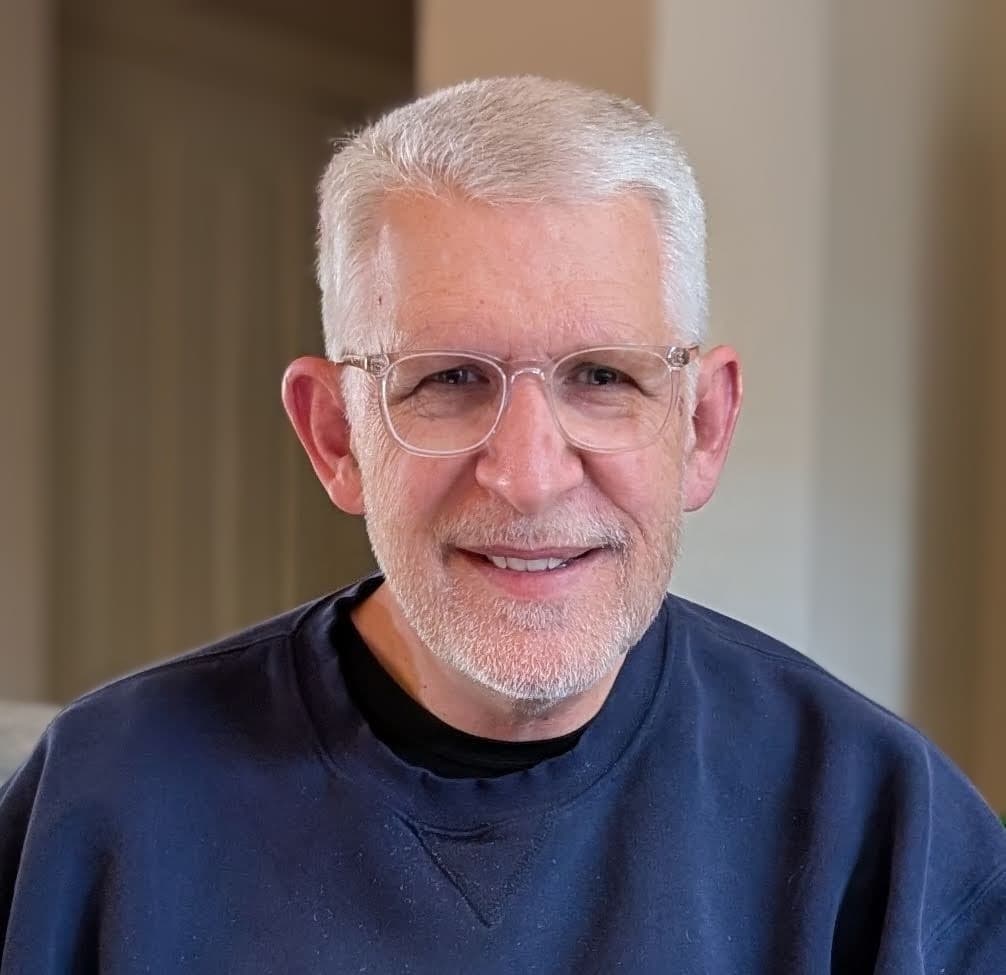
Today, let’s open our hearts to God’s voice and guard against the deceit of unbelief, remembering that true rest comes from trusting Him fully.
We are in the book of Hebrews today. So let's open up our Bibles to the New Testament book of Hebrews and the third chapter. Hebrews chapter 3. This is our second part in this chapter. Last week, we did the first 6 verses of the chapter.
We're going to pick it up in verse 7. And we're going to read down through the end of the chapter, so follow along with me as I read. Here we go.
Let's stop there and let's pray. Heavenly Father, open our hearts to the ministry of your Holy Spirit today as you speak your word to us. These are important words, Lord. These are important warnings and I pray, Lord God, that we would just look at what you're saying, that we would understand the depth and the importance of these words. We thank you, Father God, for the inspired scripture, and we pray that you would nourish our hearts as we dig into it now. And we ask that you would be with us to help us to track with what you're saying. In Jesus' name we pray. Amen. Amen. You might remember that in the previous verses that we covered last week, the author was comparing Moses with Jesus. Moses as a servant in the house of the Lord to Jesus as a son in the house and also the builder of the house. And his conclusion was pretty easy for all of us to understand. And that is that the son is obviously superior to the servant. And we talked about how that was a very common and very natural conclusion for a Jewish audience, who this writer was directing this letter to. But why did he feel the need to make that kind of a comparison? And the answer is, he's just about to speak to his readers now in the verses that we're looking at today, about the devastating effects of the people responding to Moses with unbelief. And he's talking about, of course, all of their disobedience during the time of the wilderness journey. But the ultimate act of disobedience on their part, really, which was to come to the very precipice of the promised land and not go in. Because that was the point. God brought them out of slavery in Egypt that He might train them up and bring them to a place of entering into His promises. And of course, the promised land is a perfect picture of entering into the promises of God. But rather than laying hold of the promises of God, they responded in unbelief. And you know that that obviously didn't go very well. So he's reminding his readers about that, and he's going to emphasize how much greater of a responsibility we have to heed the son who brings us the message of salvation. He says, if the Jews struggled so much and had such devastating result in responding to a servant, speaking of Moses, how much greater responsibility do we have responding to the son Jesus Christ as He speaks to us about eternal life? He's not here to lead us into a physical promised land. He's here to lead us into a spiritual promised land. And how much greater is that? And he's kind of asking the question, can you imagine the loss if we fail to heed the word of this one, the son in the house, not just a servant, but a son who comes to lead us, not to a physical kingdom, but to a spiritual kingdom that involves eternal life. And so he begins. If you look with me again in your Bible in verse 7, he says, "7Therefore," and of course the word therefore points us to his earlier comparison with Moses and Jesus. "7Therefore, as the Holy Spirit says,
Now, most of what you're reading there is a quotation from the Psalms and specifically Psalm chapter 95. And that particular Psalm recounts just what we're reading here, the experiences of elder of Israel in the wilderness. And particularly those periods of time when they sought water and found none. And they came to this place early on and then they came back about 38 years later to the same place. And again, complained because they had no water.
They bickered and they spoke against Moses. And it was referred to as the place of testing where the people tested the Lord. But again, the ultimate act of unbelief was when they came to Kadesh-barnea, which was that place right before they were to cross the Jordan and enter into the land of promise. And you'll remember that Moses decided to dispatch some spies into the land to spy it out and to see just kind of how things looked. And so the spies went into the land and they stayed there for a long time.
And when they came back, all but two of them gave a very disheartening report to the people. They essentially told the people, there's no way, there's absolutely no way that we're going to be able to take this land. These people are strong, they have tall cities with great walls. They have people who are huge. There's just absolutely no way.
But you'll remember that the two men, Joshua and Caleb, spoke up and said, no, we can do this with the Lord is on our side (Numbers 14:6-9) But they couldn't they couldn't turn the hearts of the people. And the reason is was because they were filled with unbelief. And that is the issue. That is the theme that the writer of Hebrews is focusing on, particularly in these verses that issue of unbelief. And from the story of the Israelites wandering in the wilderness, he gives this extrication look with me in your Bible, in verse 12.
Verse 12 says,
And that's the crux. That's the crux of this warning. That's the theme of what he's talking about. So what is the writer actually warning against here? Well, the answer is, you can see those words an unbelieving heart. He's warning about an unbelieving heart. So what does he cite as the threat that faces an unbelieving heart? Look again in verse 12, you'd pick that verse apart. You can just answer these questions. What is the threat? Well, the threat is to fall away from the living God. That's what he's warning against. Lest any of you fall away. With an unbelieving heart. And then finally, who is he warning? Well, look at the verse again. Take care brothers. We talked last week about the word brothers. It's brethren. It refers to people in the body of Christ. So who's he referring to? Who's he giving this warning to? Brothers. Take care, brothers. You know, one of the most popular questions that is asked of me when people write is, do you believe that it's possible for a believer to lose their salvation? I get it pretty often. I've actually decided, I'm going to stop answering that question. How you like that? I'm not going to answer it anymore. And the reason I'm not going to answer it is because it's the wrong question. People love to ask it, but often what they're doing is they're saying, Pastor Paul, do you believe that it's possible for somebody to lose their salvation? And my response is, who cares what I believe? For that matter, who cares what you believe? The big question that we ought to be asking, well, let me put it up on the screen for you, just in case you were wondering. (slide) Question: Does the Bible issue any warnings to believers about walking away from the Lord? That's the question we ought to be asking. Not whether in my opinion or in your opinion, we think this or that, or the other thing is even possible. Does the Bible issue any warnings to believers about walking away from the Lord? Hebrews 3:12 is the answer to that question. And the answer is, yes it does. Yes it does. Can we read it one more time?
If it weren't possible for believers to struggle with an unbelieving heart, this whole exhortation would be ridiculously nonsensical. It would be irrelevant if it wasn't possible. So I think it's important to emphasize though, once again, that the whole issue revolves around unbelief. It revolves around unbelief. The writer of Hebrews is not saying to you or to me that if you make too many mistakes, you can lose your salvation. That's not possible. But that is what people are asking when they ask me, do you believe it's possible to lose your salvation? What they're asking is, Pastor Paul, do you believe that I can make enough mistakes so that I finally get to the point of no return. And that God is finally going to say to me, that's it. You did it. You did too much. That was the straw that broke the camel's back. You are done. You are out. I'm getting out my big eraser and taking your name out of the book of life. That's what they're asking and that's ridiculous. People get so, oh, I don't know. It's hard to even put this into words. I have to be careful when I talk about the fact that your salvation is not predicated upon the fact that you and I make mistakes because I don't ever want to come across and sound like it's okay to screw up or it's okay to sin, and it's just no big deal. I don't want to convey that idea. Sin is always a serious issue, but so is the death of Jesus Christ on the cross. It was a very serious thing that He did. And His work on the cross was enough to give us forgiveness for our sins. And so, you know, we always have to kind of hold that intention. But people will write me so distressed sometimes. Or ask me, you know, Pastor Paul, if I'm really saved, why do I keep making mistakes? I'm like, because you're not in heaven yet. That's the answer to that question. You're not there yet. And as long as you are here on this planet, in this world, this fallen world, and in this fallen flesh, you are going to mess up. And that's not to brush those things under the rug or to make them sound insignificant. It's simply to say it's the reality. And that's why the Bible tells us that the blood of Jesus Christ keeps on cleansing us from sin. That's why Jesus told us, confess your sins. You know, make sure there's nothing in between you and God. So the answer to the question, is God ever going to remove my salvation because I've messed up? The answer is no. You didn't earn your salvation by being good and you don't keep it by being good. Or lose it by being bad or by messing up. So important for people to remember. The issue again here is not about making mistakes. It's about unbelief. And do you understand that's a very different issue? So what we need to do here is we need to define unbelief because once again, I think some Christians get this confused. They confuse unbelief with doubts. So let me share a quote with you by one of my colleagues, David Guzik. I thought he did a great job of saying this. Look at this. He says: (slide) One can truly believe God, yet be occasionally troubled by doubts. There is a doubt that wants God's promise but is just weak in faith at the moment. Unbelief isn't weakness of faith; it sets itself in opposition to faith. -David Guzik Do you understand? So once again, we we're talking about unbelief, but even Christian's mistake real unbelief. Unbelief isn't just occasional doubts. Everybody has doubts from time to time. But we go into the word of God to resolve our doubts because we want to resolve our doubts. Unbelief doesn't want to resolve the issue of unbelief. It's not looking to resolve it. It wants to hold on to what it has and so forth. So you have to understand that true unbelief is a decision essentially to reject faith, to reject belief. It's that choice. It looks for reasons, in fact, to justify its rejection of belief. And it loves to find what it considers to be justification. You see, I'm right. See that. And they point to things and that and that and that. That's why I don't believe. And you can tell them what's going on. They don't want to believe. It's not that they can't, they don't want to. I choose not to. Let me show you how the Bible describes this kind of unbelief from Acts chapter 19: (slide)
But I want you to notice the first part of that passage when it says people became stubborn and they continued in unbelief, it was a stubborn refusal.
And I don't want to believe this. I choose not to believe this. I'm not going there. I don't care what you say. I've made up my mind. I'm not going to believe. I'm just not going to believe. Okay? So don't even, don't even talk to me about it. And that's why the writer is speaking to you and I. And saying it as he says it in verse 12. Look with me again in verse 12. "12Take care, brothers, lest there be in any of you an evil, unbelieving heart, leading you to fall away from the living God." Do you know why an unbelieving heart is called evil? It's because unbelief, refuses to believe the truth, even when it comes from God. And it declares God openly to be a liar. You know, people like to couch that kind of unbelief in very soothing, acceptable words. But when you boil it all down, when somebody comes to you and they say, well, okay, I've heard your argument. And I've heard what you said and I've thought about it, but I just, I can't accept it. What they're saying is that's a lie. That's what they're saying. Now, you and I believe that the Bible is the word of God. And so for somebody to reject that is to literally reject God's word and to call Him a liar. And that is why the writer of Hebrews calls it an evil unbelieving heart. Because it is an evil thing to look God in the eye and say, you, sir, are a liar. But that's essentially what unbelief does. So how do we avoid an unbelieving heart? Well, we have one suggestion given to us. Well, it's more than a suggestion. It's an exhortation. In verse 13, look with me. In verse 13 it says, "13But exhort one another every day, as long as it is called "today."" And by the way, is it this still called today? Are we still calling this today? Is today today? Yeah, it's today. When are we having church? Today? It's today. As long as it is called today, we're to exhort one another every day. Why? "that none of you may be hardened by the deceitfulness of sin." So we are to exhort one another daily, and this is one of the key ways to keep from what he calls the deceitfulness of sin. It's referring to staying close in the body of Christ to one another. Staying close. Do you guys begin to understand how dangerous these restrictions and lockdowns are to the body of Christ to begin to understand how I . . . I know that everybody, and I'm not going to get into politics, I haven't done it in 30 years.
I'm not going to start now, but even though politicians are saying one thing, that it's all about a pandemic, I don't think, I don't think they understand. I don't think they understand that they're even blind to the fact. There is an enemy who understands that a key element to keeping you and I from a hardened heart is connectedness in the body of Christ. Believe me, satan understands it. He knows. He knows that one of the best ways to keep you and I in a vulnerable situation is to cause us to isolate ourselves from other believers. Did you notice what the writer of Hebrews calls the people to whom he is writing? Brothers. You know what that means is we're family. And what that means is that when you came to Christ and you received Him as your savior, you were not just born again. You were born into a family. We've talked about this several times. You were born into a family. We're family. Families need each other. I need you. You need me. We need one another to exhort one another so that we're going to keep our heart soft before the Lord. And sometimes exhorting one another means saying tough things, hard things to one another. Like what are you doing? What's going on in your life right now? Because you know what? This doesn't look like the Lord. This looks like a big flesh pot going on. So we need to talk about this. Those are hard things to say. Aren't they? It's tough to speak the truth in love, but we need that. I need it. I believe you do too. Let me show you how Paul exhorted the Ephesians along these lines. From Ephesians chapter 5, he says: (slide)
Submitting to one another. Isn't that interesting? Out of reverence for Christ. You can't do those things if you're never connecting with the body of Christ. These things, the things that Paul talks about here in Ephesians, require the body of Christ coming together.
Here's the bottom line. Okay? If I haven't made my point yet, I'll make it now. We were not created for isolation. By God, we were not created for isolation. We were created to be brought into Christian fellowship addressing one another, exhorting one another, submitting to one another out of reverence for Christ. Now, having said that, I understand that there are people, maybe even in this room, but some, most of whom probably are watching us live right now. Who are hearing what I'm saying, and they're recognizing that there's something missing in their lives, but there's nothing they can seem to do about it. I get notes from people all over the world, and you probably don't realize that in other countries, that many, many churches, or even all the churches in a particular area, have been closed since last March, maybe even late February, and have not opened yet. I get notes all the time from the UK from people who said, our church has been closed for months and months and months. They can't go to church. They literally can't go to church. And then there are other people who have issues related to their physical health that keep them from interacting with other people during a time like this. So, the question probably is going to come up how? How does this word apply when we're sitting here being told that we need to connect, we need to be together, we need to exhort one another, we need to help one another, and so forth. How does that apply to people who just for some reason or another, can't do it? Well, we gotta get creative. This is the bottom line. We gotta get creative. We've been doing that for months around here, just trying to be creative, to find ways to keep people coming together. And I'll tell you something, one thing that I have seen happening due to this present pandemic is that this situation has forced Christians to become creative in the way that they are connecting with other believers. And they're having to find new ways of growing in their faith and connecting and hearing the word. I mean, that's one of the reasons why our own Calvary Chapel YouTube channel just surpassed 72,000 subscribers. 72,000 that's around the world. Because why? People want the word. They want to hear God's word. And so they're like, I can't go to church. So they're getting online and they're doing what they can. Well, there's other things we need to do as well. We need to reach out, we need to connect. And thank God we've got the technology to be able to do that.
And I know it's hard, I know it's difficult, zoom meetings or Google meetings or whatever you use to get together for with people online or something like that. I know it can be challenge. Good grief. My family just got together day after Thanksgiving. My older oldest sister arranged a meeting with family and extended family. I think there was like 11 or 12 of us all online at the same time. And my dad is singing, he's 93 years old. He's singing and whistling on top of other people talking and, and we were like, Dad. And we were like, somebody mute his microphone. So it was just, it was kind of funny, but we connected, with one another and we were in four different time zones all the way from Eastern to Pacific time and everything in between Mountain and Central. And, we were talking and sometimes as Christians we've just gotta say, you know, I gotta do this. I need to connect. I need to connect with other believers. I need to stay connected. I can't afford to isolate. Because I know that is the desire of the enemy, that I would be isolated. You know, this was a threat way before any kind of a pandemic hit. We were warning people about isolation years and years ago. So don't isolate, stay, connect. Verse 14, look with me again in your Bible. The author repeats a statement that he made in our last study. "14For we have come to share in Christ, if indeed" and you'll remember last week we mentioned that the word if always introduces a conditional clause. He says, "14For we have come to share in Christ, if indeed we hold our original confidence" And we talked about confidence is another word for faith. And how do we hold onto it "firm to the end" Again, the writer is addressing this letter to Hebrew Christians who are being tempted to let go of their faith because of persecution. So he says, hey, we have to stay firm. We have to hold firm to the end. He's not saying you have to be perfect to the end. He's not saying you have to live a squeaky clean life. He says, you have to hold your confidence. What's my confidence in? Remember we talked about that last week. In Jesus Christ, not me. It's in Him, confident in Him, what He did for me on the cross. And then these final verses of the chapter, verse 15 and following, he says, "15As it is said, "Today, if you hear his voice, do not harden your hearts" in other words, do not make a choice to disbelieve as they did "in the rebellion."
Referring back to that earlier time for the Jews. "16For who were those who heard and yet rebelled? Was it not all those who left Egypt led by Moses?" That's an important question. Who was it? It was the people who were set free from their slavery in Egypt. Who were all baptized in the Red Sea, who came out of that place and saw the wondrous power of God. Those are the people "with whom was he provoked for forty years? Was it not with those who sinned, whose bodies fell in the wilderness? 18And to whom did he swear that they would not enter his rest, but to those who are disobedient?" And then again, he repeats this key statement. Verse 19. "19So we see that they were unable to enter because of unbelief." And the author reminds us here that because they lacked faith, because they were filled with unbelief, they couldn't enter God's rest. So what does it mean to enter God's rest? Well, in the context of the story that's being told here in Psalm 95, referring back to the Exodus, it's referring of course, to the fact that the Jews did not enter into the land of promise when they came to the border. Because that's a picture, that's a picture for you and I. You and I aren't walking toward a physical land where God said this is yours. I've given it to you. But the promised land of the Old Testament is a powerful illustration of entering into the promises of God, resting in the finished work that Jesus provided for us on the cross. That's what it all depicts for you and I. So when he says they shall never enter My rest, He's saying because of their unbelief, there is no rest. I was blessed to hear Dan close in prayer from worship and just talk about what it is to rest in the Lord. And did you hear him? He said it brings such peace into our lives when we've learned to rest in God. And that's exactly right. And frankly, this is a theme that the author is going to develop as we get into the very next chapter. And he's going to make some very insightful statements and connections about this whole idea of resting in the Lord. And he's going to even introduce the Sabbath because the Sabbath is another picture in the Old Testament of what it is to rest in God. And he's going to talk about that. Why is resting so important? Look what God says way back in Isaiah, 700 years before Christ was born on the earth: (slide) Isaiah 30:15 (ESV)
--- For thus said the Lord God, the Holy One of Israel, "In returning and rest you shall be saved..." That's why rest is so important. In rest, you're saved. Not work. Rest. So many people are out there working for their salvation. They're working to get to heaven. I gotta do, I gotta do, I gotta do, I gotta do to get to heaven. No, no, no, no, no. You want to get to heaven. You want to be saved. It's found in rest. Resting. Resting in what Jesus did on the cross. Look what Paul said in Philippians chapter 3:3: (slide)
- Remember we talked about confidence is another word for faith. So we're going to hold on to our confidence, but what is our confidence in us? Heavens no. No confidence in the flesh. A hundred percent confidence in what Jesus did.
And again, we're going to talk a whole lot more about this idea of resting in Hebrews chapter 4. So I want you to stay tuned if you've been struggling at all in this area of resting in what Jesus did, resting by faith and what Christ did, then the next few messages here in the book of Hebrews are going to be critical for you to lay hold of and understand. And I pray that you will, because as we were told, there's great peace in learning to rest. Amen. ---
View the formatted transcript
PDF TranscriptStudy Resource
Discussion Questions
Use these questions to guide personal reflection or group discussion as you study Hebrews 3.