
Putting On Christ
Ephesians 4 (Part 4) :17-24
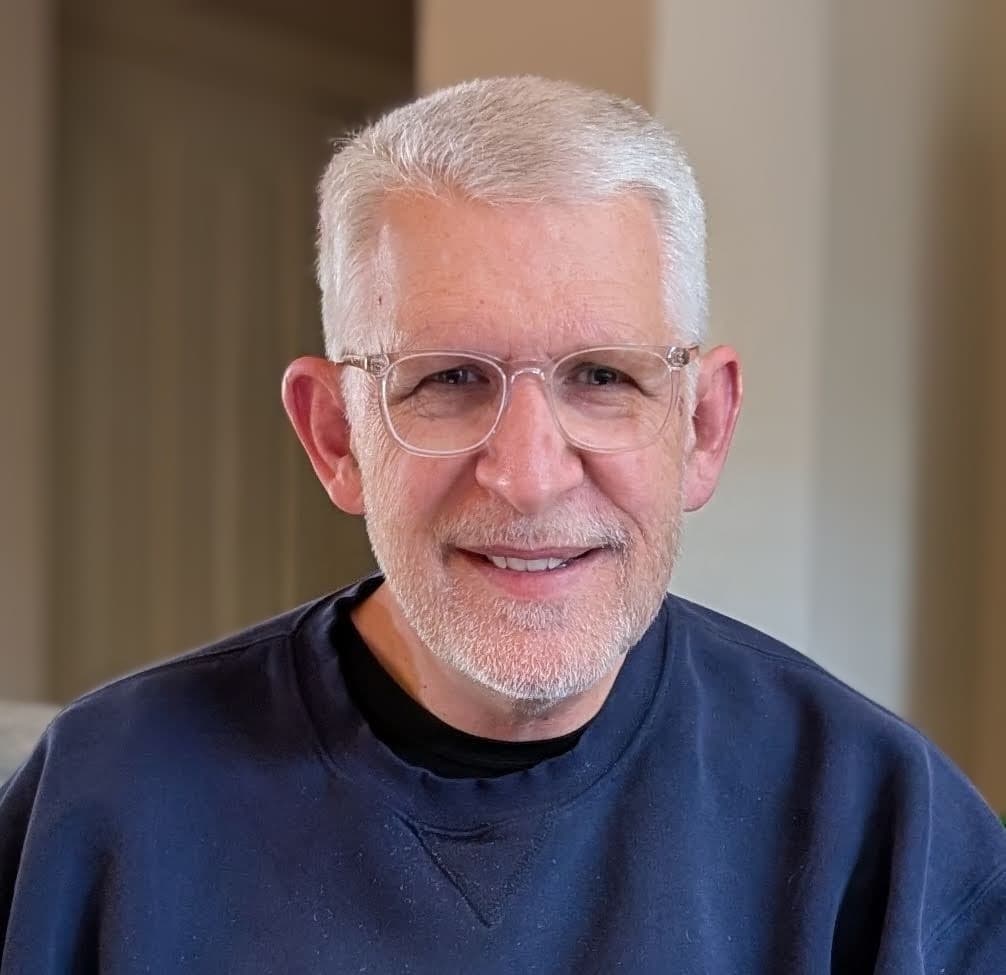
Embrace the transformative journey of putting off your old self and putting on the new self in Christ, as we grow in true righteousness and holiness together.
We're in Ephesians, chapter 4. So, to open your Bible there, please, Ephesians, chapter 4. We've been taking our time here, going through the book of Ephesians, and particularly even this chapter. This is our fifth installment in this chapter alone. But I've been careful not to go too quickly because of the stuff that's here.
We’re picking it up in verse 17. And we're going to read down through verse 24, so follow along as I read, it goes like this:
Stop there, please. Let's pray. Heavenly Father, thank you so much for giving us this opportunity to gather in this place and to dig into your Word. We pray that as we do that, you would impart wisdom and insight according to all that you desire to say to us from this passage. Lord, we believe that you moved powerfully upon the apostle Paul to write these things; we believe that your Holy Spirit guided him and directed him in the writing of it.
You have preserved these words for these many years, and now we believe, Lord, that your Holy Spirit is still at work imparting insight and understanding to us as we dig in and unpack the information that is contained in these verses. We thank you, Father, that you are the teacher we desire to learn from, and so we humble ourselves before you that you might minister to our hearts. We believe, Lord God, that you've given us ears to hear and spiritual eyes to see. We ask you, Lord God, now to enable us to really receive from you today in Jesus' name, we pray, amen. Last week we covered the leadership giftings that Paul talked about here in this section of Ephesians, chapter 4. You'll remember we talked about the fact that my job as a pastor-teacher is to equip you to do the work of the ministry. And I told you last week that really it is more appropriate to call you a minister than it is even me, and so I don't know how many of you went home and changed your stationery, but anyway, you are a minister. You are called to go and minister in the world and in the church. We talked about how important it was that we look at verses like that, where we see a biblical design for the church. We've had 2,000 years to muck up the church. God gave us a biblical outline of how the church is to be, and we've added so many man-made things over those 2,000 years to it. And it's really neat, because I think there's a move in some sectors of Christianity to break away from that. And clean away the muck and the stuff that's man-made, and there's so much of it. So many questions that I feel during a given week from people about the Bible and church and stuff are predicated upon man-made things, even how we, even the things we call one another. So anyway, yeah, or what we call people in leadership. So, we felt that it was very important to counter that gravitational pull away from biblical understanding of what the church is supposed to be. You'll remember that Paul said that when we're doing what we're supposed to be doing, when you are being the ministers that God has called you to be, and I'm being the pastor-teacher that God's called me to be, equipping you to do the work of the ministry that God's called you to do, we are building one another up. The Bible says, we're strengthening one another, and we're stabilizing our lives against challenges that come our way, such as something Paul mentioned last week, winds of doctrine.
--- Man, have we seen winds of doctrine blow through the church? Even in the last 30, 40, 50 years, there have been just so many emphasis, and when I say winds of doctrine I'm probably referring like to weird, crazy, wacky things that have come along. I want to be careful, I don't want to hit too close to home. But I know some of you have been in churches in the past where you just dealt with whatever new fad the pastor locked onto through the latest popular Christian book. And you guys remember, some of you, going to church in years past that... ,for 6 months, you'd be following the pastor who would be preaching on whatever book he happened to be reading at the time, or, and then the next 12 months, you'd be dealing with something else because he latched on to another book about something else. And then after that, there's maybe 18 months worth of preaching that you heard all about the latest book fad, whatever, that it hit the church or whatever. And you get to the end of all that and you realize, I don't know the Bible any better than I did when I started. I've just gone from fad to fad to fad. Well, when we're doing what we're supposed to be doing, when I'm teaching the Word of God and you are being equipped, and then you're ministering one to another. Paul says that we are actually guarding ourselves against that junk, those winds of doctrine. And we're going to be insulated from following or being led after those kinds of things. And it's a really, it really is a beautiful kind of a picture of the church operating as it's supposed to operate. And if you missed any of that from last week, or anything frankly, in the previous studies from Ephesians, you can go to our website, ccontario.com, and you can catch up on all of those. The Apostle Paul, in this section that we're reading and looking through today, begins with this idea or this exhortation that he lays out before us. And he says in verse 17, “Now this I say…” But, and then he adds the authority of the Lord by saying, “...and testify in the Lord…” And that's to say, he's speaking in the authority of the Lord. He says, “...you must no longer walk as the Gentiles do…” And Paul is using a Jewish term for unbelievers here, and that term is Gentiles. Now the fact of the matter is, Gentiles are just simply a group of people who are non-Jews. And you and I assume, are Gentiles unless you have some Jewish blood in you. But if you don't, then you're like me, you're a Gentile. And obviously, the people that Paul was even writing to here in Ephesus were largely Gentiles, and that doesn't mean they were necessarily ungodly people, but the term came to mean unbeliever. And the reason it did is, in a Jewish mind, is because the Gentiles had not received the Word of God, they had not received the morality of the law of God, they knew nothing of the wisdom of God, and their lives showed it. They basically lived a very secular, immoral lifestyle, and so the term Gentile came to mean or be synonymous with unbeliever or worldly person, which we would say today. I wouldn't probably say to you, hey, don't walk like the Gentiles walk, because we're Gentiles. I would say, don't walk like the world, don't mimic the world. don't live like unbelievers, atheists, godless people, whatever you want to call them. And he even describes how they used to walk there in that verse 17. He says they walked in the futility of their minds. That's an interesting word. That word, futility is interesting because it means pointless, useless. Actually, the Greek word literally means empty. Don't walk in the emptiness of the Gentiles, or if you will, of unbelievers. Don't walk in the futility, in the uselessness, the pointlessness. Do you guys remember before you came to Christ, do you remember the things that dominated your mind, your heart, your lives? I do. I mean, you guys know that I surrendered to the Lord finally at the age of 25, and so I'd been living just the secular lifestyle, the all-about-me, make-me-happy, whatever-I-want kind of lifestyle, and I remember it, and I remember how futile it was. The things that I focused on were all about me, and were all very temporal, and they were all about how I feel, and how to make myself feel better. The mantra of the world is, I just want to be happy, which is a very temporal thing and it's empty. And if you want to be reminded of just how empty it is, hop onto the Facebook page of one of your old high school friends who didn't come to the Lord. Just scroll through their page and you're going to be reminded of just what that empty life is all about. It's, you'll find post after post of memes and pictures depicting much of that which is pointless or empty. It might be humorous. It might even be interesting. But in the grand scheme of things, it doesn't really matter. It doesn't go anywhere. There's no eternal value to anything because the world doesn't really believe in eternity. ---
And so they live their lives in the scope of the day-to-day, the now, the what I can get out of it sort of a thing. It's all about what Solomon wrote about in the book of Ecclesiastes. I don't know how long it's been since you've gone through the Old Testament Book of Ecclesiastes, but here's Solomon, smartest man in the world, more wisdom than any other man given, has this incredible resource of wealth. And he essentially sets out to try to find meaning to life apart from God, which he refers to as under the sun. In other words, life on earth. And he sets about doing all kinds of things seeking pleasure, starting building projects, planting vineyards. I mean, you name it, he tried everything. (Ecclesiastes 2:17) And you guys know how his conclusion, he says it's all pointless, it's all vanity. In fact, he called it vanity of vanities. (Ecclesiastes 12:8) Which is to say, there's just nothing to it, there's no eternal value. You mow the lawn only to find it needs to be mowed again a few days later. It's that sort of repetitious, cyclical nothingness. You amass wealth and then you die, and you can't even take it with you. He says, and it's just pointless, it's vain, it's empty, which is the whole thing. Now Paul goes on here in verse 18 to begin to describe why you and I were so fixated before Christ on the temporal and the empty. Look at what he says in verse 18, he says, “They…” And we might as well say, we were, because this is us before Christ. He says,
Wow, I mean, think about that. And then, what is the result of that? Look at verse 19:
That just means greedy for more. Now, when the Bible says that people give themselves over to sensuality, you need to understand something about that. That sounds really awful, and it might be, but it doesn't necessarily have to be. It's just centrally focused. In other words, um, let me give you an example. We talk about people who are thrill-seekers today. People who like to go bungee jumping or jump out of a perfectly good airplane, which I can't figure out the delight of that, but I understand some people find that... I mean, it's just, it's an adrenaline rush, right? We call them adrenaline junkies.
And the world that we live in, think about it, that's all they got. That's all they got. They got their 5 senses. And to titillate or to excite the senses is really the height of their existence, to make myself feel good, to be excited, to be scared in a fun sort of a way, to be just enveloped in the sensation. It could be food and overindulging that goes with that, or it could be emotional... I love to read romance novels. It's just, there's the feeling. It's just all about sensuality. It's all about what I can feel, whether physically, emotionally. That's it. When you think about it, that's all the people of the world live for because that's all they have. And so when Paul says they're given over to sensuality, it's very simply saying that they're living for that. And he then— but there's only one problem with living for sensuality. You can never get enough. The more you... , stroke that desire to feel, the more you want to. If I go to a horror movie and I... it's a slash-killer sort of thing, it's like, ooh, that was a lot of fun. And now I've got to go to one that's a little bit worse, a little bit more on the gory, bloody side. And if it's something I'm doing, like jumping off a mountain, and I need to get a higher mountain now and I have to build the rush there's the... Now, I'm talking about things that are fairly socially acceptable. I mean, nobody's going to look down on somebody for jumping out of an airplane. It's like, wow, that's fun. But what if that sensuality is something that is very dangerous, or base, or sinful, that has maybe sexual connotations outside of marriage, or whatever. And now I'm living for that sensual pleasure, and I'm needing more, and more, and more. You get the picture. Paul is making a picture for us here. Let me put these on the screen, and we'll just outline them here. The Futility of life Apart from God ● Darkened in understanding ● Alienated from God ● Hardened in heart ● Unfeeling and uncaring ● Given over to sensuality I call this the futility of life, or the emptiness of life apart from God. And Paul talks about, they are darkened in their understanding, they are alienated from God because of that. And they are hardened in heart, unfeeling and uncaring, given over to living for sensual pleasure and delights and constantly wanting more of the same. And is it any wonder that Paul is exhorting us not to walk in that any longer? We walked in it at one time now, don't do it anymore is basically what he's saying. He says to you and I in verse 20, if you look with me there again: “...that is not (what you learned, that’s not) the way you learned Christ…” or as the NIV puts it, “...you didn't come to know Christ that way.” He says in verse 21, “...assuming that you have heard about and were taught in him, as the truth is in Jesus…” And then he lays out that truth in verse 22 here it is: “... to put off your old self, which belongs to your former manner of life and (he says) is corrupt through deceitful desires 23 and (then also) to be renewed in the spirit of your minds.” He reminds you and I that we've been taught to do this. This is the life that we've been taught to live now that we've come to Christ. We didn't come to Christ, receive him as our savior, and then we weren't told, now go out and just do what you want to do. It's no big deal. Just live. What? How? We weren't taught that way. We were taught, in fact, to resist the flesh, right? We were taught to yield to the Holy Spirit, to the leading of the Holy Spirit in our lives. And so he says, I want to remind you of that because if you're living after your former manner of life, that's living a corrupted lifestyle. And he, of course, the old life or the old former manner of life is the way we used to live before we met Jesus as our Savior. It's basically living after fleshly desires, deceitful desires, and that's what corrupts that nature to begin with. And it's a very accurate description of me before Jesus, me, B.C. (Before Christ), that was me. I remember, it hadn't been that long. I mean, it's been a while, but I still remember. I remember living for myself. And so Paul says, make sure you put off the old corrupted way. Verse 24, he says, put off the old corrupted way. And then in verse 24:
Now, I want you to stop there for just a minute because I want to talk to you. The reason Paul is exhorting you and I to put off the old self and to put on the new self which is Christ in us, right? Is because now, we have the freedom to do that, we didn't before. Back before I knew Jesus, I didn't have the power to say no to my flesh. My flesh dominated my life. My flesh called the shots, and I was a slave to my flesh, and so were you before Christ. When Jesus came into our lives, we received the Holy Spirit, and we received the benefit of what Jesus did on the cross for us. He broke the dominion of the sinful nature in our lives. In other words, He took away the power of the sinful nature to say, listen, you've got to do what I want. You've got to do what I say. Now, I don't have to bow to that as a Christian, I can say right? I don't have to do that anymore. And I don't. And neither do you. Why? Because we've been set free. The Bible says that Him whom the Son sets free, right, is truly free.
So, I'm now free. I can say no to the sinful. I can actually put off the sinful nature and I can put on that new nature which is in Christ and I can choose to live a different way. I couldn't choose before. I didn't have that capability.
Now I can. We can choose to live however we want. Here's the rub though, I can choose to go back and live in slavery. I'm free to do that too. As a Christian, I've been set free to choose my path, and I can even choose the wrong one.
Because you know what? If I'm not free to even choose the wrong path, then I'm not really free. And again: “Him whom the Son sets free is free indeed.” That means I can choose the right, or I can choose the wrong. Now, I don't want to choose the wrong, and it would be really stupid for me to do that.
Paul warns against it in the book of Galatians, he says, listen, guys, do you know why Jesus set you free? I'm paraphrasing here in Galatians chapter 5. He says, do you guys know why Jesus set you free? It's to be free! Now, be free!
And don't go back and live a life of slavery.
But we don't we understand from that passage? We are free to go back and live a life of slavery if we want to. I can go back and put the chains back on. Don't know why I would, I'd be stupid to do it, but I can do it. I'm free to do it, you see.
That's such an important thing to remember. Let me show you how Paul talked about this in Romans chapter 6:16, love this passage. He says,
--- Don’t you know that when you offer yourselves to someone to obey him as slaves, you are slaves to the one whom you obey — whether you are slaves to sin, which leads to death, or to obedience, which leads to righteousness? Do you understand that? He says, listen, you're free. You're free to go back and live that life of slavery if you want to but just understand this: you will be a slave to sin and it leads to death, but you can also choose now. You're free also to choose to live a life of obedience to God which leads to life, right? But you have that freedom. And Paul tells us to choose the life of Christ. Here's how he says it: He likens it to like getting dressed in the morning. You put off your bedclothes, your jammies, whatever. And you put on, that's your old, it's that's a picture of your old life, and you put on the clothes that you're going to use for the day. (Ephesians 4:22-24) Now the picture here is the old life, the old rotten sinful nature. Take it off! And put on the clothing that is in Christ, created to be like Him in righteousness and holiness, and so there you go. Just, doesn't it sound easy? It's like, hey guys! Just put off the old self. Put on the new self, just like that. Wouldn't that be fun if it was that easy? The reality of people who talk to me anyway about sin in their lives is one of struggle. I went with Duane out to the prison last night to meet with the inmates out there and one of the guys, one of the inmates was talking and asking about an area of sin in his life that he's just still, it's still challenging him on a regular basis. And I could see it, I could see it in his face, there was a genuine sorrow. I mean, struggle. It's like, this is a struggle, pastor Paul, this thing I'm going through, this sin that keeps rising up and grabbing a hold of me, and I hate it. I hate it. I hate when I do it. I hate when I fall to it. And see, that's the reality. And so when the apostle Paul comes along and goes, hey, put off the old nature, put on the new. We go, ah, it sounds a lot like an oversimplification because our experience of dealing with sin is a challenging one. It's like take off sin, is it that easy just to... Do you guys remember the Chronicles of Narnia when C.S. Lewis, what a great writer he was, he fashioned so much of Christian theology into his stories. But there's the story, and I forget which one it was, but it was where Hustus, the cousin of the original kids that went into Narnia and Hustus was a jerk. He goes to Narnia with the kids, and he's just a jerk. ---
And he eventually becomes who he is on the inside. He becomes this fire- breathing dragon. You remember in the story? And over the course of time, he is brought to understand the depravity of his heart. And he wants to be rid of this horrible thing that he now sees himself as, and in the movie and in the book Hustus takes his claws and tries, he scratches at himself. He just wants to be rid of this corrupted, rotten flesh, and he's like, get it off me, sort of a thing. And Aslan comes along and says, that's not the way it's going to work, you can't do that yourself. And in the story Aslan breathes on him, and of course, he's made new. But it's that picture of how we struggle with sin. And we want to take it off, and I'm like, ugh when I talk to people who are struggling with sin, they want to be rid of it. They're not like going, I really like this sin thing. They're, usually by the time they come to me, they're like, please help me, because I hate myself every time I stumble into this area of sin. And I think of Hustus, the dragon, trying to scratch it off. And yet, Paul makes this statement about just putting off the flesh, and I want you to understand something. Your struggle, and my struggle, with getting rid of that sinful flesh, putting off the old nature, is not a reflection of any lack of what Jesus has done to secure that victory for us, or that ability for us. In other words, the fact that you and I struggle to put off sin, is not a reflection of what He did, it's a reflection of us. It's like He said, the spirit is willing, the flesh is weak. (Matthew 26:41) It's you and I that are struggling with this issue of sin. But I want you to know something. I want you to know that Jesus has made every provision for you and I to be free from those areas of sin that dog us on a regular basis. And the reason I emphasize that is because we've got to get our eyes off of our sin and onto the solution for our sin. When I was talking to that inmate last night at the prison, I could just see in his eyes, as he was, and he didn't go into detail about his sin, sometimes people do. But you could just see that this was where he was focused. This is what his eyes were looking at. He was saying, pastor Paul, I've just, there's this area of sin in my life, and I just really want to be free from it. And I can tell what was going on in his heart. He was really focused on that area of sin. But can I tell you what happens when you focus on your sin? It just gets bigger. It gets bigger and tougher and harder, and there's really, and you become overwhelmed. And what you and I are supposed to do in order to walk in the victory against our sinful nature is that we need to begin to focus on the solution that God has provided through His Son Jesus Christ to set us free. And it's not wishful thinking, it's putting our eyes on the solution rather than the problem. Because again, the more you look at the problem, the bigger it gets and the stronger it gets. And see, that's why when I'm talking to people about their sin and they're telling me about their sin, they're describing a giant that has power over their lives. And they're describing it to me that way. you don't understand, pastor Paul, this thing has me by the jugular. And I can't get free because this thing is powerful. And I want to say... I want to introduce you to something that's more powerful over this thing that has a hold of your life. And it is the power of the Holy Spirit living in you. Let me share some scriptures with you related to this. The first one is from 2 Peter, chapter 1:3. Love this passage. 2 Peter 1:3 (ESV) His divine power has given us everything we need for life and godliness through our knowledge of him who called us by his own glory and goodness. “His divine power has given us everything we need for (what? both) life and godliness (and Peter tells us there that it comes) through our knowledge of him who has called us by his glory and goodness.” I want you to notice and emphasize in your heart and mind those promises here, that His power has given us everything we need for godliness. That's why I said when you and I struggle with sin, it's not a problem on his end. He's given us everything we need. Everything we need for godliness. Okay? And then 1 Corinthians chapter 10:13, one of the most misunderstood passages in the Bible. It's all about temptation, and he writes that, 1 Corinthians 10:13 (ESV) No temptation has overtaken you that is not common to man. God is faithful, and he will not let you be tempted beyond your ability, but with the temptation he will also provide the way of escape, that you may be able to endure it. No temptation has overtaken you that is not entirely common to man. (But he writes) God is faithful, and he will not let you be tempted beyond your ability, but with the temptation, he will also provide a way of escape, that you may be able to endure it.
This is one of those passages that busts us. We're busted when we read this. Because what it tells us is, when I'm tempted to sin, and I fall to that temptation, it's not because God didn't do His part. This passage tells me that He promised, He promises never to allow a temptation in my life that is beyond my ability to endure, and when I am tempted, he will provide a way out, right? New Christians get so discouraged when they, after they've come to the Lord and then they fall back into sin or whatever. I've talked to many over the years, they say, pastor Paul, what's wrong? Did I not say the prayer right? Or something, because I fell back into sin and I'm so discouraged and so disgusted with myself and so forth. And the response that I have for them is not one that they want to hear. Because I tell them, the reason you went back into that sin is because you chose to. You see, Jesus set you free. That's what He says in his Word, you've been set free from the power and dominion of the flesh. But you chose to go back and live it. You chose to go back and do it. Now, this was your choice. You didn't have that choice before you knew Jesus. Now you chose to go back. Now, don't be condemned, God's going to forgive you, and it doesn't mean you're not a born-again Christian. Let's get up and let's move forward again. Let’s keep walking with Jesus. We create habitual behaviors in our life. Habitual responses to life. And just because you came to Jesus Christ doesn't mean those habits aren't going to persist for a period of time in your life, because they often do, right? And we end up responding out of the same sort of emotional whatever that we did before we knew Jesus, and those things have to be unlearned. But listen, it doesn't mean that God hasn't given you everything you need, because He has. Paul writes in Romans chapter 6:6, and... it actually goes on to verse 11, I didn't put it at the top but, Romans 6:6 (ESV)
We know that our old self was crucified with him in order that the body of sin might be brought to nothing, so that we would no longer be enslaved to sin. So you also must consider yourselves dead to sin and alive to God in Christ Jesus.
This is such a wonderful passage in the Bible, but it starts off with the words, we know. We know. What does he say we know? We know that our old self was crucified. Here's my response. Do we really know that? I mean, do we know it in the sense of believing it? No, when we're going through an area of sin and where we're having this besetting sin, you know what we know? We know we're caught. That's pretty much all we know. And when people come to me and want prayer or encouragement for an area of sin that they've fallen into, really, all they know is their sin. And that's pretty much it. And they'll just like, and that's what, because that's what they talk about. They talk about this area of sin. Pastor, do you know what kind of sin I'm dealing with? Do you know my sin? Well, do you know that when you came, can we put that back up, please? Do you know that when you came to Jesus Christ, that the old self was crucified? Did you know that? Did you know that the body of sin has been brought to nothing so that it no longer has to dominate your life? Do you know that? Well, see, those are not things that we know. Well, we might know them, but we don't really believe them, to be honest with you. And because we don't believe by faith that we've been set free from the dominion of the flesh, it constantly rises up and grabs us. And says, you've got no choice in the matter. I'm the master, you're the slave, get down on your knees. And Paul says, no, that's not the reality of the situation. He says, I want you to consider yourselves dead to sin. The word 'consider' means believe. I want you to believe in your heart that you're dead that this sinful nature that used to dominate your life is now dead to you. It has lost its ability to dominate your life. I want you to believe that. It's hard to believe when you're messing up, isn't it? I mean, because when you're messing up, you're I feel like I'm just a slave of sin but you're not. The reality is you're not a slave of sin. You've been set free from that slavery. Now Paul says, I want you to live it. I want you to live like you are no longer enslaved to sin. I want you to believe in your heart that Jesus Christ severed that tie, that connection with the sinful nature. That's a hard thing to do, isn't it? It's a very difficult thing to do. But it is critical that we do it, that we begin to believe this thing no longer has power over my life. So, the scriptures I just gave you there, I think are great ones to—I hope you wrote them down—they're great ones to memorize and to speak out in faith when sin rises up and tries to grab you again and says that it's in charge. There's another wonderful passage I want to share quickly with you. It's from 1st John. I love this. Talk about walking in victory over the flesh. John writes:
Beloved, we are God's children now (he says), and what we will be has not yet appeared (and that's because Jesus has not yet appeared), but we know that when he appears, we shall be like him, because we shall see him as he is (in other words, face to face). And everyone who thus hopes in him purifies himself as he is pure. Here's what John is saying, there's this progressive work of sanctification that God is doing in our life now, day by day by day by day. But, guys, and I want to encourage you with this, there's coming a day when Jesus is going to come for his church, and we're going to see him face to face. And on that day, we're going to be transformed and we're going to be like Him because we will see Him as He is. Here's the beauty of it. He lets us see Him as He is today through His Word, through the power of the Holy Spirit. And that is why day by day, we are being transformed from glory to glory. We're not going to be fully and finally changed until He returns. And that'll be wonderful. But we can't just say, well, someday, because today He wants to work on our hearts. Today He wants to transform our lives. And that happens as we continue to look at Him, and see Him through His Word and so forth. I want to end here today with a quote by the man who wrote the hymn 'Amazing Grace,' John Newton, who was a fairly amazing man. He probably wouldn't say so. But this is something he said, which I found very cool. He says, “I am not what I ought to be. I am not what I want to be. I am not what I will be. But thank God I am not what I used to be.”
— John Newton (Author of Amazing Grace) “I am not what I ought to be. I am not what I want to be. I am not what I will be. But thank God I am not what I used to be.” Isn't that a great quote? And we're all right there, aren't we? I'm not what I want to be. But oh, thank you, Jesus, that I'm not what I used to be. And God has not done, it's a work that's ongoing. But we need to get our perspective right. We need to get our perspective to the place where we understand that. Listen, Jesus did the work, and now I have everything I need to live that life of godliness. I just need to keep my eyes fixed on Him. And I need to stop focusing on my sin because it just gets bigger, nastier, and meaner. But when I focus on Jesus, the solution to my sin, His power begins to take hold in my life. And I begin to find that those areas of sin that once dominated me are falling away because by faith I believe that I have entered into His crucifixion. The crazy, crazy thing about the crucifixion of Jesus Christ, you and I get to get up there on the cross with Him. And we get to experience a death with him, but ours is a death to self. His was a death bearing our sin, but we die to self, and just like him, who was raised from the dead, we also get to experience a resurrection unto new life. And that is the Christian life. Your Christian life is a resurrection unto new life, where we get to live that new life.
View the formatted transcript
PDF Transcript