
September 2024
Understanding God's Plan in a Fallen World
“When faced with life's challenges and pain, remember that we live in a fallen world, but God's love and mercy are at work to ultimately restore and heal through Christ.”
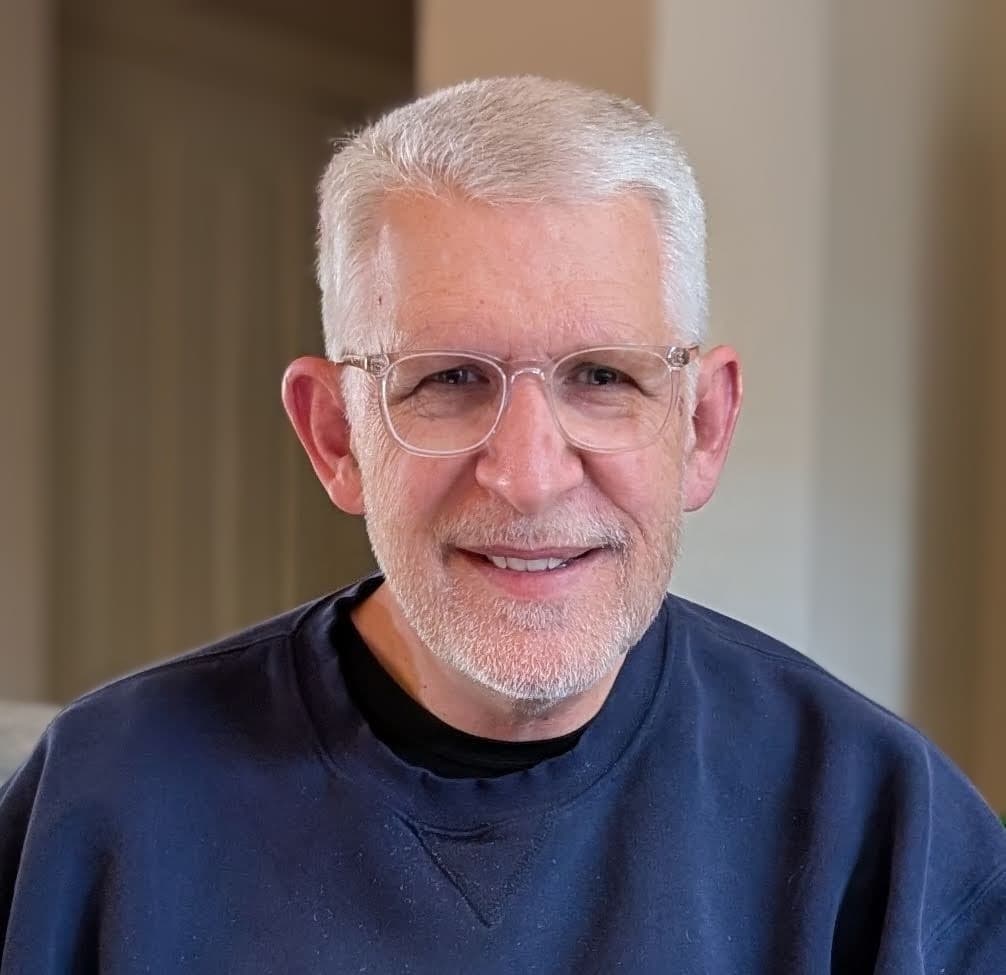
Bible Q&A with Pastor Paul - September 2024 Teacher: Pastor Paul LeBoutillier Calvary Chapel Ontario Pastor Paul: Good evening, everybody. Good to see you. Good to have you here with us. We decided to kick off September with another Bible Q&A, and so that's what we're going to do tonight. The questions have been rolling in, and so hopefully this will help answer some questions that perhaps you might have. We try to use questions that are such things that people wonder about. And then, second of all, hopefully this will also help equip you for when people ask you questions. I think I know that happens a lot for many of you, whether you're at work or somewhere else, and you get to talking about the Bible or whatever, and questions come up that can be pretty challenging. So, anyway, that's what we're going to do tonight.
Sounds good.
Are you ready?
I'm ready.
All right. You're the questioner.
Let me send off the first question that comes from Grace. And she says,
“Dear Pastor Paul & Miss Sue. Thank you for your Bible teaching. I learn a lot. My grandson asked me if God is full of love and mercy, why doesn't he stop bad things from happening, like shootings in a school or allowing babies to be born to abusive or drug addict parents? I just don't know what to say.”
And that's really challenging question. It's particularly challenging when you're talking to a child, because there are just some things that kids are not going to fully be able to understand. But I know that this question is not only asked by children, sometimes it's asked by adults. And they'll even say, if God is a God of love and mercy, then why are all these things happening? Why is the world full of pain and hurt and so forth? And this is not one of those quick conversations. This is not one of those things that you can just say, well, let me give you 60 seconds and explain this to you. This is probably going to be a sit down conversation for a while, but it begins with the fact that people need to understand that the condition that the world is in is because mankind fell into sin, and that's why things are the way they are, that we live in a fallen world, and bad things happen in a fallen world, and God has a plan to overturn all of that. But it's not yet, and this isn’t heaven. And we're living in a period of time that is a dangerous time to live. To be completely honest with you, this is a very challenging time to live, because things go wrong all the time. People get sick and bad things happen, and so it's the world in which we live. I think the important thing is to know and understand that God's plan is working to overturn all of this. And of course, sending His Son to die for our sins on the cross was a powerful, really beginning of that whole process of overturning the curse of sin and all that it implies in our daily lives. But as believers, that's where we keep our eyes, that's where our hope is. I heard there was even another school shooting even today. I think something like that happened even today. So we know this stuff is going on. It's continuing to go on.
Don't you think this is a really common question for children or young people to ask parents. It's very important for parents to think through this. And like you said, it's there's no quick answers, but it's kind of a process, and a life of modeling are just assurance that God is in control. But it's a good question.
Well, it is a good question. It's an important question. And as I said, it's not an easy one to respond to. But, unfortunately, it comes from people who don't know the Bible and have not read through and study through the Bible. When you know the Bible, when you understand the Bible, you know God's plan and that there's a plan in place, and that's where we're to keep our focus on that plan.
All right. Next question is from Daniel. He says,
“I have a question for your Q&A: Romans Chapter 1 says: obedience comes from faith. Can you explain this?”
He's probably noting of the fact that on my very first study of Romans is titled ‘The Obedience’ that comes from faith. And so he's probably wondering, what that's all about. He's asking to explain and what he's referring to is a particular verse in Romans, chapter one, and we'll put it on the screen here. It is Romans 1:5 (ESV), and it says, through whom we have received grace and apostleship to bring about the obedience of faith, for the sake of his name among all the nations. And that, of course, is where, I got the whole idea of the obedience that comes from faith. The reason this grabs people is we don't usually think about obedience stemming from faith. When we talk about obedience, if I were to say something you like, God wants you to obey him. Well, immediately we begin to think of, well, I got to work hard on obeying God.
Think about willpower.
Willpower, effort. And people will even kind of betray that whole idea when they talk about their life and they'll say, I'm working on this area of my life. I'm really working to get this area of my life under control, and that's the way we think about obedience. But the Bible says that obedience comes the same way that salvation comes. It comes by faith. And when you start reading the book of Romans, Paul talks about the obedience that comes from faith, but he doesn't explain it until he gets to the sixth chapter. And that's typical for Paul in the way he writes. And when he finally gets to chapter six, he says this on the screen. Notice it says, Romans 6:11 (ESV), you also must consider some Bibles say, reckon yourselves dead to sin and alive to God in Christ Jesus, that's the key to having obedience by faith. You reckon yourself dead to sin and alive to Christ. You see, the Bible says that when you come to Christ, you're a new creation. You've entered into his death, which is what is portrayed in the waters of baptism. And now the old man is dead, and you are to live like he's dead or she, as the case may be, and you are to live like you are now alive in Christ. Well, guess what? That's by faith. And the Bible tells us here that the righteous shall live by faith. Our life in Christ is from faith to faith. It's not from faith to effort, it's from faith to faith. So we're saved by grace through faith, but we then don't keep ourselves saved through effort of obedience. We walk in the power of the Holy Spirit, the newness of who we are in Christ by faith to reckon ourselves dead and alive to him. So that's the obedience of faith that Paul talked and he introduces in Romans chapter one, and then begins to explain in Romans chapter six. And I would encourage people that really want to get into this and learn more, to just really take a deep dive into Romans chapter six, and live there for a few months, and it'll start to come clear.
Sounds good. And from Gainesville Florida says,
“Hi Pastor Paul and Ms. Sue. My husband and I have been listening to your John series. My question is in John 14: 15, Jesus says, “If you love me, keep my commandments.”
Again, when people hear anything in the Bible about commandments or obedience or anything like that, they're immediately taken a back. And they think, I've got to do this. And sometimes they'll even think, I got to do this to be saved. Which, of course, is not what Jesus is talking about. The point I was making in the study of John is that when Jesus talks about obedience, he's not talking about obedience for salvation, because we're not saved by being obedient. We're saved by grace through faith. So when Jesus says, if you love me, you'll keep my commandments, he's talking about all the things that he told us to do. We used to sing a song. Do you guys mean, this is my commandment, that you love one another? Well, that's part of Jesus's commandments. We're supposed to love one another, we're supposed to love our neighbors. We're supposed to love God above all and these are the commandments that he gave us.
Doesn't one of the translations said, if you love me, you will keep my word?
Yes, it's the same.
It's the same. But for some reason that just seems just a little bit more clear. Because, like you say, we equal commandments with 10 things. But when we say, keep my word, it kind of helps us like, everything you said, everything you taught.
Well, again, when some people see the word commandments, and they and the word keep commandments to them, they tumble into this whole idea. They lose their way in the sense of embracing that your salvation is by grace, through faith, and they begin to think that now I've got to do something to be saved or to stay saved and that's just not the case.
All right, Adriano says,
“Hello, I was listening to John 11 Part 2. At the end of the video you were talking about not repaying sin with sin, but I'm a little confused. If a man seeks to harm one's family, should the protector of the family just watch his family be hurt?”
This is a common question, because Jesus talk about. He does talk about turning the other cheek and things like that. And people get confused, and they're like, so does this mean that we're to never. I mean, the Bible says, don't resist an evil person. And so people ask from time to time, what exactly does that mean? And if someone's attacking my family, so I just sit back and watch this happen or something. And that's not what Jesus is referring to. Jesus was talking specifically about when we are being persecuted for the gospel. And Paul talks also about this whole idea of not repaying evil for evil. In other words, if someone does attack your family, you don't go attack his family. It's talking about retribution and revenge and that sort of thing. So that's what the Bible is primarily referring to.
Kibira says,
“I'm from Uganda. I've been listening to your teachings about the Lord's Prayer and it got me to Wondering. Does God answer our prayers or is it his will that plays out has nothing to do with our prayers? Also, how does God reconcile his will with our daily needs we ask of him through prayer?”
This is again, a fairly common challenge that people will deal with when they recognize that we're supposed to pray. We're told in the Word of God to pray. But then they learn that God's sovereign. And they start learning what sovereignty means. And sovereignty means that God's will is above all, and he's going to have his way, and there's no one who can thwart him. So many people run into this, and consider this a potential contradiction. And so the thing that we have to remember is that, yes, God is sovereign, but he told us to pray. And Jesus exhorted us in several ways, through parables and through examples, to pray. You'll remember when he released a demoniac that his disciples couldn't take care of. They came to him afterwards and said, Lord, why were we unable to cast out this demon? Well, this one comes out by much prayer. So we know that we're to pray. We know from what the Bible says, that prayer makes a difference. What people are stumbling over is, how does it make a difference in light of God's sovereignty? Well, that's something you're not going to be able to figure out. You're just simply going to have to go for it. You're going to have to just take up the call to prayer, and you're going to have to trust that God is working all these things together in ways that he's not really willing to explain to you, probably because we couldn't get it if he tried. It's really one of these things we do by faith. We step out and we do it by faith.
Very good. @Craignlorriecarter said
“Greetings Pastor Paul and Sue. First, I would like to say thank you for these Q&A's. I look forward to them each month. In the Old Testament, they had to sacrifice animals for the forgiveness of sins. Were they completely forgiven of sin at this time by the blood of bulls, etc, and if so, why did they not go into heaven if they were completely forgiven? This has always kind of confused me. I appreciate and look forward to your answer.”
This is again, something that people struggle with. How were people forgiven in the time of the Old Testament? How exactly did that work? They sacrificed animals. So what exactly happened when they sacrificed animals? Well, one of the things that Paul explains to us in the New Testament is that even though an animal died, and the Israelites were being taught sacrificial substitution, the idea of something giving its life for something else or someone else, they were being taught that. We know from the New Testament that they the sins were forgiven yes, but they weren't punished. In other words, God didn't punish the animal in place of the human being, because an animal can't stand in for a human being. That process was to teach substitution and that sort of thing and blood sacrifice, because that all points to Jesus. But their sins were told in the New Testament were left unpunished. So this is the crazy thing. Yes, they were forgiven, but their sins were left unpunished. Paul says this in Romans 3. Let me put this on the screen. This is an important passage. Look at this Romans 3:25 (NIV84), I'm reading this out of the NIV. I like the wording better. God presented him, that's Jesus, as a sacrifice of atonement through faith in his blood. He did this to demonstrate his justice, because in his forbearance he had left the sins committed beforehand unpunished. So in other words, when Jesus came and died on the cross, he was punished for all the sins that had taken place previously, all the sins that were taking place presently, and all the sins that would take place in the future. So he came and was punished for all time, for the sins of man. So were they forgiven in the Old Testament? Yes, they were forgiven. Were their sins punished? No. And that's one of the reasons why people did not go to heaven. They went to a holding place. The punishment had not happened, and that didn't happen until Jesus was sacrificed on the cross. And one of the things the writer of Hebrews tells us along the way, and this is another important passage from Hebrews 10:4 (ESV), he says, it is impossible for the blood of bulls and goats to take away sins. So we know from the Old Testament the sacrifice of animals didn't take away sins. It was by faith that the people were forgiven the same way that we're forgiven today. People often think, in the Old Testament they were forgiven by sacrificing animals. Were forgiven in the New Testament by putting our faith in Jesus? No, no, no, they were forgiven by faith in the Old Testament, we're forgiven by faith in the under the New Covenant. It's always been faith that has caused the forgiveness of sins.
So there's a YouTube question from @vijayjaggala, “In the Bible, there are several instances where God changes people's names. Any reason for it?”
There are many reasons. Sometimes the reason is because of a calling that God has on someone's life. Sometimes it's a change that has been made in their life. For example, when Jacob was renamed Israel, you've got Abram, who was renamed Abraham, Sara, who was renamed Sarah. And of course, all those names, names were very important. Names had meaning. They carried a connotation of the person's character or change of character, whatever the case might be. And so names were always very, very important. And the Bible tells us that we ourselves are going to receive a new name one day, and it's interesting. I assume that the names we're going to get are going to have significant meaning for our lives, probably about how we serve the Lord and I hope my name isn't dork head or something like that, and the Lord gives me a new name.
I'm sure we'll love it, whatever the name is. Beverly says,
“After the 1000 year millennium, what happens to the believing humans? Will they receive a glorified body or will they be put onto the new Earth? My Dad always taught that these humans will go onto the new Earth and live as God intended Adam and Eve to live and populate the Earth before they fell. What are your thoughts?”
I assume that Beverly is asking about people who survive the Great Tribulation and go into the millennial kingdom as mortals. Because we know that people will survive, the Great Tribulation, some will survive. In fact, many Jews will survive the Great Tribulation, and they will go into the millennial kingdom as mortal human beings. Now, the church, the Body of Christ, by this time, will have already received our resurrection bodies, so we will no longer be mortal. So she's asking, what happens to these people, they go into the millennial kingdom, and then what happens? Because we know at the end of the millennium, the old earth and the old heaven are destroyed, and a new heaven and new earth are created. And so she's asking, what happens at that particular point? And the Bible doesn't go into that specific detail. We just have to trust the Lord for those people. But people are going to live and die during the Millennial Kingdom. So there is going to be a final resurrection and we know that. And so that we know, and so we assume that at that point that those people will be given their resurrection bodies and carry on in the new heaven and the new earth. But the specific details aren't really lined out for us.
All right. @lauragardner, “Hello Pastor Paul. I hope you are both well. How do you know if your belief in Christ is a head belief or a heart belief?”
Interesting question, isn't it? I think we make too much of the difference between a head belief and a heart belief. I'll be honest with you. You hear people talk about it quite a bit, and they'll say, somebody knows something, but it hasn't quite reached their heart, and it's a way of saying they haven't begin to really, truly embrace it with their life. Well, I don't know. It's hard to know exactly what this person is asking, because I believe a head belief and heart belief are both critical. You have to believe with your head. The Bible, that's knowledge. And we have knowledge of the Word of God, and we believe the Word of God, and we believe it intellectually. Obviously, we don't just stop there. We begin to live it out or walk it out in our lives. And that's what the Bible talks about when it says that we are to work out our salvation with fear and trembling. That literally means just walk out your life in Christ, live it out on a day to day basis. So that's not just an intellectual thing. It's a way of life and so forth. So how do you know, I think you know at least answering her question, you know if you're walking it out, if you're living your life in Christ, if it's not just head knowledge that you have relegated to an intellectual pursuit of God, but it really doesn't affect who you are as an individual. That's the best I can come up with.
It is sometimes difficult to know exactly where somebody's coming from when they ask a question.
It really is very much.
Good answer. An anonymous viewer says,
“How much of the Old Testament should we pick up as Christians? My concern arises from the fact that the church seems to fall back to the Old Testament whenever it is convenient, especially when talking about giving.”
I'm really glad that this person explained what was behind the question, because otherwise I probably would have launched into something that didn't really relate. How much of the Old Testament should we pick up as Christians? I mean, that's an odd question to begin with. Of course, all of it. But then they say, so does that mean that I've got to keep the feasts and so on and so forth? So what this person is doing? There's a lot behind this question. I think Christians do recognize that in some churches, there's not a whole lot of emphasis on the Old Testament until thing like tithing comes up. And then suddenly the church leaders tell people that, there's a command that they need to tithe and tithing is 10% and you got to give 10%. And I think a lot of Christians eventually find that to be a little hypocritical when the Old Testament is used by church leaders as a convenient tool to get people to do things, rather than teaching through the Old Testament and understanding what it means and how it applies to Christians and so forth. I get a ton of notes from people about tithing. I mean, those come in probably once a week for the last several years. What does the Bible say about tithing? Because my church says we are commanded to tithe. And I always send them the same passage from the Apostle Paul, where he talks about that God loves a cheerful giver. And he says there that each person is to give according to what he's decided in his heart to give. And I tell people that, they ask, is tithing commanded in the New Testament? The answer is, ‘No, it is not’. Here's the point. God did command the Israelites to give 10%, there's no question about that. So what are we supposed to give in the New Testament? 100%. Here's the deal. You are not your own. You were bought at a price. Your body is not your own. Well, if you've been purchased by Jesus Christ and His blood. Then he owns you. It's 100% his. Now what you decide to give back to him, it's still a matter of the heart. You owe him 100%. But he says in the New Testament, each man should give according to what he has decided in his heart. Why? Because God loves a cheerful giver. He wants you’re giving to be something that is not an obligation. I hate it when people say I have to pay tithes. I hate that. I tell them, I say, ‘No, don't say that. Don't say you're paying’. You pay your power bill. You pay your water bill. They don't pay your mortgage.
They don't know who they're tangling with. I know you’ll correct them, and you will teach them.
Sue always says to me, she goes, you don't have to be such a teacher all the time but it's true. You pay your bills because you have an obligation to pay your bills. You don't give to the Lord out of obligation. You do it out of love. God loves a cheerful giver. If you can't do it cheerfully, I would say, don't do it. I really would. And I'll tell people if they're kind of moaning and groaning about, I gotta give to the Lord, I'd say, just keep it. Just keep it. I don't think it's doing you any good at all.
@sharona22 says,
“Hi Pastor Paul and Sue. Is there a scripture reference to know if we would still have free will in heaven?”
This is one of the many what's going to happen in heaven questions. They come a lot. They are things like you get questions, are we going to know each other and have are we going to recognize each other in heaven? Are we going to have free will in heaven? Are we going to have this? Are we going to have Dairy Queen in heaven? And, of course, is my pet going to be there, which let's not get into that. Here's the point. People always wonder if we're gonna have less in heaven. That's what all these questions come down to, am I gonna have less? And my question is, ‘No, you're not going to have less’. The only thing you're not going to have in Heaven is a sinful nature. Other than that, you're not going to have less, you're going to have more, and so much more that you can't even begin to even fathom how much more. So knock off the questions about, am I going to have less.
So how does that relate to free will? How do you explain?
Free will is one of the things that makes us in the image of God. He gave us free will. That's something that you have that your dog doesn't have or your pet hamster. So, of course, you're going to still have your free will. You're not going to be an automaton. Now here's the deal. What people will say is, well, if we're going to have free wills, that mean I can sin and then fall. No, because you're not going to have a sinful nature. When you die or when you or when Jesus returns and you receive your new resurrection body, the sinful nature is gone. So, yes, you have a free will, but you're not going to be tempted to sin any longer.
What a relief. Kimberly says,
“What is the significance of “sour wine”
There are several questions here. I have no idea if any of his family or disciples thought to bring some. I mean, they were in shock. So I don't think they probably thought, I'm going to go home and get some supplies. I don't think the sour wine has any symbolic significance, to be honest with you. And when it talks about sour wine, it just means wine that had been had fermented too long, and you know that it turns to vinegar after that. And that's essentially what some translations even call it. They call it sour vinegar, and it was just happened to be there. Who knows if it just probably got left there, because they would mix things with this stuff, this gall to deaden the pain? And we're told that Jesus didn't receive that. But, no, I don't think there's any significance to it. It was just over wine that had been there too long.
All right. Ken says, wrote this in the morning,
“Good morning Sue and Pastor Paul. I have a simple question for you. What constitutes marriage in God's eyes?”
This is a great question. It really is. What constitutes a married couple? In other words, what does the Bible say we have to do to be married in God's eyes? Here's what's fascinating. The Bible says nothing about here is what you got to do to be a married couple. It doesn't give any steps. It shows us how some cultures did that. Some of it's really simple. When Isaac met Rebecca, it says he took her into his mother's tent, and she was his wife, boom. They didn't have cake. So what we do see in the Word of God, and there are clues elsewhere in the Word of God that talk about marriage and what it is, and one of them is in the book of Proverbs, believe it or not, which talks about a wayward woman who forgets the covenant she made before God. So the Bible speaks of marriage as a covenant. Often these examples are given in negative sorts of connotations, but we see that a marriage is a covenant and in the book of Malachi, there's a fascinating passage where God is kind of reprimanding the Jews for putting away their wives, divorcing their wives, and he says to them in the book of Malachi that he says, The Lord is rising up as the witness against you. What was the job of the witness? We still have witnesses today at weddings. Usually it's the best man in the maid or matron of honor, not necessarily, but a witness is someone who witnesses the promises that are made. Well, what's the job of the witness? The job is to hold the people to their promise. So two people who could promise in marriage, they say, I promise. I'm going to love you and honor you and cherish you for all the days of my life. And she says the same thing, and the witnesses are going, boom, I heard that. And so if there's an issue later on, where they kind of go, I don't know if I want to be married anymore. The witness rises up and says, I was there when you made a promise. So those are the two elements that we see in the Word of God about marriage. And I believe that they factor into this whole idea of what constitutes a marriage. It is a covenant made before God, and it is made before witnesses. That's it. The rest of what we do in marriage is all tradition, 100% tradition. There's nothing in the Bible that says you have to be married by a pastor. Our government came up with ideas like, you got to be ordained or licensed to officiate at a wedding. There's nothing in the Bible about that. These things came to me over years. I was doing weddings for years and years and years, and I used to say, at the end of a wedding, by the authority vested in me by like the state of Washington or the state of Oregon, and suddenly I realized, wait a minute, I really did. It kind of came as a light bulb. I was like, wait a minute. Oregon has nothing to say about anything. This is God's institution. Now, Oregon, or any state in the country, they can give you a license that simply says, we acknowledge you as a married couple, as legally married, which means you guys can do this and that and the other thing legally. What the world has done is we've started to put our, all of our focus on this marriage license, like that's what constitutes a marriage. And so if we're going to end a marriage, what do we do? We go to the courthouse and we say we want to get a divorce, and they go, okay, you're now divorced. And we think we're divorced, and you're not, because that license didn't make you a married couple. God makes you a married couple. And that license doesn't make you unmarried. So this is where we've gotten way off. We were watching a movie one time. You remember this? There was this couple that got married, and then they found out that there was something wrong with the license, and I just about lost it watching this movie. Because this couple, they're married, they're living like a married couple. And then somebody goes, there was a problem with your marriage license. You guys aren't married. And I was like, I was about punch the TV. Of course, you're married. We get so weird, though. Anyway, I've even had people say to me, I want to get married in a church so that it counts. That has nothing to do with anything.
They were talking to the wrong person.
They were talking to the wrong person, that's right.
Alice, “Hi Pastor Paul, my hubby and I watch you first thing every morning and last thing at night. As we were rereading Mark chapter 4, I noticed it said, “Again he began to teach beside the sea. And a very large crowd gathered about him, so that he got into a boat and sat in it on the sea, and the whole crowd was beside the sea on the land. And he was teaching them…” My question is, how did they all hear him from the boat on the water? Was this a supernatural occurrence?”
This question comes from someone who has never been out on a boat and talked across a lake. We were born and raised in Minnesota, where there's a lake… Sue: 10,000 lake.
Around every corner there's a new lake. And it's interesting. You can stand on different sides of a lake, and you can talk, and you can hear people talking across a lake, because it just something about, well, there's nothing in between. So when Jesus got into a boat and pulled out onto the lake, he was separating himself from the people, so that there was nothing between him and his voice reaching the people. So, no, there was nothing supernatural. In fact, it was very natural.
Just science.
It was science. It was just the dynamic of talking across water. You got to be careful when you're on a lake, out in the boat in the middle of nowhere, talking and if people out on the shore, they can hear you.
David from England says,
“Really appreciate Paul's teaching on YouTube. Recently I watched his exposition on Colossians 3. Why do you put to death such things as sexual immorality (v5) but only rid yourself of such things as anger (v8)?”
I would call this a sharp observation David from England, and it is interesting. Paul does say in Colossians there concerning some things to literally put to death some things, and then to put off other things. And honestly, I think it's just the Apostle Paul using different verbs to describe the same thing, which is just getting rid of things in your life that are a part of the old nature, because the same result occurs in both situations. So I don't think we can really make a huge deal about it.
He just kind of had a pretty good mental thesaurus when he was writing.
I guess so.
He use different phrases, different turns of words to describe.
To describe the same thing.
All right. Varughese says,
“I understand the rapture the church will take place after the Church Age, which is the end of chapter 3. But, I have a question about Revelation 16:15, is that verse referring to the rapture? I always thought about the rapture was going to be like a thief. Thank you for your clarification.”
What he's referring to, we'll put it on the screen is Revelation 16:15 (ESV), it says, Behold, I'm coming like a thief. Blessed is the one who stays away, keeping His garments on that he may not go about naked and be seen exposed. And it sounds kind of like it's rapture language, but the context of Revelation 16 goes immediately into the battle of Armageddon. And so I believe that is referring to the Second Coming of Jesus, where he comes to earth. In the rapture, he does not come to Earth. We meet him in the clouds, Paul says. And so the second coming is when he comes to the earth to fight on behalf of Israel, and we return with him at that time, which is going to be pretty exciting.
Good explanation. Shirley says,
“I've read in the Scriptures references to “Jacob's trouble”
That's an interesting. The Bible does refer to the time of Jacob's trouble, and that is another way of referring to the Great Tribulation. And the reason it's called the time of Jacob's trouble is because Israel will go through the Great Tribulation, and it's going to be very troublesome for them, because they're going to make a pact with the Antichrist, and then he's going to renege on that halfway through, and he's going to begin to persecute them and kill them and it's going to be a terrible time, and that's why it's referred to as the time of Jacob's trouble.
@sharona22 slipped in another question “How did Lucifer have the thought of overthrowing God if heaven has no sin?”
Good question, by the way. There's a lot of things we don't know about the angels, to be completely honest with you, and they're incredible beings, but we know about Lucifer, that he is the creator of deception and sin and that sort of thing. We know it because we're told it in the Word of God. Jesus even refers to him as a liar and the father of lies. And in the Bible, when someone is called the father of something, it means they are the originator of it. That's one of the things people get messed up on sometimes, like when it's talking about Jesus, it'll talk about wonderful counselor, Sue: Everlasting father.
Everlasting Father. And they're like, wait a minute, that's talking about Jesus. Why is it calling him the Everlasting Father? Well, he's saying that he's the father of everlasting. In other words, he’s the creator of time. And so when Jesus refers to Satan as the father of lies, he's the creator. He literally came up with it on his own. That's how wicked he is. He came up with it all on his own. It's crazy. I know it's hard for us to think about it.
We try to make sense of things that are really in a different orbit that we can think.
That's a good way of putting it. My orbit is pretty small.
Mine too. From Paul, “I've been going through the Bible with you as my teacher and it's been a true blessing. In Ezekiel 28:13, is this Eden, the Garden of God, in heaven or on earth and is it anything like the Garden of Eden on Earth?”
Paul is referring to Ezekiel 28 which contains a passage prophetically, where the Lord speaks of the origin and the fall of Lucifer, speaking of Satan. And so he says to Lucifer, in that passage, you were in the Garden of Eden, or the garden of God, and I believe it's referring to the physical, earthly garden, of course, where Adam and Eve were ultimately tempted. Satan was there.
Scott says,
“I feel like my prayer time is pretty good and consistent. I pray to all three members of the Trinity. But what makes it difficult for me is I don't have a mental image of God the Father or the Holy Spirit for that matter. I just wondered if there are scriptures that can help me with this?”
No. Well, the only scriptures I can give you are the fact is the explanation of why you don't have a mental image for God the Father and God, the Holy Spirit. First of all, the Bible says in John 1:18, no one has ever seen God, so it's pretty tough to have a mental image. And then in John 4:24, we read that God is spirit. That's where Jesus is talking to the woman at the well, the Samaritan woman. So no one has ever seen God. God is spirit, pretty tough to have a mental image in that sort of a situation. Here's the deal. I don't believe it's necessary to have a mental image of God, the Father or the Holy Spirit for that matter, because any mental image that you could possibly conjure up is only going to degrade or demean ultimately their majesty and holiness, because God is not like us. He's other. That's what the word holy ultimately means, it means other. Holy, holy, holy, the angels are constantly saying before the throne of God. Holy, holy, holy, is the Lord God Almighty. He is other. And we have a very difficult time understanding, what is other? What is different? And because we don't have a frame of reference, we literally don't have a frame of reference for God. Now, thankfully, God became a man in the person of his Son, Jesus Christ, and Him we can relate to because he's one of us. He became a human, and he's still a human. That's the interesting part. Jesus still has his human body today. And when he returns, he's going to have that same human body. And that's why the Bible says that the Jews are going to look upon Him whom they have pierced, and they're going to see him as he has been pierced and so forth. So I would tell Scott, just don't sweat it. Don't worry about it. It's not something that you're supposed to have. It's not something you can have. So don't worry about it. And by the way, praying to the Father Son and Holy Spirit, I don't think there's anything personally wrong with addressing the persons of the Trinity. But Jesus told us to pray to our Father in heaven, in the name of Jesus and in the power of the Holy Spirit. And I don't lay that out as a legalistic recipe, but it's a guideline Jesus gave us.
Excellent. A YouTube follower said,
“What's the difference between Sadducees, Pharisees, and the Sanhedrin?”
The Sanhedrin is liken it to the Supreme Court of the United States. It's referred to in the Bible as the council, and it was patterned after the elders of Moses in the wilderness. When God rose up, elders raised up elders for Moses to help him lead the people of Israel. So the Sanhedrin was a reflection or an echo of what we saw in the early Scriptures. The council, or the Sanhedrin, was made up of two different sects, S-E-C-T-S, of the Jewish religious expression. And then you can think of them as liberals and conservatives. The Sadducees were liberal and the Pharisees were conservative, and the Sadducees didn't believe all of the Bible from the old the old Hebrew Scriptures. They only accepted the first five books of the Bible. They rejected everything else. They didn't believe in angels, they didn't believe in demons, and they didn't believe in an afterlife, a resurrection, no resurrection for the Sadducees. So that's we just dealt with that in the book of Acts, where Paul kind of shouted out, I'm a Pharisee, the son of a Pharisee, I'm on trial today, because I believe in the resurrection and the Sadducees kind of lost it. But the Pharisees believe it in all those things, although they'd given themselves into legalism, so that's the difference between those two groups.
We've had two parties for a long time.
Yes, the two party system. How's that working for you?
Naveen says,
“The pastor at my church said that if I don't confess to the people I sinned against I won't go to heaven. I've committed a lot of sins like hurting others, fighting, etc. If I confess to the Lord Jesus all my sins but not to those whom I sinned against, will I not be forgiven?”
Basically, what Naveen's pastor is telling her that is that you have to work, do good works to get to heaven. That's what it boils down to.
You can see that.
You got to go confess your sins to the people. And, boy, big fat bummer, if somebody died and you didn't get to him in time, you're out of luck, chuck. It's kind of the way it goes. It's like, Gee, I sinned against somebody, but they're gone, and I can't go and get forgive. That's ridiculous. It's again, basically teaching salvation by works. We're saved by grace through faith, and this not of ourselves, it is the gift of God. Not by works lest anyone should boast. This pastor just needs to go back and hang out with Ephesians 2:8-9 for a while.
All right. Michelle says,
“I've been going through your Old Testament teachings, and in Leviticus 8, you were explaining how Aaron and his sons were set apart. I'm curious, since Moses was a Levite, why weren't his sons High Priests? Why only Aaron's sons?”
God's choice. Boom, that's it. We have a hard time with God's choice, but it's just what it is.
Ayana says,
“Hi Pastor Paul and Mrs. Sue. Thank you so much for your ministry and answering our questions. I was wondering if it's biblical for a Pastor to tell you to sow a financial seed if you're hoping for another job, or some kind of a blessing.”
Probably.
And she's asking, is that Biblical?
Well, when you ask if it's biblical, every abuse of the Word of God begins with a kernel of truth. And the kernel of truth is sowing and reaping is a reality. What this pastor, unfortunately, is doing, which is kind of part of the word faith movement, is manipulating the idea of sowing and reaping to the point where if you need a new job, or you need some kind of financial boost in your life or blessing, then you need to sow a seed of financial giving. And then God's gonna do this and that and the other thing. And, again, it all comes back to a kernel of truth. Because in the Old Testament, yes, God promises the nation of Israel. He says, just if you give, I'll bless your socks off. And even tells him to test him to see, and we know that sowing and reaping continues on into the New Testament. It's a principle that is applied to many areas of life, it can be applied positively and it can be applied negatively. And so there is a biblical principle in place. Here's the point. You can't manipulate the terms of the whole sowing and reaping concept. And that's what the word faith people are trying to get people to believe that they can do. It's like you need a new job, just so into that idea, and then you're going to reap that. I remember as a young man doing this. I remember kind of getting caught up in this whole idea. And I was a fairly new Christian, and I decided I was going to give above and beyond, give some extra somewhere, because we needed money. We were newly married and just walking with the Lord, and it didn't turn out the way I wanted. And I was really disappointed, because it just didn't happen. But later on, years later, when we were truly in need, I believe we began to see a harvest of just this thing. And God was like, I know when the time is right. So when you do sowing and reaping, you're doing it into the hands of the Lord. It's not something you can manipulate. So is it biblical? Kinda, but not the way he's dressing it.
Well, wouldn't a good summary be like, don't wait until you're in need. You should be sowing faithfulness and sowing giving, and sowing forgiveness, and sowing all of these.
All the time.
So that the point, just do it all the time. And then when you're in need, you can just say, Lord your choice.
The whole thing about the word faith movement is they tend to treat God like a vending machine, like a pop machine. And I put in my money, I hit the button. I have faith and outcomes my prize, and it just reduces God to like a vending machine, and it takes away his sovereignty and his perfect wisdom and understanding the future, knowing what we're going to need beyond anything we could possibly know ourselves and we just got to trust that the Lord is taking care of us and just be faithful every day.
Here's our last question. And Varughese got another question in here “About other denominations of Christianity. They all believe in Jesus Christ so are they all part of the Church? I'm a born again believer, but I've been wondering about Eastern Orthodox Church, Roman Catholicism, etc. How do I know that I am believing the way God wants me to believe in him?”
Well, I'm gonna answer the last part first. The Bible is how you know that you're believing the way God wants you to believe because he wrote you a letter, and he gave you that letter to read, to study and to understand what your relationship with him is supposed to be like, and what he wants of you and how he wants you to put your faith in in him. So that's how you know. You don't join a denomination to figure out what God wants you to believe you. You don't even go ask a priest or pastor or whatever. You go to the Word of God, and it can be read by anyone. So that's how you know. Now, these other groups, and he's listing, the Eastern Orthodox Church and Roman Catholicism. Here in America, there's a laundry list of different groups and so forth. Are they part of the church? Maybe, but they might not be part of the body of Christ. This is something that I have talked about for a long time, and people cock their heads when I talk about it. I think that the body of Christ, the church can be a whole bunch of people that don't necessarily believe. They don't even necessarily have their faith in Jesus. They might believe in Jesus from the standpoint that he was pretty cool, but they haven't really put their faith in Him for the forgiveness of sins, or whatever. The body of Christ are those who have come to faith and are born again. There are a lot of people in the church who are not born again. They're not whether I was raised in a church where the words born again were never used ever and no one told us how to be saved. They didn't even tell us we had to be saved. But we went to church every week and all the things that we did. So how many of those people were part of the body of Christ, I don't know. Probably, maybe a few. Are there people in the Eastern Orthodox Church who are born again? Probably. In Roman Catholicism, I think there are probably people who are really, truly putting their faith in Jesus Christ. Does that mean that the denomination is good? No, not at all. Don't think about denominations, it's not about denominations.
This is not comparative religions. It's not how we arrive at the answer by comparing everything.
Listen, you stand before God. He's not gonna ask you what church you went to. It's not gonna matter. The only thing that matters is whether you've put your faith in Jesus Christ for the forgiveness of sins. I don't care what church you go to as long as you're walking with Jesus by faith. So just forget denominations. Just forget it. Go to a church where they teach the Bible and they believe what the Bible says, and they believe all of the Bible. Genesis to Revelation and where they don't manipulate the Word of God like we heard somebody else talking about, and just walk with Jesus and don't get sidelined or bothered or concerned by denominational weirdness. Most of it is just man being weird, coming up with his own rules and that sort of thing and it's just a distraction really. So we're done.
Good questions.
Yeah, those were pretty good questions. So hopefully some of those helped. So let's pray as we finish up. Father, thank you so much for the opportunity tonight to open our hearts to you, Lord, to worship you, and then to go through your word talk about things that you know are important. So we just pray, Lord, that you would help us to study, to show ourselves approved, to study through the entire Bible, Genesis to Revelation, to learn about you, to grow in you and to live for you all the days of our lives. Lord, help us to live and to serve you with a whole heart and to be obedient to you and to walk in obedience to the commands that you've given to us, not to be saved, but to express our love for you. Lord, we know from the Word of God that our salvation is a work that you did, not that we do, and you accomplished all that needed to be accomplished on the cross, and we embrace that by faith and trust in you. Lord for everything that we need be with us. We pray strengthen our hearts in the name of Jesus, our Redeemer and King. Amen.
Amen!
God bless you guys. Have a good rest of your evening. Bye.
Download the formatted transcript
PDF