
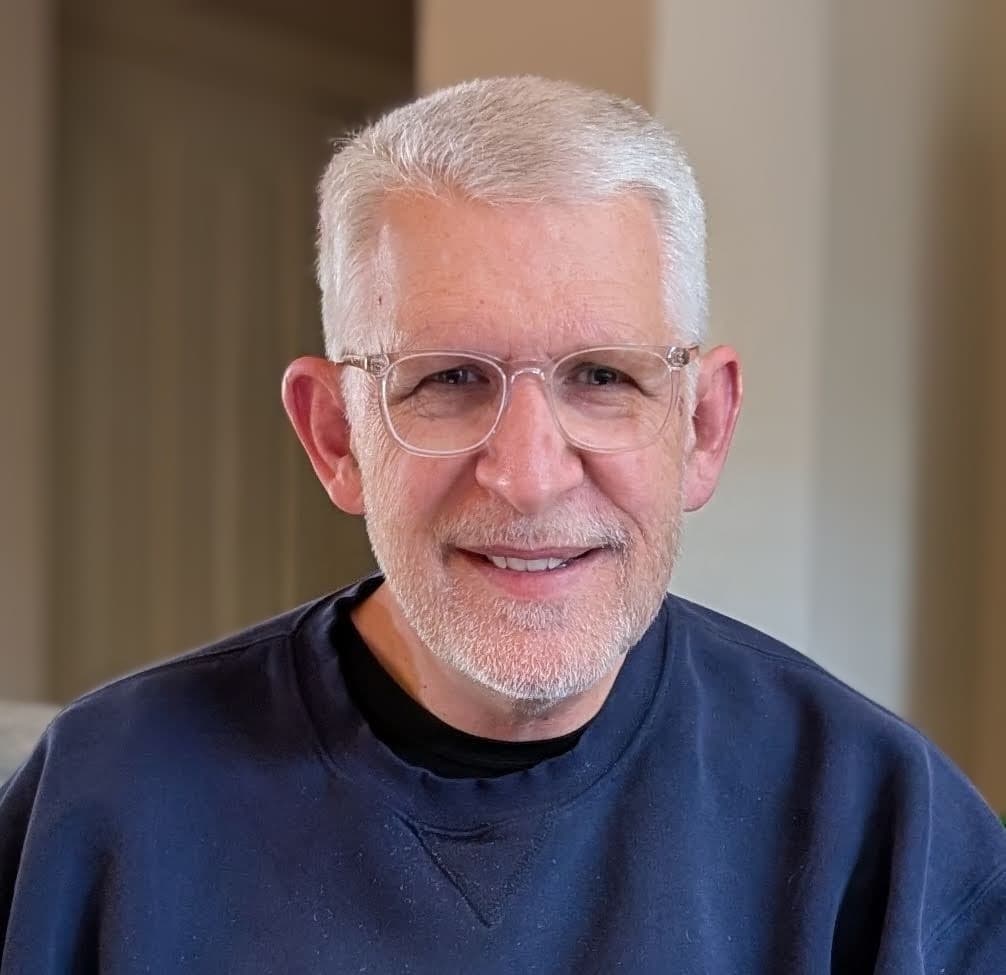
Pastor Paul LeBoutillier Pastor Paul: Hi, everyone. We are back with some more of your Bible questions, and I'm Pastor Paul here with my wife, Sue, and we're going to roll through the ones that we're covered today.
Let's do it. Our first question comes from Canada. Janipher from Alberta says,
“Hello Pastor Paul. Are there more prophecies in the Bible that are not fulfilled yet? I'm still in the Old Testament in my Bible study. I'm excited to know.”
Wants a little preview of coming attractions. Just keep going, Janipher, in your study. There are many, many prophecies in the Old Testament that have yet to be fulfilled. The Bible speaks of the first coming of Jesus and also his second coming. And it also talks about that time period after the Great Tribulation. Well, it talks about the Great Tribulation, and then it talks about that period after the Great Tribulation, which is referred to as the Millennial Kingdom. So there's much of that that is not yet fulfilled. So it's very exciting to read.
Good stuff coming up.
For sure.
Alright. Luka is from Europe, “I can't thank you enough for your teachings. If everything is in God's hands, why then do we pray? If His will differs from our will, what is the purpose of prayer? If everything is already planned out (Psalm 139:16), why bother praying (both the good and the bad will happen regardless)?”
Well, it's because God has a plan, but that doesn't mean within that plan there aren't possibilities of change and difference. We can't allow ourselves to believe that God's plan is such that what we do doesn't matter. God has given incredible freedom for us to make a difference and to make changes in our lives and in the lives of others. So he has told us, he has exhorted us in the word to pray. I don't think God would tell us to pray if it would have no effect or be of no import. I really don't. And when a parent has a wayward child, they don't say to themselves, it doesn't matter what I do or say or pray for them. They're going to either come to the Lord or they're going to not. So I'm just going to let them go there. No, we pray. We get on our knees. We call out to God. We pray for God to work in that person's life and bring them to a saving knowledge of Jesus. And we pray because God told us to pray. We're told to pray the prayer of faith, which is to believe that prayer makes a difference.
That's good. We always need inspiration on prayer. So that's very good. Michael says,
“Thank you for preaching the Word with such accuracy. I know that Jesus made the once and for all sacrifice on the cross, and now by accepting Him we are saved by grace through faith. When we sin, do we always need to continue to ask for forgiveness even though we have been cleansed of all sin when we accepted Him?”
Yes, we do need to continue to ask for forgiveness, not for salvation, but to make sure there's nothing hindering our prayers and our relationship with God. Our relationship with God is not unlike our relationship with other human beings. When we do something against someone, we're told to go to that person and say, would you forgive me? I did or said something that was wrong. I shouldn't have done that. And the reason we're told to do that is because if we don't, there remains a rift between that person and yourself. And the same is true in our relationship with God. We can create a rift in our relationship. We can even create a hardness of heart in our own lives about unconfessed sin or from unconfessed sin. So yeah, we need to confess our sin and come to the Lord for forgiveness.
Ruth is from Kenya, and she asks,
“Why is it that God is so patient with others, such as the Canaanites whom He gave 400 years to repent but others seem to get the consequences of their sin immediately, like David when his newborn baby died? Does it mean God is slow to anger for some but not all? Is He merciful to some and not others?”
No, it's because of the difference between judgment and discipline. The Bible tells us God disciplines those whom he loves. David was a man who received discipline from the Lord. And yes, it was a form of judgment, but it was an act of discipline on God's part. Whereas with the Canaanites, he was looking at an entire people group, and he was giving them time to repent. David had already repented. He had come to the Lord by faith, and his relationship with God was secure. He was a child of God. And yet the Canaanites were completely pagan and had no concept of God. So God gave them time to repent of their sin and come to him in faith. So that's the difference here. It's between the kind of judgment that might fall upon an entire nation and the kind of discipline that might come to an individual. Yeah, discipline is often done more swiftly, but it's done for a completely different purpose.
Good. Melanie says,
“Thank you for your wonderful online teachings. I live in Utah and most of my neighbors are Mormon.”
I imagine they are.
“Is it biblical to think that people can be saved after they die, because a proxy baptism was done for them in the Mormon temple? Also, in your opinion, are Mormons saved?”
First question, is it biblical to think people can be saved after they die? No. The Bible doesn't lead us to believe that after death, there are second chances. That being said, I have always said, and will continue to say, God can do what he wants to do. And if God wants to give somebody a chance after they die physically, that's his business, and I'm not going to argue with him on the matter. But the Bible doesn't lead us to lean that way, in the sense of anything that the Lord has given us. It essentially tells us that we are appointed once to die, and then after that, the judgment. So the answer is no for that first question. She goes on to say, in your opinion, are Mormons saved? First of all, as I've said many times, my opinion isn't worth anything. The question really here is, how are people saved? It's not whether or not Mormons can be saved, Jehovah's Witnesses can be saved, Roman Catholics can be saved, and Lutherans can be saved. The issue is, how are people saved? Well, what does the Bible say? The Bible says that we're saved when we put our faith in Jesus Christ for the forgiveness of sins and trust him and him alone. Jesus said, there's no other way to be saved. He said, (John 14:6), I am the way and the truth and the life, and no man comes to the Father except by me. If somebody embraces that, I don't care what label they go by, they will be saved. And I think it is possible for people to be part of a group that teaches bad doctrine, but still get a hold of the gospel. Because you can be a fringe Mormon, you can be a fringe Jehovah's Witness, you can be a fringe Roman Catholic, you can be a fringe Lutheran, any of those things. And not really embrace what this group is doing, but you just hear the gospel and you're like, wow, great. And that person may continue to call themselves a Mormon or a Jehovah's Witness, and yet they're putting their faith completely in the gospel message. Hey, that person's saved. So it's not about labels, it's about faith. Faith is the issue and who your faith is in. If your faith is in yourself, you get your trouble. If your faith is completely in Jesus, things are good.
That's good. Fay says,
“Hello Pastor Paul and Mrs. Sue. As I understand it, Christians are to judge one another when they see a fellow Christian in sinning. But in my class study, James 4:11-12 speaks of not judging your brother or sister or else you're judging God's law, and if you judge the law, you're not a doer of the law. It feels like he's speaking to Jews who were under the law, but some commentaries believe he's speaking to Christians. Can you please help me understand this scripture? Thank you both.”
I believe he is speaking to Christians. And when James tells us not to judge, he's really kind of repeating what Jesus said when he said, why do you look at the speck in your brother's eye and you ignore that huge piece of wood that's sticking out of your own? That's the kind of judgment that we're not to do. It's a hypocritical kind of a judgment. When this person says, as I understand it, Christians are to judge one another when they see a fellow Christian is sinning. I take issue with that a little bit, because it depends on what you mean by judge. To a lot of people, judge means condemn.
Casting a verdict.
Exactly, casting a verdict. And it's synonymous with judge. Technically, that's not what the word judge means. To judge means to simply determine. You have to discern what is right, what is wrong, and make a determination. That's a judgment. I can look at a believer and see his lifestyle, and I can make a determination about that lifestyle based on the Word of God, and I can say, that's a sin. In that sense, I have made a judgment, but I have not condemned that person. How am I to treat someone who is involved in sin? I am to recognize that it is sin, and that is making a judgment, but I'm to go to that person, assuming I have a relationship and the ability to do that, and I'm to confront them in love. I'm to speak the truth in love to that person and try to get them to a place of repentance. If they won't listen, I'm to take someone else, and we're to involve others in that process of attempted restoration. And then the Bible says if they refuse, then we are to tell it to the church. The church then has to make a decision about withdrawing from that individual. That's church discipline. But that's not the kind of a judgment necessarily that we make as individuals. That's made by the church. You have to understand the terms, what judgment means, how it differs from condemnation, and how you are to approach a brother or a sister who's caught in sin. That's kind of the way we're to go.
Alright. Vanessa says,
“I was watching your teaching on Romans 14 and you explained that “weak in the faith”
First of all, Vanessa heard me incorrectly. I didn't say a weak Christian is someone with strong convictions. What I said specifically was a weak Christian is one who has convictions over things that are misdirected or not salvation related. Like in the Bible when Paul addressed weak Christians who thought that it was wrong to eat meat that had been sacrificed to an idol. He referred to those people as being weak in the faith. That's what I was saying. It is very possible to have strong convictions and still be very strong and mature in your faith. Having strong convictions is something that all of us have. I have very strong convictions about celebrating the birth of Christ, or celebrating the resurrection of Jesus, or what day or what not day I might worship on. I have very strong convictions of those things based on the Word of God. They're not salvation issues though. So there's nothing wrong with having convictions on matters that are not salvation related, as long as we don't make it a salvation issue and start saying, if you don't believe like me, you may not be saved.
Alright. Jordan says,
“I find the Bible to be both lengthy and also dense. If I really want to understand parts of the Bible, I have to read very slowly and spend a lot of time studying it. It takes such a long time that I will often be years or maybe even decades removed from reviewing certain books within it. By that time, I may have forgotten things I once knew. Do you have any advice?”
Well, my first piece of advice is don't worry about how long it takes you to read the Bible. Different people read and comprehend at different levels and different speeds. So don't try to match someone else's speed or whatever if it's not working for you. It doesn't matter. I would much rather someone be reading small portions of the Bible and understanding it than attempting to read large portions and not getting anything out of it. So that's my first piece of advice. Don't let it bother you. It's better to just be in the word. Secondly, if you're concerned about forgetting what you've read, start taking notes and write down what you've learned and then start putting those notes in categories. Start categorizing things like the character of God, sin, salvation, heaven, hell, the devil, disobedience, obedience. You could make these categories and then write down verses that speak to those categories. You could talk about end times stuff and so on and so forth. That way, you can go back and review your notes from time to time. Look at what you've written down. It's funny. I get people sending me pictures of their notepad. They'll have a stack of notepads that they've filled out over a long period of time and they share those and they'll say, look at all these notes I took. Well, that can be really a great way to just remind yourself what you've learned. So if you're concerned about forgetting, write things down.
I think it can also be a good strategy to be in several areas of the Bible at one time. For example, let's say this person is very, very slowly going through Romans or something like that, which you can go very slowly. But when you go to church on a Sunday morning, maybe the pastor is teaching from Exodus. And then if you're in a Bible study or something, maybe you're reading Isaiah or something. So it can be useful to be in that way. You are reviewing some of the other things that you're not personally really in depth studying yourself right now. You're getting a review by being in a few different things.
I agree. The only thing that I usually discourage people from doing is cherry picking different passages from the Bible every day. I think that it's important to start at the beginning of a book and go to the end. I don't care how long it takes you to do it. I don't care if it takes you a year to get through Matthew. I don't really care. That's not the point. But I think it is counterproductive to read a few verses in Matthew today, a few verses in Isaiah tomorrow, and then at the end of the week, a couple of verses in Proverbs, and never get a sense of continuity in the Bible. So that's something I do discourage. Other than that, don't worry about how long it takes and take notes.
Very good.
There you go.
And that is the end of our questions.
All of our questions for this time. We'll have more. Well, assuming you write in and give us more, we'll have more. In just a moment, you'll see an email address on the screen where you can send us your Bible questions, and we hope that you'll do that. You always have good questions, so send them along. We'll do our best to answer them for you. And until we hear from you next time, God bless. Have a good rest of your day. Bye-bye.
Download the formatted transcript
PDF