
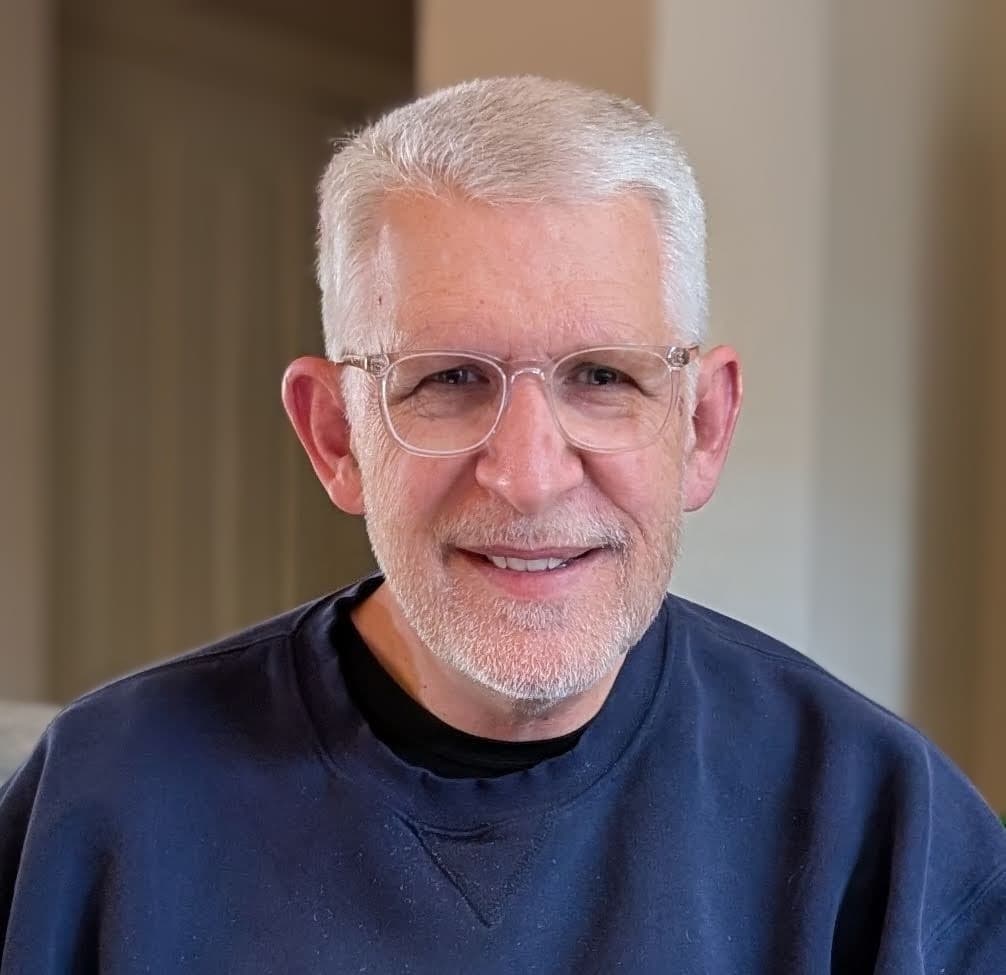
Pastor Paul LeBoutillier Pastor Paul: Hey everybody, we're back with some more of your Bible questions and hopefully some good answers for you. So, let's see what we have for this time.
All right. We'll start with our first question from Char. She says,
“I have been saved for 45 years and came from a Roman Catholic background. It was a difficult decision to make but searching the Scriptures and finding out that many of the teachings of the Catholic Church are nowhere to be found in the Bible. I had to make the break. I have been told I should not point out the false teachings of Catholicism with my family. What are your thoughts on how to approach family and friends?”
That's really, really hard. You know witnessing is hard enough just witnessing to people. Witnessing to family is another level of difficulty frankly. Even Jesus said that a prophet is accepted except in his hometown. So it's very, very difficult to witness to family members. Especially people who are entrenched in a religious belief system that they really can't defend. But they just believe it because they've been told. And now you've got this family member who's saying ‘No, that's not right’. And that's a very, very difficult thing for people to handle to hear what I've been believing is wrong. So I always tell people, I don't care who you're witnessing to whether family, friends, co-workers, perfect stranger. You got to pray. You got to pray because here's the deal. Until the Lord begins to really work on someone's heart, you could be the best witnessing person in the world. And if their heart isn't ready to receive, they're not going to receive. They're not going to hear. They're not going to be open to hearing. Jesus talked a lot about let him who has ears to hear. Listen, there were a lot of people in his day that didn't have ears to hear. The Pharisees being one of them, the Sadducees. I'm sure there were other people that just had hardened their heart and they said, this is what I believe and you're not going to change it. So you've got to begin with prayer. Pray for your family. And then I always tell people look for an open door. Wait for the Lord to show you a sign that there's an openness there for your family to be able to hear and receive. And when you get that sign go for it. But to try to break down that door yourself, frankly, you can do more damage than good.
Often times I've seen the situation where someone just pulls back and prays for their family. Pray-pray-pray. And all of a sudden you find yourself in a situation where they are telling you the things that you wish you could have said to them all along. Like, the Lord is working on their hearts and they start, did you know that? You're like, tell me more. They start teaching it to you. So there's nothing better than prayer and discernment really.
Prayer and discernment, stick to that. I would caution Char or anyone else who's witnessing to family and friends about trying to bring correction with when the person isn't ready to hear it. They're just going to close their heart further.
All right. Bilma says,
“Blessings pastor Paul and Sue, thanks for all your teachings. They have helped me grow through my Christian journey. My son passed away 6 weeks ago by suicide at the age of 22. He received Christ in his heart at the age of 18. His last wish was to be cremated but according to the teaching in my Bible study class, both suicide and cremation are a sin. My heart aches to hear this but I will respect and accept what the Word of God says.”
I want to tell Bilma, first of all, I'm very sorry for what you've been through. Having a loved one like a son commit suicide is such a painful thing. But she has heard through her Bible study class that, first of all, anyone who commits suicide is lost and that anyone who is cremated is lost. Neither of those things are in the Bible. I want to say, Bilma, I have taught through the Bible three plus times every chapter, every verse from Genesis to Revelation. And I can tell you that the idea of suicide being an unforgivable sin is not there. It is a very strongly held belief but it's not in the Bible. And then you have people who will tell you things like, it's a sin to be cremated. The Bible doesn't say that. Nowhere does the Bible say that it is a sin to be cremated. Now people are making that leap of logic because they believe that their bodies, and they’re right, are going to be raised one day. Listen, people who've been dead a 1,000 years or 2,000 years, do you think there's anything left of their physical body? It's dust. But do you think God can't raise their body because of that? So I'm just going to reiterate. There is not one word in the Bible about suicide being an unforgivable sin. Listen, we're saved by faith in the finished work of Jesus Christ on the cross! And there is nothing in the Bible that says being cremated is a sin. So I just want to encourage Bilma just to hang on to faith, and do trust the Lord.
Good. I'm glad we can comfort her with that. White has two questions. Here's the first one, “Greetings Pastor Paul and Sue. First of all, thank you for this Q&A platform, as well as your Through the Bible teachings. I am being blessed by them and growing spiritually. My first question is from Hebrews 12:5-7. Does this passage imply that God can ordain hardships or painful circumstances to train or mold us into the likeness of Jesus Christ?”
Hebrews 12:5-7 is that passage about discipline. And it says; Hebrews 12:5-7 (NIV) And have you completely forgotten this word of encouragement that addresses you as a father addresses his son? It says,
“My son, do not make light of the Lord’s discipline, and do not lose heart when he rebukes you, because the Lord disciplines the one he loves, and he chastens everyone he accepts as his son.”
That's really good. So the second question, “In addition to inductive Bible study and prayer, what advice would you give to a young man like me (age 23) who knows he has a gift for teaching the Word of God but wants to fully prepare the one he loves, and he chastens everyone he accepts as his son.” Endure hardship as discipline; God is treating you as his children. For what children are not disciplined by their father? for ministry? I've heard you several times warn about the dangers of entering ministry before one is truly ready, using examples like John Mark–even yourself.”
I have talked about that. Haven't I? What can somebody do to prepare for ministry? Submit to those over you. Go to your pastor. Tell him, I believe that the Lord is calling me into the ministry but I'm young and I want to learn and I want to just be here and I want to learn what I can. So I would encourage this person to just serve. Get into a local church and serve. And it's important to be in a local church because it's one thing for this person to say I think God has called me. It's another thing for other people to recognize that gift and to confirm it. That is such a wonderful blessing for someone to have. So I would really encourage that. And then this person specifically says that they believe the Lord is raising them up as a teacher. In that case I would encourage a deeper studies of the Word of God. I would encourage that you invest in things like Bible software that will allow you to dig deeper into the Word. I would encourage you to listen to Bible teachers and learn from them. Find out what they're doing. That's good. You'll even in at times recognize some of their mistakes and those are things that you should learn to avoid. I have spent a lot of time personally listening to Bible teachers and picking up their good habits, because there are things to learn from those who've been at it for a long time.
One thing I do remember about your situation when you were in your 20s and you were raised up too quickly. However, in the course of how God led us you really did maintain a humble attitude. I never remember you challenging those who were over you, the other pastors, and as if you had it all figured out. You were really humble about that and just really served under their guidance. I think that's another important key.
It is important. When we talk about someone being raised up too quickly, age really isn't the issue here. Somebody could be 23 and ready to pastor at church. Another guy can be 23 and he needs 10 years of just walking under, living under, serving under, ministering under another senior pastor. Another guy could be 23 and he needs two years. It really is a very individual sort of a thing. And that's why it's important to submit yourself to the leadership of your fellowship so they can guide you through that process. And they can tell you when they think you're ready.
All right. Here's a question from Joyce, “Hello Pastor Paul. I am from Southern Africa. I recently came across your teachings on YouTube and I love them. I am newly married and my husband and I realize we’re not financially ready to have children. Is it ungodly to use birth control measures?”
No, it's not ungodly. I don't believe it's ungodly at all. I think you do have to be careful. I mean when you're talking birth control measures, that's a very broad subject that can be everything from abstinence to using drugs of some kind. And you need to know what drugs do and don't do, what they're doing to your body, what they're potentially doing if you were to conceive. You need to know those things. I believe that it's wrong to stop a conception that has already taken place. I believe that is very wrong. But family planning is not a bad thing. I think couples should do it. Now that being said, I think couples also need to be careful. When you set standards for readiness to have children that is really subjective. I think there are some people that set the standard so high they'd never be ready.
That's what I was going to say, that financially ready to have children, boy. Who is?
What is that?
Who is ever ready to have that?
I mean, define that for me. Financially ready to have children. We had children when we were poor. In fact, all four of our kids were pretty much raised up in difficult financial circumstances. You as my wife were very good with money management which saw us through those times. But we weren't ready financially to have any of our kids. And yet we raised four of them and we raised them very happily. I think when they look back on their childhood, they would say I don't think we were missing anything.
No, they all say they had a great childhood.
So I would be careful. When I talk to couples I tell them to be careful and to pray about it and to be guided by the Lord more than necessarily their own goals. And even whatever goals they have, they need to check those with the Word of God.
An element in our lives in the same way that the River Jordan did not begin to part for the nation to walk through until their feet, the feet of the priest, got right there. There's a little bit of an element of trust in the Lord to that we step out in faith in a way. Now I know that there can be circumstances that we have to be wise. But sometimes I think it's not all that bad to presume upon the Lord.
I agree. There are times when it's like the Lord is going to guide you wherever you are. And if you were to get pregnant without really planning on getting pregnant, I wouldn't worry about it. God knows. He knows your circumstances. He's totally able to provide. And I think you should trust the Lord no matter what.
Next question is from Callie, “Hello Pastor Paul and Sue! When does sin enter our flesh? Are we already sinners in the womb or are we one with the Lord and then separated by our sin nature when we are born? And does God create some people to have disabilities or are disabilities the result of a fallen world?
There's kind of two questions there. When does sin enter our flesh? It's hard baked into our flesh. The Bible actually refers to this. King David wrote in the Psalms, it's Psalm 51. I like this out of the NIV. It says; And what David isn't saying is I sinned in the womb. He's saying that even at conception he was a fallen person. A person who would need to be saved because of sin. And that's an important reminder. We're not sinners because we sin. We sin because we're sinners. We're born sinners. We're born that way or even conceived you could say that way. So there isn't a point where the baby is born and now sin enters into their lives. It's much sooner than that. And then as to her second question, does God create some people to have disabilities or are they the result of a fallen world? They are the result of a fallen world. I don't believe that God creates children with disabilities. And yet children with disabilities are born. And the reason they're born that way is because we live in a fallen world. And with that fallenness comes the difficulties of life.
Curt says,
“In Revelation 19:7–9, where does the Marriage Supper of the Lamb take place? When does it take place? And, who is invited?”
It depends on who you ask. So if you're asking me—which he is asking me—I believe that the Marriage Supper of the Lamb takes place in heaven. I believe that the Marriage Supper of the Lamb takes place during the Great Tribulation which is happening on earth. And who is invited? Now, that's an interesting question because the church who is the Bride of Christ obviously isn't just invited. It's their Psalm 51:5 (NIV) Surely I was sinful at birth, sinful from the time my mother conceived me. marriage supper. The marriage supper of the Lamb is when he is celebrating the wedding of himself with the bride. And the church is the bride. So the bride is not invited. A bride does not get invited to her wedding. She is there. It's all about her and her groom. We know this. We just went through this. Our final son was married here just this last week. So who is invited? That's an interesting question and there are different beliefs along these lines that many of the Old Testament saints who are not part of the church are in fact the guests at the marriage supper of the Lamb. But I would really refer Curt to my study in the book of Revelation on that passage. Because I talked more about that.
I actually remember that study. It was very good. Larissa says,
“In the teaching of John chapter 1, Pastor Paul was mentioning how there are different forms of the word “life”
Those three kinds of life are Bios life, which is your biological living, a living organism. And then you have the Psuchë life. Psuchë is where we get our word psyche and it is the emotional, intellectual life. Let's call it, the soul life, soulish life. And then you have Zoe, which is really referring to—most often in the Bible— it refers to the eternal life, the life everlasting. Words translated “LIFE” in the Greek Bios – physical life Psuche – soul life (emotional, intellectual) Zoe – divine life, eternal life Now, if you look up the word Zoe in a Greek New Testament dictionary, it's going to just say life or living. But in the context in which it is often used in the New Testament, we see it as eternal life. The life that is truly life. And that's the life Jesus is talking about when he says, I have come that they may have life. That's Zoe life, eternal life, abundant life, real living.
That's awesome. I like that. Cjay and Mary say,
“Hi Pastor Paul and Sue. Thank you for your godly teaching which has inspired us to read the Word daily. We have just finished studying 1 Samuel in a home group, along with your studies. One question is puzzling us. Samuel tells Saul in chapter 28:19 that “tomorrow you and your sons will be with me.”
That sounds confusing. But really what Samuel meant was you'll be in the place of the dead. He's not specifying whether or not Saul would be in the place of the righteous dead or in a place of suffering or torment awaiting judgment. Because Jesus told us in the book of Luke that that was really all kind of one place. And there was a place of comfort which was also referred to as Abraham's bosom. And there was a place of judgment or torment, if you will, while the person awaited final judgment. And yet it's all the same place. So that's what Samuel's saying. You'll be here. He's not specifying. He's not making a statement on whether Saul is saved or not. He's simply saying you're going to be in the place of the dead. And that's where you're going to be with us.
Well, that's a wrap for this time.
That's it.
It's our last question.
Those are the questions we have for this week. We've got more in the coming weeks. Thank you for sending them to us and we'll get to yours just as soon as we can. Until then. God bless.
Download the formatted transcript
PDF