
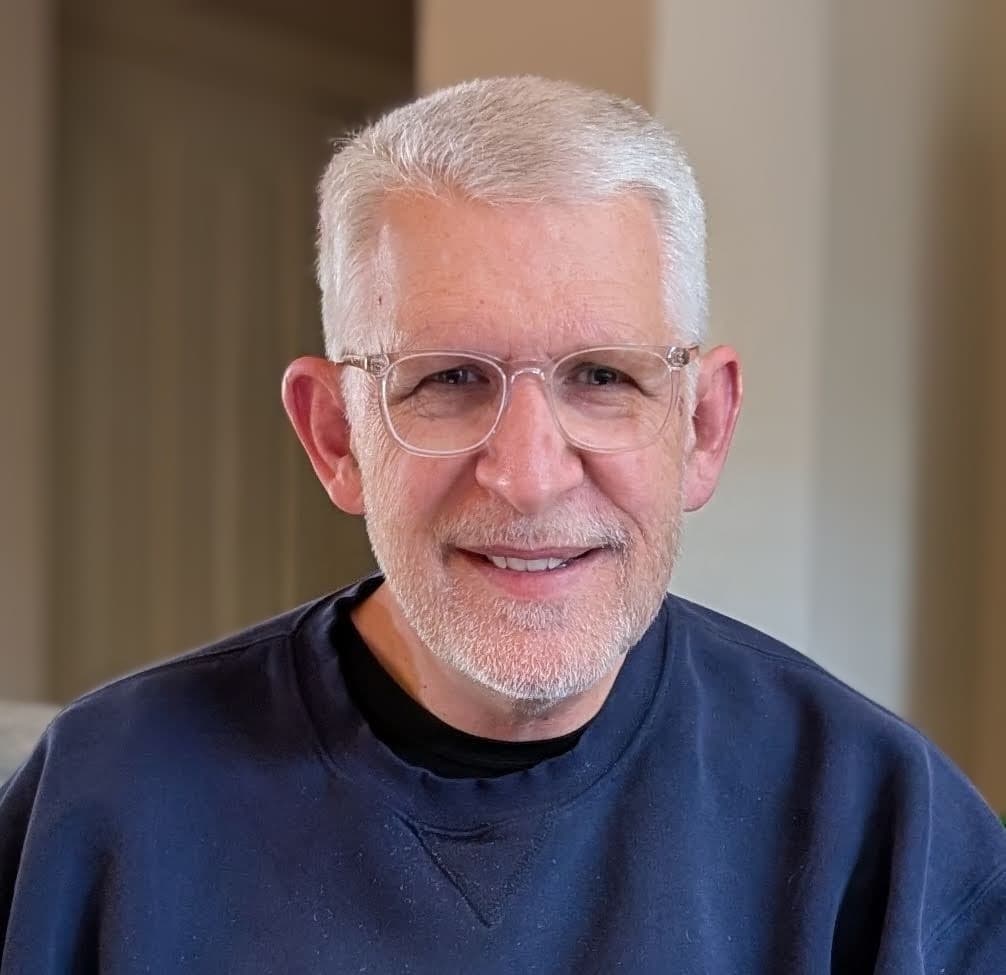
Now that I said we're not a clapping church, would you guys welcome him to Calvary Chapel? Good morning. It's good to see you guys here today. I recognize most of you, I think, but there are actually a few faces that are new, which is kind of interesting, but, you know, not unexpected. It's good to be back in Ontario to be with you guys.
We're staying busy. You know, I told everybody when we left here a little over a year ago that I'm not retiring. I said, I'm not retiring, because, you know, I truly don't believe that there's such a thing as retirement in the kingdom of God. There might be in a secular job, but not in the kingdom. You know, you basically just serve the Lord until you go home to be with Him.
But, you know, it's funny. Everybody comes up to me over the last year, how's retirement? It's like, you got to have, you got to decide, am I going to explain to everyone, you know, that I didn't, you want to punch them? But I didn't. I've never punched anybody, but I wanted to.
And pretty soon, so many people would just say, you know, how's retirement? I just go, fine. It's good. It's good. But actually, you know, we're staying very busy.
I'm teaching every Wednesday night at Calvary Chapel Meridian, where my, our oldest daughter and her family have attended for, I don't know, 12, 13 years, something like that. And it's fun kind of being around the grandkids and stuff like that. I'm going to be a great grandfather in December. I know. Are you really?
I told my granddaughter, my granddaughter, my granddaughter, I did her wedding a year ago last June. And I knew, I just knew, she was one of those kids that was just born to be a mama. You know how it is. They're the ones that are always carrying a doll around when they're little. And you know, you know that you know that when they get married, they're going to have a baby like that.
And so I told her, I'm not emotionally ready to be a great grandfather. She didn't care. She's just went right through the, anyway, they're living up in Spokane, but while he's going to school, but her husband that is, and not the baby, anyway. So yeah, there's lots going on. Sue is really busy with women's retreats and conferences and speaking schedules and stuff like that.
And so we're staying really busy and the Lord is blessing. You know, one of the things we do to this day, we started it here at Calvary Chapel Ontario doing Bible Q and A's. And we did it because of really the pandemic. You guys remember the pandemic when everybody got weird? Anyway, people couldn't go to church and so they started looking online for what they could find in the way of Bible teaching, church, that sort of thing.
And you know, we had been doing here at the church, we'd been doing a YouTube channel for so long. When the pandemic hit, I had all 66 books of the Bible already done and on the internet, on YouTube. And so when people started looking around for various books of the Bible to go through, we came up and it was crazy the growth that we experienced. In fact, just in 2020 alone, our YouTube channel grew, and I'm talking about Calvary Chapel Ontario's YouTube channel, grew over 100,000 followers in one year, in one year because people couldn't go to church and they were looking for ways to get the word. So with all those followers, we started being inundated with emails, you know, people asking Bible questions and so forth.
And it got to the point where there were so many that we thought, well, we need to start doing like a podcast type thing, a video podcast with questions and answers. So Aaron and I started doing it sitting right here on the platform. And then, you know, Sue kind of came in and took over reading questions. Well, we've kept it up to this day where we do them pretty much every week. And I never, ever really set out to be like, you know, the Bible answer man.
And, you know, it just kind of happened just because people were asking so many questions. But when I first started answering people's Bible questions, I didn't really think too deeply about why they were asking what they were asking. It was just, well, this is your question and I'll do my best to answer it based on the Word of God. But, you know, over time, I began to wonder why people were asking what they were asking. And I started actually asking people.
They would email and say, here's my question, and I'd write them back and I'd go, why? Why are you asking that question? Because I wanted to know what was behind it. The reason is, is that I saw so many similar questions coming that seemed to have a really similar kind of a foundation to them, you know. And so I started really thinking about that.
And I began to realize that although the questions were very different, you know, they varied according to people, circumstances, situations, and that sort of thing. There was a root to all of them. And when you boiled it all down, and what I mean by that, when you take away, you know, people's stories, some people are really good just at asking a question. They can do it in one sentence. What is the da-da-da, you know, question mark, boom, they're done.
Other people have to write a book. And I always shudder when I see an email and it starts with, Pastor Paul, I need to give you some context. That means there's going to be a four-page, you know, mini-series that I'm going to have to read through in order to get to the question. But when you boil it all down, there are similarities in those questions across the board. And I began to realize that there were essentially, and this isn't all the questions I get, but there are essentially two basic questions that people are asking.
And they don't ask these questions outright. They couch them in all of their detail, and drama, and stuff. And let me put those on the screen. These are the questions people most ask. This is what you boil it down to.
Can God be trusted? And is God fair? Now, again, they don't ask these questions. This is what is at the root of their question. This is what you get when you take everything else, set it aside, and just see what's really going on.
Can God be trusted? Can I trust God? And what that really means is, is He faithful? And then, is God fair? I guess the first question could have even been, is God faithful?
But they usually don't, you know, word it quite like that. And people would fundamentally disagree with me. You know, most people, when they ask questions, and if I were to say to them, well, you know, the root of your question is, can God be trusted? They would say, no, it's not. What I'm asking is, why did my Uncle Phil pass away when we prayed that he would be healed?
You know, and why doesn't God heal everybody that we pray for? That's the way they're, you know, phrasing the question. But the essence, again, is, can I really trust God? Is He trustworthy? Is He faithful?
You know? And so, you know, all these questions come in. They're worded all kinds of ways, but they all get boiled down. And the reason people want to know if God can be trusted and whether God is fair is, I believe, understandable. I mean, I don't look at these questions and think, why are you asking that?
I know why they're asking. They're asking because every day they see things they can't explain. And they definitely see things and experience things they don't understand. And, you know, the most popular question, and I'm not talking about questions I receive, but just the question we all ask in our hearts when something rotten happens, you know, or as the Apostle Paul says, the day of evil comes. The question we all ask is, why?
Why is this happening? Why is the Lord letting it happen? Why is the Lord allowing this? Why? I just want to know why.
And there's a really interesting sort of a deal. You know, we ask the question, but the silence is deafening. But one thing I've learned about us, we human beings, is that we have really convinced ourself that if we can just get the answers to those questions, we'll have peace in our heart. If I could just know why, then it's going to be okay. If God would just explain why, why, why did this have to happen?
Why did it turn out like this? If I could just know why, if God would just come and sit down, and we could have a talk, and I could say to him, Lord, why? Then I'd be fine. I would have peace, and I could move on with my life. That's not true.
It's just simply not true. Again, this all comes down to, like, our desire for information. We live in the information age. Good grief. We have information.
at our fingertips. And now with all this, well, the craziness of this information and artificial intelligence that has come into the thing, we can ask anything we want. All we have to do is just call upon Google, you know, tell me this, and boom, I can have instant information. You know, it's funny, we can sit and be talking with people, you know, like the family or whatever, and we'll talk about, you know, I wonder how long ago it was that they built such and such. Well, let me find out.
When did they build such and such? Oh, that was back in 1842. You know, just like that, I got that information. We can find out all kinds of information instantly. You would think with all the information at our fingertips, we would be the most peaceful, contented people on the face of the earth.
We're not. We are more anxious today, and we are more restless today. Even with all the information that we have at our fingertips, it has made us more anxious. So anyway, we keep asking questions anyway. Can God be trusted?
Is God fair? Let's start with the first question, shall we? Can God be trusted? Which I, you know, like I told you, it kind of comes down to whether or not God is faithful, whether or not we can believe and trust that He is faithful. And most Christians, I suppose, if I were to give you a test, put a piece of paper in front of you, give you a pencil, and the question was on there, is God faithful and can He be trusted?
I think most Christians would answer the question correctly. They'd say yes. But, you know, all it takes is a little bit of hardship to come into our lives and doubt begins to creep into our minds. And we begin to start asking questions that prove and show there's a crack in our armor and that what we said on the test, oh yeah, sure, God's faithful. He can be trusted.
Now we're not so sure because we are in a painful and scary situation and doubt has begun to creep into our heart. And here's the deal. Trusting God, knowing that He's faithful. You know, the Bible, here's one thing we do know. When you read the Bible and you see what it says, you realize that the Bible challenges us to trust God, to put our faith in Him, and to believe that He is truly faithful and we can trust Him, you know.
Like, for instance, my life passage. Let me put it on the screen. Proverbs 3, 5, and 6. Trust in the Lord with all of your heart. And don't think you're such a smart aleck.
That's my little paraphrase of that next part. Don't lean on your own understanding. You're really not that bright. So he says don't lean on what you can figure out in the situation. Rather, in all of your ways, acknowledge Him as the Lord God who's in charge and, you know, He'll ultimately make your path straight, which is a wonderful thing.
But you have to admit, there's a huge difference between someone saying trust me and the Lord saying to you, trust me with all of your heart. Now that raises it, doesn't it? That raises the bar of what we're being asked to do, what we're being challenged to do. I mean, trust Him with all of my heart? Are you kidding?
You know, if a human being comes to me, a fellow human says to me, Paul, trust me. That's only going to go so far. It's like my mother used to say, I can trust you as far as I can throw you. And, you know, and the reason I know that I can't trust another human with all of my heart is because humans don't have complete power. They're not in complete control, right?
You know, I remember making promises to my kids when they were little, you know, like on our day off, you know, we're going to go do this. We're going to go to Boise. We're going to go there. We're going to have fun and stuff. You know, you can trust me.
I'm your dad, you know, and then something happens. Something pops up on the schedule and then we can't go. Well, why? Well, it's because I'm not in control. I can't control everything around me.
And then things come up that I didn't expect. Well, guess what? That never happens with God. He never gets surprised. He never has a circumstance just pop up in front of him and go, what is this?
You know, it doesn't describe God in any way, shape or form. He always knows he's in control and you can trust him, right? So it's kind of a different. So he can say to you and me, trust me with all of your heart, all of it, not just some, but all of your heart. And that's what makes it different when we see those promises in the Bible.
And there are so many passages in the Bible about God's faithfulness, faithful to be trustworthy. Let me show you just a few. I'll start up on the screen. 1 Kings 8, the last part of verse 56, it says, not one word has failed of all his good promise, which he spoke by Moses, his servant. Now that's a statement that is making a very clear declaration about the character of God.
It is saying, essentially, that his character is such that he doesn't go back on his promises. None of his promises failed the Israelites. The Israelites failed miserably, but the promises of God did not fail. And as this passage says, not one word failed of all that he promised them. Lamentations, some of you guys are going to hear a song going through your head.
The steadfast love of the Lord never ceases. His mercies never come to an end. They're new every morning. Look at this last phrase. Great is your faithfulness.
The faithfulness of God is called great. Okay, that's how the Bible defines it. Now you would think if the Bible defines God's faithfulness as great, we would never question. We would never have a moment to question. Look what it says in Exodus 34.6.
The Lord passed before Moses and proclaimed, the Lord, the Lord, a God merciful and gracious, slow to anger and abounding in steadfast love and faithfulness. Here's another passage. So we're talking about God's faithfulness and whether or not you can trust him. It is abounding. Okay, that's how the Bible describes God's faithfulness.
It is abounding. Cool, you know. And then Psalm 36, verse 5, it says, your steadfast love of the Lord extends to the heavens, your faithfulness to the clouds. And of course, that's just poetic language to describe a faithfulness that just goes on and on and on and on. So, you know, this is interesting.
And I just gave you just a very small sampling of the passages that speak of the faithfulness of God and the fact that he can be trusted, because that's what trust is predicated on, is someone's faithfulness, right? I've just shown you a little sampling. You read through the Bible, it is embarrassingly prevalent that God is faithful and can be trusted, right? In fact, it permeates the Word so much that if you're struggling trusting in the Lord, you're going to struggle with a lot of God's Word, because he's constantly telling us, I'm faithful. I'm faithful.
You can trust me. I'm faithful, right? Now, let me tell you a little secret. This is the secret to peace of mind, which, you know, the world's looking for, but they're looking in all the wrong places. You, at least, are looking in the right place, but sometimes we can get a little turned around, even as Christians.
So here's the secret. Peace of mind does not come from knowing why God is doing what he's doing. Peace of mind comes from knowing God and knowing that he is faithful and he can be trusted, okay? That's where peace comes from. We think, as I said before, if I just knew, then I would have peace, and that's just not true.
It comes from having the confidence that there is someone who knows he is in control and he is faithful, and as we've seen, the Bible constantly declares it. Let me show you a quote by my favorite author, A.W. Tozer, on the screen. He writes, upon God's faithfulness rests our whole hope of future blessedness. Only as he is faithful will his covenant stand and his promises be honored.
Only as we have complete assurance that he is faithful may we live in peace and look forward with assurance to the life to come. Isn't that a great quote? Let me highlight the most important part of that particular quote, only as we have complete assurance. Can I give you another word for assurance? Faith, confidence.
Only as we have complete faith and confidence that He is faithful will we live in peace. See, Tozer is saying the same thing that I'm saying to you today. Peace doesn't come from knowing. Peace comes from confidence in the nature and character of God. That is what gives us peace, right?
So, it is complete assurance. You might ask, well, where can I get some of that complete assurance? It's not insurance. It's assurance. Well, like I said, it's faith.
Faith can be hard to come by sometimes. You know, I believe that God has given to mankind, all of us, He's given a measure of faith. But, boy, you know, when hard things have knocked you around in life, and I mean, you've really been knocked around. You've got scars to prove it. And then God comes along and says, trust me.
You're kind of like, well... Let's look at the other question that we're going to be kind of focusing on here. And the other question is, is God fair? Yeah, this is kind of interesting. We are born with an innate sense of fairness.
And if you don't believe me, just find two little kids, give one of them a piece of candy and give the other one a bag of candy, and they will let you know about fairness. They'll tell you all about it with eyes wide and voices raised. That's not fair. You remember saying that to your parents? That's not fair.
And you know what your parents said to you? Life isn't fair. And you wanted to slug them. But you know what? They're right.
Life isn't fair. And yet, we run after fairness. We really do. Well, we don't find it very much, but we run after it anyway. Well, here's the deal.
If there is such a thing as fairness, I expect to find it from God. I mean, you know, if fairness exists at all in this life, it must exist in the character of God, right? Here's the problem. We read the Bible, and there are these stories that just don't sit right with us. It's like, ugh, yeah.
Yeah, it's like, why did they do that? That didn't seem fair. And then there's things that happen in our life and in the lives of the people that we love, and we think, that didn't seem fair at all. Why did God do that? That wasn't fair.
That person over there, man, they've just had their share of hardship. Is that fair? And I get questions from people about fairness a lot. Pastor Paul, how is it fair that Adam and Eve are the ones that sinned in the garden and we all have to deal with the consequences? I mean, it introduced every bad thing.
It introduced a fallen world. It introduced sin and the curse of sin and death. I wasn't in the garden. I didn't get a chance to look that serpent in the face and say, get away from me. That's what I would have done.
How is it fair, you know? Or somebody says, Pastor Paul, I don't understand. I was reading the book of Joshua, and I see that God commanded the Israelites to go into the land of Canaan and to wipe out the people that were there, men, women, and children. That just doesn't seem fair. I don't get it.
And then somebody else will write me a question and say, are all the sins that we can commit in a given lifetime sufficient for an eternity in hell for those that reject Christ? I mean, is that fair? Is that fair? Eternal hellfire? It doesn't seem fair to me.
And on it goes. And what it all comes down to is, is God fair? But then the Bible doesn't usually use the word fair. It uses the word just. And just is a short form of the word justice.
And in our culture, we tend to think of the word justice as someone getting their due. But that's really not the definition. When a jury hands down a guilty verdict and somebody goes to prison for life, we think, well, justice has been served. Well, the essence of justice is fairness, and that's why that age-old image of justice is the scales, you know, the blindfolded lady holding the scales. It's supposed to be fair.
And so let me on the screen show you a definition of the word just. You're surprised? It means fair. By the way, I looked this up. It means fair.
It means fair-minded. It means equitable. It means even-handed. It means honorable, and it means upright. That's what just means.
And in the Scripture, we are told again, repeatedly, that God is just. Now, when you read that from now on, I want you to put the word fair in there because that's what it means. It means God is fair, okay? You might remember in the book of Revelation, the Apostle John is receiving a vision of heaven, and he sees the saints who have overcome the beast, and they're singing a song. It's in Revelation 15 up on the screen.
It says, And they sing the song of Moses, the servant of God, and the song of the Lamb, saying, Great and amazing are your deeds, O Lord God, the Almighty. Look it. Here's the word just. Now, remember, that means fair. Fair and true are your ways, O King of the nations.
This is what the people who have been martyred, right, for their faith during the Great Tribulation, are singing before the throne of God. You are fair, God. You are fair. They lost their lives because of their testimony and so forth, but they say, You are fair, you are just and true, O Lord God. Isn't that interesting?
That song of Moses is actually taken from Moses' song, and it's found in Deuteronomy. Let me put that up on the screen for you. Now, this is even more interesting. Check this out. From Deuteronomy chapter 32, it says, The rock, that's God right there.
His work is perfect. That means without flaw. For all his ways are justice. And again, that's fairness. A God of faithfulness and without iniquity.
Just, meaning fair, and upright is he. This is a single verse. One single verse. And we get so much out of it. Let me put it, let me show you in bulleted list here.
Here's what we get out of this verse. We find out that God's ways are perfect. In other words, there are no errors. There are no flaws. We find out that his ways are just, and we already know that that means fair.
We find out in this single verse that God is a God of faithfulness. We find out that he is a God who is without iniquity. And this is a tough one. Because, you know, we live in a broken, fallen world where we are full of iniquity. Everybody we know is full of iniquity.
We don't know anybody that doesn't have some iniquity in them. Except God. And so we really can't relate, you know, when somebody goes, hey, he's without iniquity. We're like, what's that like? You know?
Without iniquity. No error. No false judgment. And then we find out here that he is just, and again, fair and upright. And perfectly so.
Perfectly so. So again, we find out here as we look at a few of these passages that the Bible is eminently clear on this particular topic. God is fair. Is God fair? Yeah.
Perfectly so. So here's the question. So why do I doubt it sometimes? Well, it's because you see things in the world. Something happens to you.
Something happens to someone you love or whatever. And you begin to question. That doubt begins to creep in. And, you know, this happens to everybody. Okay?
Just because you're a Christian doesn't mean you're never going to ever doubt anything. You will. And especially when something painful or challenging or scary comes into your life. We all do. We begin to wonder.
Can I trust God with this? And is he going to be fair to me? And we begin to wonder. Well. You might be interested to find out that Abraham actually faced a very similar situation when he had some interesting guests come by his tent.
In fact, it was the Lord himself. Let me show you Genesis 18 on the screen. It says, Oh Lord, if I have found favor in your sight, do not pass by your servant. Let a little water be brought, and wash your feet, and rest yourselves under the tree. It goes on to say, Then the Lord said, Because the outcry against Sodom and Gomorrah is great, and their sin is very grave, I will go down to see whether they have done altogether according to the outcry that has come to me.
And if not, I will know. Now here's the deal. This is important for Abraham to hear this because he's got a nephew living there. A guy by the name of Lot. Don't name your kids Lot.
Just a little tip. Anyway, Lot is an okay guy. He's not the best of people in the world, but he's an okay guy. And Abraham does not want to see him die because he knows that it's as bad in Sodom and Gomorrah as that. It's, oh, it's bad.
And so he begins to intercede for his nephew. Look what it says as we go on. It says, Then Abraham drew near and said, Will you indeed sweep away the righteous with the wicked? Suppose there are 50 righteous people within the city. Will you then sweep away the place and not spare it for the 50 righteous who are in it?
Far be it from you to do such a thing, to put the righteous to death with the wicked, so that the righteous fare as the wicked. Far be it from you. Now, I want you to pay special attention to this last phrase. Shall not the judge of all the earth do what is, what? Just.
Fair. So here's, it's the same question. Will not the judge of all the earth be fair about this thing? Well, now, you know, yes, this is the critical question. This is a question many people ask and so forth.
But I need you to understand something. Abraham wasn't asking the question because he doubted God's fairness. In fact, he was so convinced that God is fair that it emboldened him to say to the Lord, surely not. Because I know who you are. I know what you are.
I know that you are the essence of fairness. Justice is not something you do. It's something you are. So there's no way you could do that. There's no way you would sweep the whole place away with some righteous people in those cities.
There's no way. And that's what he's saying. Will not the judge of all the earth do what is just or fair? Right? So, you know the story.
Lot and his family lived in Sodom. They were brought out of the city. But, you know, this is the age-old question. When terrible times come upon us and you don't know what's happening. And you don't know why.
And what you do know is that it feels unfair. And even though God's word said his ways are perfect, you're like, no, this doesn't feel perfect. This feels the opposite of perfect. As a matter of fact. This is junk and I don't like this.
So what do you do? What do you do when those sort of questions begin to crop up in your heart and in your mind? What do you do? What are you going to do? When you begin to ask the question, Can I trust God?
Is he going to be fair? Well, I'm going to show you a passage, but I'm going to tell you ahead of time. You may not like it. Because it kind of comes as a cold slap in the face. To be honest with you.
It's a passage out of Peter's first letter, and I think we have it now. We didn't have it in first service, but there it is. Let those who suffer according to God's will entrust their souls to a faithful creator while doing good. By the way, this passage might tweak your theology a little bit because there are many people within the body of Christ who if asked is suffering ever the will of God, they would say never. This passage would beg to differ.
Peter says, let those who suffer according to God's will do what? Go to God and ask the question, why is this happening? No, he didn't say that. He says the only thing that is going to give you peace entrust your soul to your faithful God. That's it.
That's it. Entrust your soul. I don't know why this is happening. This is painful. This is horrible.
But all I can do is trust you. That's all that's left to me is just to trust you. You know, as we go through the Bible, and what I mean is when we, the blessing of going through the whole Bible, not just some of it, but all of it, Genesis to Revelation, is we find that there are passages like this and others in the Bible that help us to kind of prepare our hearts for those times when something happens, it's horrible, we have no idea what's happening, why it's happening, and we cannot see the road ahead and we don't know what to do. And we're heartbroken. And one of the first preparations that God has given to you and me in the Bible is in one of the earliest and oldest books of the Bible, and that is the book of Job.
I don't know if you've read through the book of Job lately. It's a tough read. I mean, it's a tough read. When I was here at Calvary Chapel, Ontario, I taught through the book of Job in four weeks. There's like 36 chapters or something like that.
And I did that purposely because you can get lost in the book of Job if you're not careful. But you've got to understand the overview of what's really going on in that particular book. And you guys, I'm sure you know about the book of Job. Here's a man that is met with several tragic and extremely painful situations and circumstances. He emerges from those things shell-shocked and asking questions.
And he's getting no answers. And then, of course, along come his buddies who claim that they know. Oh, yeah, we'll tell you why this is happening. And they're, you know, they're all wrong. Every one of them.
They're dead wrong. And then finally, at the end of the book of Job, you got all this dialogue going on. Finally, the Lord speaks. And he talks a lot. It covers more than four chapters in the book of Job where God speaks.
And so you read that and you think to yourself as you're reading through, you know, they've been talking, why is this happening? Why is this happening? Why is this happening? Why is this happening? And finally, God speaks.
And you think, OK, now we're going to get some answers. And you read like four plus chapters of God speaking. And you get to the end of it. And you know what you realize? God never explained it.
He never ever got around to telling Job, here's what's going on. Here's why. In fact, he spent most of that time asking Job questions. Where were you when I did this? Do you know how to figure this out?
Do you know about this? And he asked Job questions that there was no possible way in eternity that Job could answer. And he did that for a reason. By confronting Job with all of those questions that he could not answer in a million lives, he was communicating to Job and to you and me the same thing that God placed upon the heart of the prophet Isaiah when he wrote what he did in what to us is Isaiah 55. Let me show you on the screen.
God speaking here, he says simply, my thoughts are not your thoughts. Neither are your ways my ways, declares the Lord. For as the heavens are higher than the earth, so are my ways higher than your ways and my thoughts than your thoughts. And by the way, that's God putting you and me in our place. And he's telling us in the most tender and yet direct way.
You can't know because you don't have the ability to comprehend my plan. It's beyond you. And you're going to have to be content with who I am. And that's what Job had to come to the realization about. I have to rest.
Not in the knowledge of why these things happen, but rather in the person of God himself. And I have to know that I know that I know that he is faithful. and he is perfectly fair, even when it doesn't look like it to my eyes or to my understanding. Because believe me, that's gonna happen a lot. You're gonna look at what God does and you're gonna say, I don't get it.
And some people are so convinced of their ability to think through the plan and purpose of God and judge it that they end up getting mad at God. I don't think I'm gonna worship God. He doesn't deserve it. And what they're saying in their arrogance, although they may not know it, is I know better than the creator. Well, here's the deal.
They will never have peace. Peace comes from knowing God is faithful. Peace comes from knowing God is fair, even when it doesn't feel like it, even when it doesn't look like it to you and me. Peace comes from knowing that God is working all things together for good, for those that love him and are called according to his purpose, even when you can't see that end result. It's like the psalmist put it in Psalm 1830 up on the screen.
This God, this God that you worship, this God that I worship, his way is perfect. The word of the Lord is always gonna prove true. And he is a shield for those who take refuge and rest in him. Boy, I tell you something. I've lived enough life now to know that I need that shield.
I need that shield. But that shield doesn't come with knowledge. It comes with faith and trust. Because see, this is what the Bible says. And we're either gonna believe it or let's stop playing games.
You know what I mean? Let's either believe what God has revealed about himself or let's forget it. And I'm not suggesting you do that. I'm just saying that's what it comes down to. Let's not be on the fence anymore.
God is faithful. He cannot be otherwise. God is just and fair. He cannot be otherwise. You know, we speak of justice about as it relates to human beings.
And we talk about the fact that, well, you know, justice demanded that we bring forth this verdict. And what that means is justice was something that was over us. It demanded something of us. Guys, nothing and no one ever demands anything of God. The reason that justice and fairness comes from God, it's not because justice demands his actions.
He is just. He is fair. And he cannot be otherwise. His way is perfect. Boy, that's something you need to, I think we all need to just repeat.
God's way is perfect. I don't see it now. I can't see the perfection. I can't, you know, I can't see it. But his way is perfect.
And I'm gonna trust him. Amen? Amen. Let's stand together. We'll close in prayer.
If you need prayer, I was gonna say this morning, but it's this afternoon. Come on up. We'll have people to pray for you. Father, thank you for your love, your grace, your faithfulness, your justice. We praise you and worship you, King of kings and Lord of lords.
And when we cannot understand what is happening or why, we choose to say God's ways are perfect. And we commit those ways into your hands. And pray this in the authority of Jesus Christ, our savior. And all God's people said together, amen. God bless you.
Have a good rest of your day.