
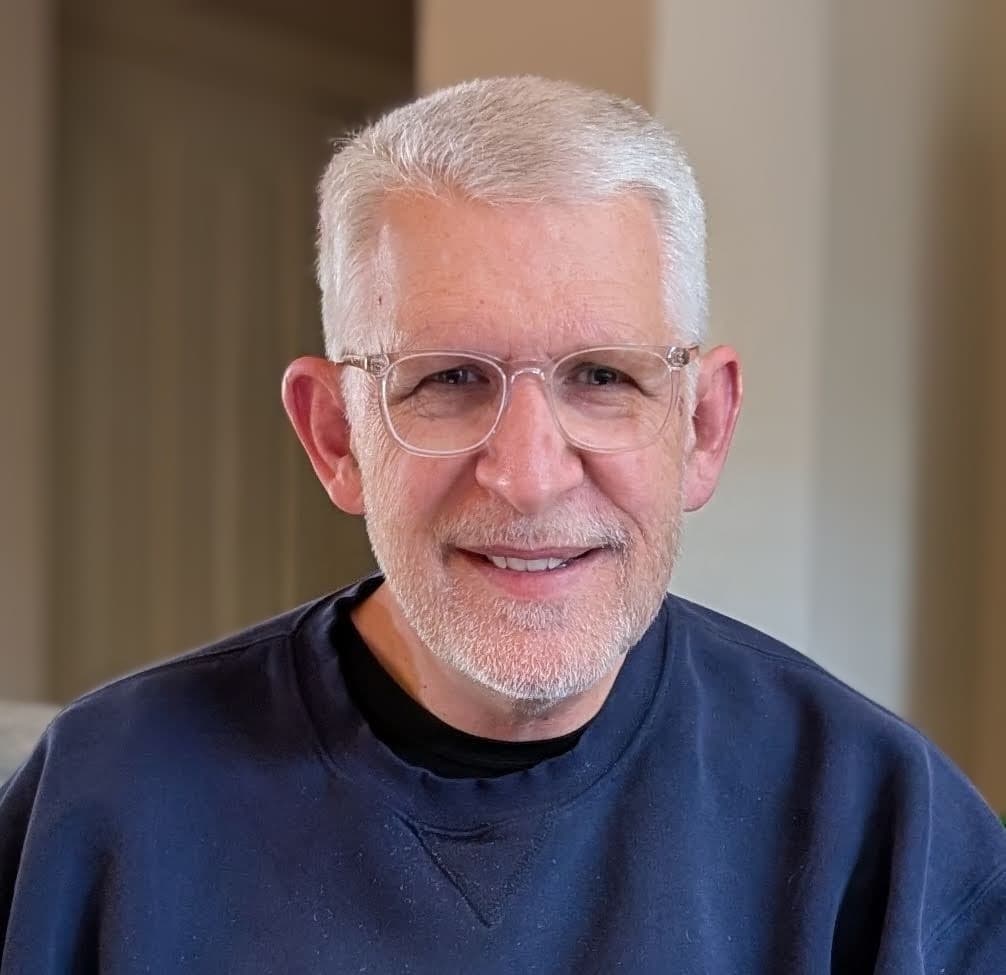
On October the 3rd of this year, just yeah, recently, at an hour while most of us were in our beds sleeping, two huge men of faith finished their individual races and went on to be with the Lord. One of those men was a man who had been a member of our fellowship for a number of years. I'm talking about Jess Mills. He joined with his family and friends just this past Friday to celebrate his life and to remember Jess. The other man was Pastor Chuck Smith, who was the pastor of the very first Calvary Chapel in Southern California.
It was at his church that the hippie movement found truth through Jesus Christ. At one point, Pastor Chuck Smith had a membership at Calvary Chapel Costa Mesa of 30,000 people. One church. Yeah, it was amazing. These two men went home to be with the Lord literally within an hour of one another.
And Jess Mills was given 95 years for his earthly pilgrimage. Pastor Chuck was given 86 years, but both of them were giants of the faith. Even though one of them is more well-known than the other, among men anyway, they are known equally in heaven, for they were both men of faith, strong, dedicated, devoted men of faith. If you would allow me this morning to indulge you for just a few minutes, I would like to play for you a final interview that was made with Pastor Chuck by Greg Laurie. I don't know the exact date of this video, but I'm assuming that it was probably made here just maybe a couple of months ago, just at the end of the summer.
But anyway, I think you'll enjoy this. I'm here speaking with Pastor Chuck Smith in his backyard, beautiful, sunny afternoon here in Southern California. Chuck, it's good to be with you. Thank you, Greg. I just finished reading a book called God's Forever Family, sort of an academic treatment of the Jesus movement.
I thought it was a very well-written book. It's really clear that you were so significant in that revival. It swept across the country. It swept across the world. But it seemed to have a stage three, a stage four, and a stage five through your ministry, where a lot of the other aspects of the Jesus movement had a beginning, middle, and end.
But then what God did through Calvary Chapel and through you continued on. Why do you think that is? I have my opinion, but I'd like to hear yours. Well, Jesus said, you have not chosen me. I've chosen you and ordained that you should be my disciples, that you should bring forth fruit, and that your fruit should remain.
I think that that's the key, the remaining fruit. In other words, whatever happened in the past is past. So many of those exciting movements of the past and the parades and so forth, they're all gone, but yet the work of the Lord continues. Of course, you look at how many Calvary Chapels now exist around the world and how successful they are. It's just God's work continuing, because it was built upon the word of God and a solid foundation.
When the storms came, it didn't crumble, but it just stood and withstood the storms and continues to just grow and expand. It's just a thrill to see what God hath wrought. A lot of these other expressions of the Jesus movement were like para-church type ministries. But when it was all said and done, you were a pastor of a church, and though we came to faith in this Jesus movement, we were in a church. And there was something you did that not only encouraged us to grow spiritually, as you said, but there was something in your teaching and in your example that said to us, young men, you can do this too.
Why? There's other men who God has blessed as expositors, as preachers and teachers, but I don't know of anybody that has inspired so many young men to ministry. Why is that? Well, I think that it's the imperfection that I have. Guys can listen to that and say, hey, I can do that.
I listen to a lot of ministers and say, oh man, a masturbation. I could never do that. But I think that it's something that is sort of transferable and that fellas pick up on it and they think, yes, I could do that. I think that's true, but I think you sort of undersell yourself as a preacher when you say that because I always was amazed at your teaching, but there was something that said I could do that. But there's another element.
That's what you left out. And that is you encouraged us to do it. Oh, yes. You encouraged. In other words, it didn't have to be only you being the guy preaching, but you not only encouraged us, but you helped us do it.
A lot of us. Chuck, you know, we talk about the gospel a lot, the importance of preaching the gospel. Jesus has commanded us to go into all the world and preach the gospel. In a nutshell, what is the gospel? The gospel is that man basically is troubled by sin.
It's a deadly kind of a disease and it is fatal, 100 percent. And so Jesus died in order to forgive us our sins and to make the provision for forgiveness. And thus we don't have to perish for our sins, but he bore our sins and he bore the punishment for our sins. That's right. So a person hearing this all for the first time, why should they believe the gospel?
Well, actually, as Paul said, it is the power of God and the salvation to him that believeth. And so if you want to be saved, you know, that's what the requirement is, believing the gospel. What does that mean to be saved? Saved from what? Well, it's saved from, first of all, the consequences of sin, because the wages of sin is death.
It's saved from the penalty of sin, which, of course, is eternal separation from God. And so that's what we're talking about when we talk about being saved. Chuck, if you were going to give one final sermon, like of all, how many sermons have you preached? I mean, thousands of them. Yes.
But anyway. Okay. If someone said, okay, you can give one last sermon, what would you preach on? What do you think your text would be? John 3.16.
Ah. For God so loved the world. Yes. Why that? He gave his only begotten son.
There's the gospel. It's all capsulized for you right there. Right there in a nutshell. It is right there. Yes.
I guess if you were going to have to pick one verse in all of the Bible that summarized the gospel, you probably couldn't find a better verse than John 3.16. I don't think you can. So that would be your final message you'd want to give. Yes. That's a beautiful one.
When you're in heaven, how do you want to be remembered? I think that when I'm in heaven, you know, I think that when we're there, all glory, all attention is going to be on Jesus Christ. And I think that that's, that's basically where it's at. And that's what we want to see. Our Lord glorified forever before his saints.
What has been the biggest surprise of your life? The biggest surprise of my life is just what God has done. You know, I think that it is so thrilling, you know, what God hath wrought. And to recognize that, you know, this is not something that man could figure out or conjure up, but it's just a divine work of God's Holy Spirit. And just to be able to be a part of it and to see it and to watch it has been just, well, so fulfilling, so rich.
Well, Chuck, I want to thank you for having this vision that has impacted thousands of people around Southern California and really around the world. And you know, you talk about Calvary Chapel and all the Calvary Chapels, but I actually think the impact of your ministry is far wider than just Calvary Chapels. You've inspired people in many denominations and non-denominations, a whole new style of music grew out of your ministry, contemporary Christian music, then contemporary praise and worship. effectively started in your church as well, so you leave a legacy that's kind of mind-boggling. And just thank you for your faithfulness to the Lord and thanks for taking a little time to just talk.
It's a joy. All right, God bless you Chuck. Thanks, Greg. The love of God is greater far than tongue or pen can ever tell. It goes beyond the highest star and reaches to the lowest hell.
Oh, love of God, how rich, how pure, how measureless and strong. It shall forevermore endure the saints' and angels' song. I thought you would enjoy that. I particularly liked how the final words of the video that came up for us were, a life well-lived, a life well-lived. I want to talk this morning about that very thing.
So I'd like you please to open your Bibles to 2nd Timothy, chapter 4. 2nd Timothy, chapter 4. And if you're there, skip down to verse 6 please. 2nd Timothy, chapter 4, verse 6. Paul is writing to Timothy from a prison and he says this,
Let's pray together please. Father God, open our hearts to the ministry of your word, and may it speak grace and insight. May we gain understanding from it, Father.
May we be open to all that you want to say today, through Jesus Christ our Lord. Amen. It is that the reason I'm reading these verses here, particularly out of this whole letter for you this morning, is because it is at this point in Paul's letter to Timothy that he states clearly what has frankly been inferred from the very beginning of the letter, and namely that is that his life on this earth is quickly drawing to a close. And that alone makes 2 Timothy kind of a challenging letter to read. Paul sounds lonely, to be honest with you.
You read through this letter, he sounds lonely. He talks about how everybody has deserted him. He talks about how much he wants to see Timothy again. He even admits that he's cold. He asks Timothy to bring his cloak when he comes, so that he might be able to stay warm and so forth.
And as you read this letter, it becomes obvious that Paul is writing what he considers to be his final correspondence with Timothy. So he spends this letter reminding him of a lot of things that Timothy needs to know pertaining to the ministry, pertaining to the kingdom of God, pertaining to just walking with Jesus Christ. But in the verses that we read here in chapter 4, the tone of Paul's letter begins to have this upturn. There's this air of victory that begins to just kind of shine forth. And I think that these words are something that we would be wise to take a look at here in these verses.
There are essentially four statements that I want to bring out from here. For those of you who are note-takers, I'm going to put these up on the screen so you can take time doing that. But the four statements are, I have fought the good fight, I have finished the race, I have kept the faith, and there is laid up for me a crown. Let's begin with the first one, I have fought the good fight. You know, I think about Jess Mills and Pastor Chuck and the kind of men that they were, and they both fought the good fight.
Just like the Apostle Paul, and believe me, our walk with God through this earth is a fight. It is a battle. In fact, you know, when Paul wrote his first letter to Timothy, he actually said this very thing to him from 1 Timothy chapter 6. He said to Timothy, fight the good fight of the faith. And, you know, when we read through Paul's letters to other individuals and to the churches, it's not hard to figure out where that battle was.
In other words, what fighting the good fight is all about. Because there are always battles, and some of those battles rage within. Some of those battles are outside of us, or without, we might say. When it comes to those battles that are raging within, Paul spoke about that. In 1 Corinthians chapter 9, he said, but I discipline my body.
The Greek literally means, I pummel my flesh. And I keep it under control. He says, lest after preaching to others, I myself should be disqualified. What Paul is saying in this verse right here is, I have to tell my body all the time, no. When it wants to do this, or it wants to do that, I have to.
Again, the Greek literally means, I pummel my flesh so that it might be enslaved to me. And not me to it. Right? Paul is admitting here that part of the battle is that battle that rages within our lives. I want to live my life.
I want to be comfortable. I want to have pleasure. I just want to be happy. How many times have you heard people say that? And it's so shallow.
And those things that drive us become the driving force of our lives, to the point where we just end up living for ourselves. Our whole life is just for me. It's for me. It's for me to be happy. We start seeing God's word in a different way.
God works all things together for my happiness. And it's not true. And Paul realized that his life was not to be lived for himself. But he also knew there was this battle raging inside, to the point where he said, I have to take my body, my flesh, and literally just discipline it. And tell it, you can't control me.
There were also battles that raged without. And Paul was referring to those when he talked, too, about fighting the good fight. When he wrote to the Ephesians, he said this from Ephesians chapter 6, For we do not wrestle against flesh and blood, but against the rulers, against the authorities, against the cosmic powers over this present darkness, against the spiritual forces of evil in the heavenly places. This is part of fighting the good fight of the faith. Fighting it in prayer.
You know, Paul talked in one of his other letters about one of the brothers, he mentioned it by name, and he said, he is always wrestling in prayer for you. Wouldn't it be wonderful to have somebody wrestling in prayer for you? I mean, just to know that somebody is wrestling in prayer for you. Wow. But that's somebody fighting the good fight.
It's a battle. It's a fight. It's stressful. It's strenuous. Because it's not easy.
It's all about facing down the enemies that come our way. Those enemies that want to steal from you and I, rob from you and I, our effectiveness for the Lord, and our ability to take hold of the promises of God. You know, I don't know if any of you, some of you have been coming on Wednesday night. Boy, I tell you, if you haven't been one of them, you need to get online and follow along with our Joshua study. We've got all the past studies there.
Joshua is all about going in and taking hold of the promises of God, and it's about fighting the good fight. And if you haven't been following that study, I would encourage you to start checking it out on our website. because it is so important and it just connects very much with what Paul's talking about here when he says, I've fought the good fight. Next, Paul spoke about, I have finished the race. And the image of our lives as a race was one of Paul's favorite metaphors for the Christian life.
And when he wrote to the church in Philippi, he actually talked about how to run the race. Check this out. This is really interesting. Philippians chapter three says, not that I have already obtained all this or I'm already perfect, but I press on to make it my own because Christ Jesus has made me his own brothers. He says, I do not consider that I have made it my own, but one thing I do forgetting what lies behind and straining forward to what lies ahead.
I press on toward the goal for the prize of the upward call in Christ Jesus. That was Paul's heart. That's how Paul ran the race. Paul did not run the race as he said, aimlessly. He knew where the starting point was.
He knew where the finish line was, and he kept running toward the finish line, not turning to the right or to the left or turning around to see where he had come from. That's a fast way to lose the race. Let me ask you a question. Are you pressing on? Are you in your own walk with the Lord pressing on?
If not, it might be because you're focused too much on where you've been rather than where you are going. Let me tell you something. One of the biggest lies of Satan is the teaching that in order for you and I to be healthy, emotionally, psychologically, we have to go back and deal with the past. And that is the enemy's ploy to get you and I to take our eyes off the prize, off the goal, and to turn around and actually look the opposite direction. Let me tell you something, people.
You cannot do what the Apostle Paul did while you're doing that. You can't press on. That's not pressing on. And I have seen person, and I'm talking about Christians, person after person, just get stuck, get their wheels stuck in the past. And, you know, it's funny, we Christians, even though the Bible tells us, you know, not to live in the past, but to move on, you know, we ignore that.
We just gulp down what the world teaches us, thinking that that's the way it ought to be. And we are, many of us, shipwrecked from our effectiveness to reach a lost and dying culture. Because we're so busy thinking about ourselves. Let me tell you something. The Apostle Paul had reason to think about his past.
There were a lot of things in his past that he wasn't very happy about. He wasn't proud of. There were a lot of things he regretted, a lot of years that he regretted. And if somebody had a reason to go back and just kind of hang out in that cesspool called my regret of the past, Paul was a man who had the right to do that. But he chose not to.
He said, one thing I do, forgetting what is behind. The past is in the past. It's under the blood of the Lamb. Yeah, there might be areas you need to heal. You commit those to God.
You give those to Him. He knows when to bring healing into your life and how. And I trust Him as my counselor more than any other human being who tries to force me into a situation of dealing with things before God has actually created a readiness in my heart to walk forward in that thing. I trust the Lord and you need to as well. You need to trust God with your past.
Maybe it does dog you in the present. But you give it to Him. You know that it's under the blood of the Lamb. And do what Paul said, forgetting what is behind, press ahead, press on, press on. Pressing on, wow.
I have a hard time even talking about this, but I don't know if you're aware of this. Pastor Chuck Smith taught his last message at Calvary Chapel, Costa Mesa on September 29th. That was just a few weeks ago. Listen, even though he was suffering from advanced lung cancer, he taught all three morning services and three days later he went to be with the Lord. Talk about pressing on, pressing through for God's sake.
Pressing on, pressing through, forgetting what is behind, he just kept pressing on. I am so far beyond impressed. I am humbled by that kind of commitment, that kind of determination, that kind of devotion. Because how easy would it be at a time like that to just kind of say, I'm done pressing on. I'm done.
Even Jess Mills continued to come to church when it was almost physically impossible for him to get around. But he knew that being in the house of the Lord was a vital commitment of his entire life. I am so impressed with the ability these men showed us, the examples they gave us of pressing on. And not just pressing on, but pressing through. Pressing through the challenges and difficulties of life.
Just blows me away. I'm so humbled by that. Next, the Apostle Paul said, I've kept the faith. And for Paul, that meant not letting go of the fundamentals of the gospel, what is true and so forth. Staying true to the message of Christ, crucified and risen, and not deviating from that message at all.
It also meant being faithful to his calling. In other words, what Paul is also saying here when he says, I've kept the faith, he's saying, I did what he asked me to do. I did it. I fulfilled my reason for being, you know? What is your reason for being?
Why are you here? Why are you on this earth? Why are you here? Are you here to make money? Are you here to be happy?
Are you here to make other people happy? Why are you here? It's an important question. Frankly, it's a question that has been answered in the word of God for all of us. Why are we here?
Paul wrote about it in Ephesians 2 where he said, for we are his workmanship. What have we been created to do? Created in Christ Jesus for good works, which God prepared when? Beforehand that we should walk in them. Here's the interesting thing about your life.
God had prepared things for you to do before you were even born. He prepared them. And all you have to do is walk in them. But guess what, guys? That is a description of why you're here.
That's why you're here. You're not here just to have fun or to enjoy the pleasures of this life. God gives us the pleasures of this life as a wonderful gift. But we have made him our reason for living. It's everything to us.
And we've set aside our actual calling, our actual reason for living, which is to serve the Lord, to give our lives for him. Lord, you've prepared things in advance for me to do. And I am to walk in faith and to do those things. Show me what you have for me to do. There is this huge block of the body of Christ that does nothing.
Nothing. There's about 10% of the body of Christ that does everything. And there's about 90% that comes to church once in a while, but never serves, and is not serving out in the world. They're just living their lives, going to work, coming home, make dinner, go somewhere for the weekend, see if we can get some fun going on in our lives. Looking forward just to the next event, the next vacation, the next something that's just going to bring a little bit of, you know, a bend in the road to the monotony that I call my life.
And it doesn't satisfy, because we are called to greater... things. We're called to keep the faith, to walk after Jesus with all of our hearts, to serve Him with everything that we have. That's what we're called to. And finally, Paul said, there is laid up for me a crown.
Let me read the whole verse. Look with me again in your Bible there in verse 8.
And this verse reminds us of something that Jesus told us many times in parables, and that is that there is coming a time of reward. It's for all believers in Christ when God will look upon what we have done, and He will reward us accordingly. Unfortunately, we were also told in the Scripture that there are some who will be saved, but they will have nothing to show for it.
The Bible says the fire of God's glorious, holy presence is going to rush through all that you and I have built our lives with, and that which is silver and gold and precious gems will remain. That stands for the things that we've done for the Lord. But those things that are wood, hay, and stubble are going to burn up just like that. And Paul tells us, actually, in one of his letters, that there will be some who will experience the holiness of God just rushing through their lives, and when the holiness of God has passed, there will be very little that remains. The man himself may be saved, he says, but as one escaping through the flames.
I don't know about you, but I don't want my life to be that way. You know, I want to live, I want to have a life well lived. Not for me, but for the Lord. That's what I want. I want to hear the words, well done, good and faithful servant.
But I'm smart enough to know that that's not a guarantee. We talk about it sometimes in Christian circles, like it's a guarantee. It's not a guarantee. Paul told us very clearly it's not a guarantee when he talked about the man who is himself saved, but everything he has is burned up. What do we got to do in order to hear those words?
We got to fight the good fight, we got to finish the race, we got to keep the faith. That's what we have to do. Now, if you're feeling a little pressured here this morning by some of the things that I'm sharing, and you're thinking, I can't do that, I want to just welcome you into my club. Because I am the president of the I can't do it club, and that's just the fact of the matter. You know what?
We can't do it. If you've been trying to live a Christian life, you've heard me say this many times, stop it. Stop trying to live a Christian life. Stop trying to serve God in your own strength. Stop trying to grit your teeth and serve the Lord.
Remember something that the Apostle Paul said. He wrote this when he wrote his letter to the Colossians, and here's what he said. He said, him we proclaim, meaning Jesus, warning everyone and teaching everyone with all wisdom that we may present everyone mature in Christ. And look at this, for this, he says, I toil, struggling with all his energy, that he powerfully works within me. People, this is the secret.
This is the secret right here to fighting the good fight, to finishing the race, to keeping the faith. It is not trying to pull yourself up by the bootstraps and be a good Christian. That person doesn't exist. It is doing what Paul says here. It is working, toiling, whatever, in order to the strength and energy of the Lord.
You and I must learn to rely on the power of the Holy Spirit. We must learn to depend on him. We must. We must follow the example of these godly men who have gone on before us now, and we must see their example of absolute devotion, and we must learn from it. Believe me, Pastor Chuck getting up and doing three services three days before he passed into the presence of the Lord made a huge impression on me.
I sit here and complain about doing two services sometime, and I'm ashamed of myself, because it's not the heart that these men showed. It's not the devotion. It's the devotion that they had. I can do all things through Christ who gives me strength. That's what we should be saying.
Not I can do all things because I'm a Christian, but through his power, through his grace, through his Spirit, he will enable me to do what I otherwise cannot do. That has to be our motto. That has to be our cry. That has to be our prayer. Or it's not going to come together.
Or we are not going to fight the good fight. We are not going to finish the race, and we are not going to keep the faith. But here's the thing. The Bible says God has given us all that we need for life and godliness. Everything we need for life and godliness.
That means he has accomplished or accommodated us with everything necessary for us to live this life, for us to fight the good fight, for us to finish the race, for us to keep the faith. He's given us everything we need. It's our responsibility to humble ourselves and to connect with his power and his grace to live the life that he's called us to live.